Short Piecey Layers Haircut
- Words by
- Julio Arco
- Published
- Reading
- 5 min
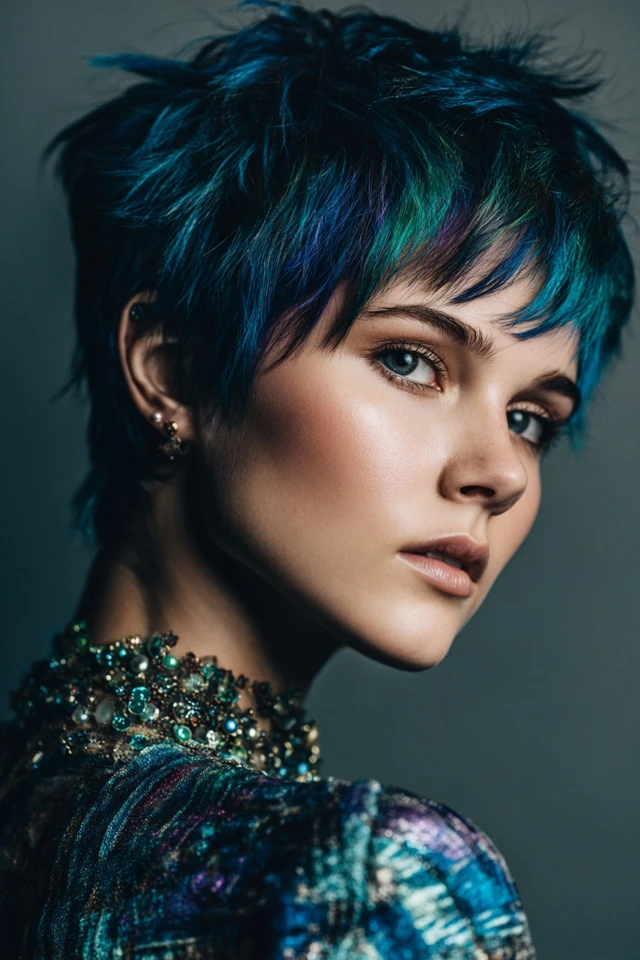
A short textured layered cut is a short haircut with length removed at different heights (the layers) and finished so the ends look separated and a little loose (the texture). Piecey layers are exactly that: visible, defined strands instead of a smooth, blended shape. Ask for choppy or piecey ends, and tell your stylist how much time you want to spend styling.
Below: what separates texture from layers, which versions suit your hair, and how to keep the cut looking intentional between trims.
What is the difference between a textured and a layered haircut?
Layers are about length. Your stylist cuts shorter sections over longer ones, which builds shape and removes weight. Texture is about the finish of the ends. Point cutting, razoring or slicing makes them uneven, so the hair separates into pieces instead of lying in one smooth line.
That is why the two terms overlap. You can have layers with a smooth, polished finish, or texture on a single length. The piecey look combines both, which is why it reads as movement even when the hair is dry and untouched.
Through the lens of evidence-based design, I'd treat texture as the thing the eye reads first. A broken, uneven edge catches light in many small spots, while a blunt edge reflects it in one line, so the same color looks softer and more dimensional with piecey ends.
Which short textured cut suits your hair?
Short textured layered haircuts for straight hair
Straight hair shows every cutting line, so it is the best canvas for crisp piecey layers. It can also look flat at the crown. Ask for shorter layers on top to lift the root, and use a light texturizing spray or paste to separate the ends. If your hair is very fine, keep the layers subtle, because too much removal can make the perimeter look thin.
Textured bob for thick hair
Thick hair benefits most from layers, since they take out bulk that otherwise makes a bob expand into a triangle. A textured bob with internal layering sits closer to the head and swings when you move. Ask for the weight to be removed from the inside rather than just thinned at the ends.
Wavy and curly hair
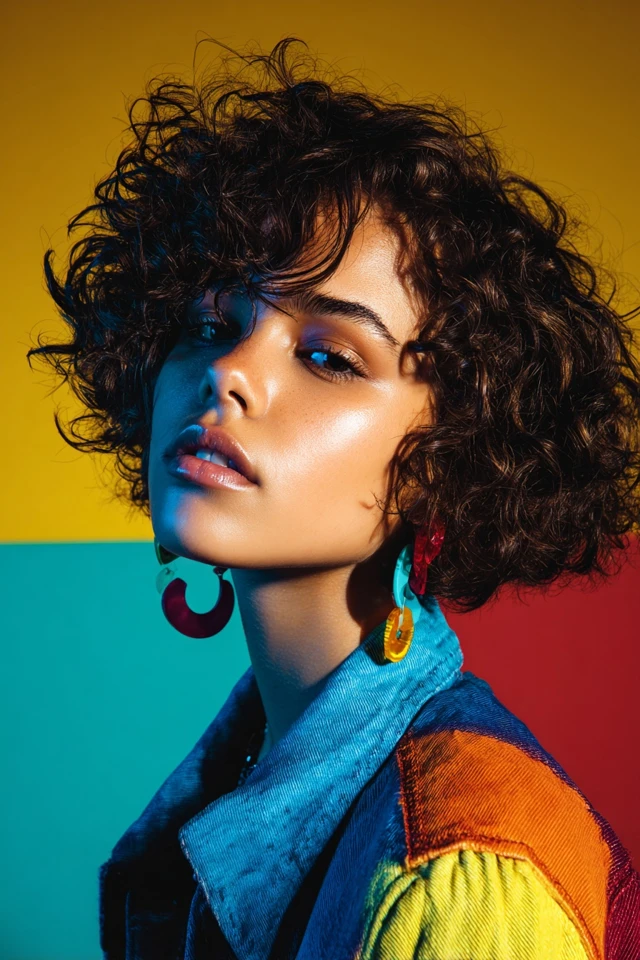
Curls already have texture, so layers do the work here: they stop the shape from stacking into a pyramid. A short shag with curl-friendly layers is a common choice. Have it cut with your curl pattern in mind, and expect it to spring up shorter once dry.
Fine hair
Fine hair needs fewer, longer layers and a slightly blunter perimeter so the ends keep their density. Texture comes from styling product more than from aggressive cutting.

Short cut ideas to bring to your appointment
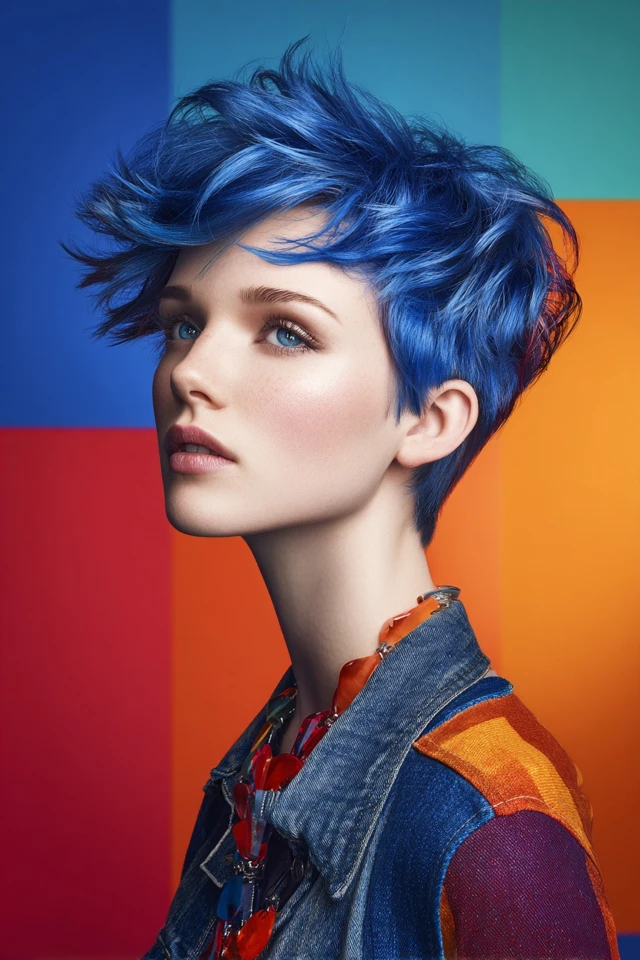
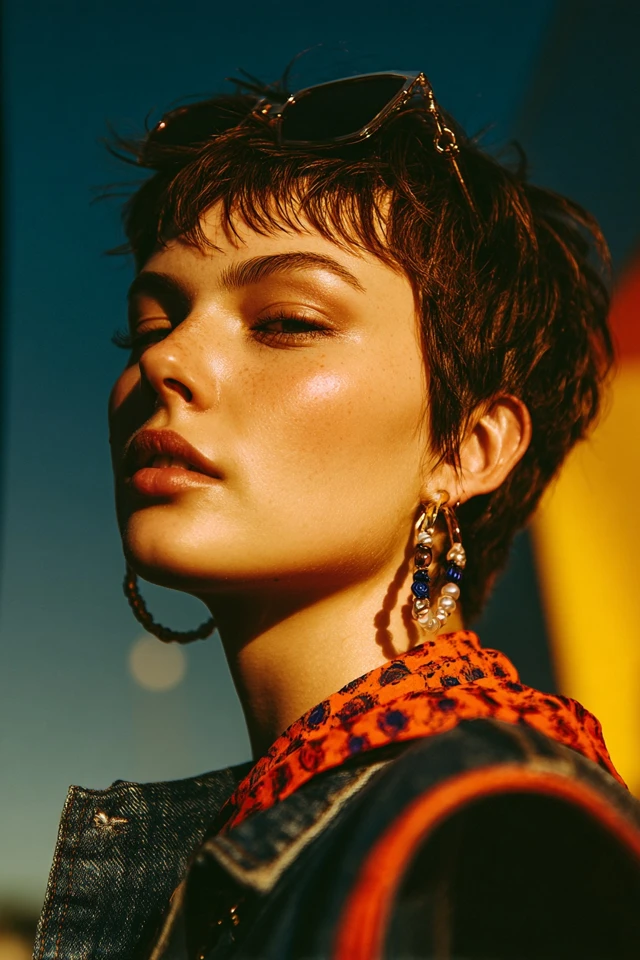
- Textured pixie: very short at the sides and nape, with longer, separated pieces on top.
- Choppy bob: chin length or slightly above, with uneven ends. See the short razor cut for a softer, feathered edge.
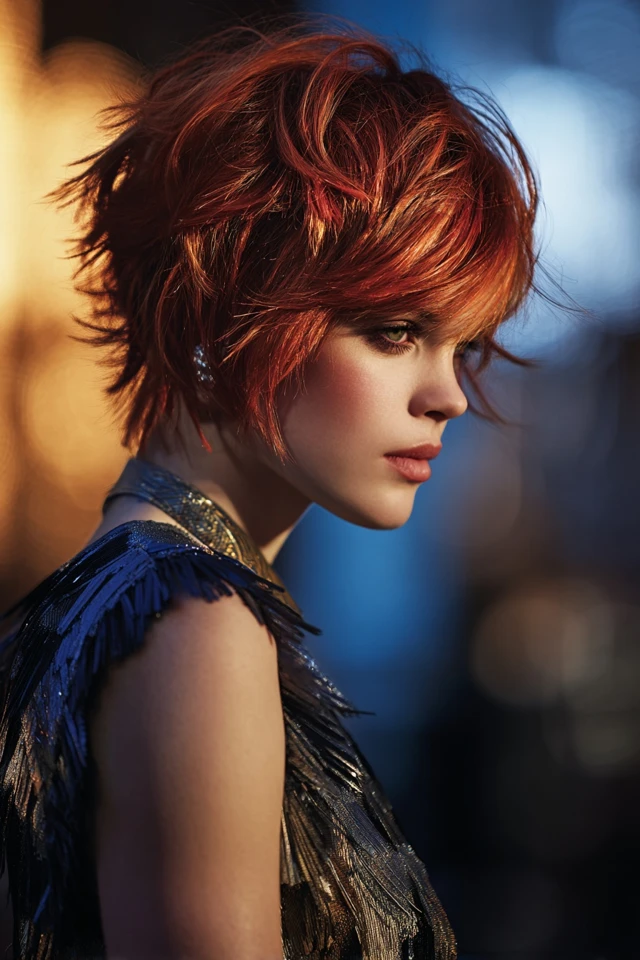
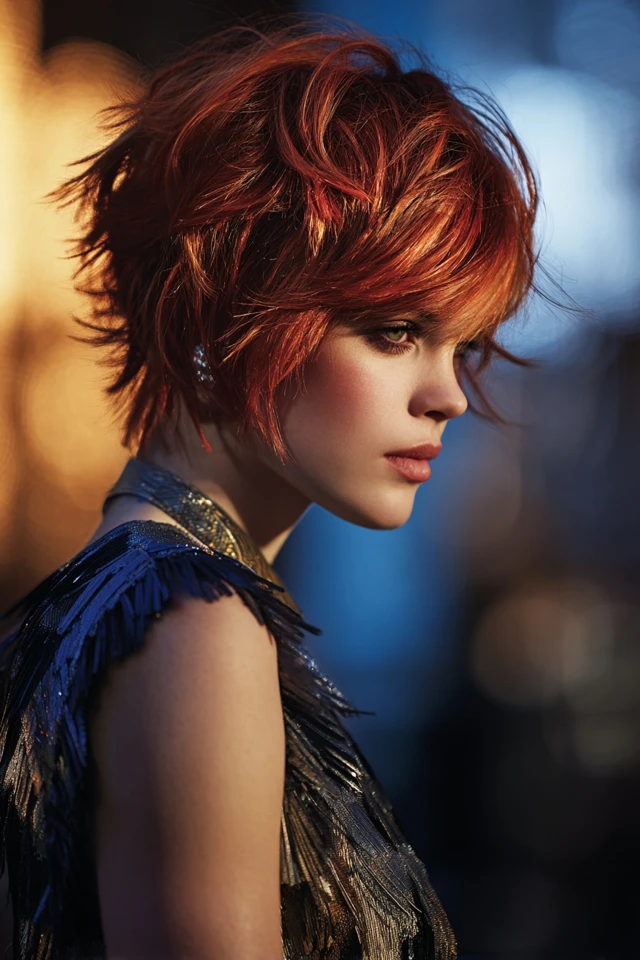
- Short shag: layers throughout, longest at the nape, with lots of movement.
- Angled bob: shorter at the back, longer toward the front. The short angled haircut shows how that edge works.
- Collarbone-skimming layers: the longest end of short, for people not ready to go shorter. Try the collarbone-skimming cut.
Choppy layers for short hair work best when the sections are cut at an angle rather than straight across. Bring a photo and point to the ends, not just the overall shape.
Should you add a fringe?
Short textured layered haircuts with fringe frame the face and hide a high forehead, but they add upkeep. Wispy, side-swept bangs grow out more gracefully than blunt ones and blend into the layers. A fringe also reads as the focal point of the whole cut, so keep the rest of the texture a little quieter. The short layered fringe haircut goes into the options in more detail.
How to style and keep it low maintenance
Low maintenance short layered haircuts rely on the cut doing the work. A good piecey cut should look decent after air drying, with a small amount of product to define the ends.
- Towel-dry, then work a pea-sized amount of paste, cream or texturizing spray through the ends.
- Rough-dry with your fingers, lifting at the roots.
- Twist small sections and press the product in to separate the pieces.
If you reach for a flat iron, the American Academy of Dermatology says flat irons should be used on dry hair on a low or medium heat setting, no more often than every other day. For detangling, the AAD also advises a wide-tooth comb instead of a brush on wet hair, since wet hair is delicate.
Short cuts lose their outline as they grow, so plan on a trim roughly every 6-8 weeks. If that is too frequent for you, ask for a version with softer, longer layers that grows out more evenly. For a no-effort routine, see the short wash-and-go haircut.
What to wear with piecey layers
A cut with this much surface detail looks balanced next to simple, clean-lined clothes: a tailored blazer, a crisp shirt, a plain knit. Fluid fabrics echo the movement of the hair, while structured pieces give the loose texture something to contrast with. As an architect trained in evidence-based design, I'd keep the neckline in mind, because short hair exposes it. A scoop or V-neck lengthens the line from chin to collar, and a high crew neck makes a short cut feel more compact.
If you want more length with the same texture, the medium choppy layers haircut is the natural next step.
Frequently asked questions
What's the difference between a textured haircut and a layered haircut?
Layers change the length of the hair at different points to create shape. Texture refers to how the ends are finished (point cut, razored or sliced) so they look separated and uneven. Many cuts use both.
What is a textured haircut for female short hair?
It is a short cut where the ends are cut unevenly so the hair looks piecey and has movement. Pixies, choppy bobs and short shags are common examples.
What are some trendy short, layered haircuts?
Textured pixies, choppy bobs, short shags and angled bobs with face-framing layers are all popular. Pick one based on your hair density and how much styling you want to do.
How often should I trim a short layered cut?
Roughly every 6-8 weeks keeps the shape sharp. Softer, longer layers can stretch that interval.
Filed under Haircuts