Ruffles and Pleats: How to Wear Fabric Dimension
- Words by
- Julio Arco
- Published
- Reading
- 4 min
Ruffles add soft volume and movement. Pleats add structure and a controlled kind of movement. To wear either one well, let it be the only busy detail in the outfit and keep everything around it simple.
That one rule covers most situations, from a ruffled blouse with straight-leg jeans to a pleated midi skirt with a plain tee. The rest of this post covers how the two techniques differ, which pieces are worth starting with, and how to style them.
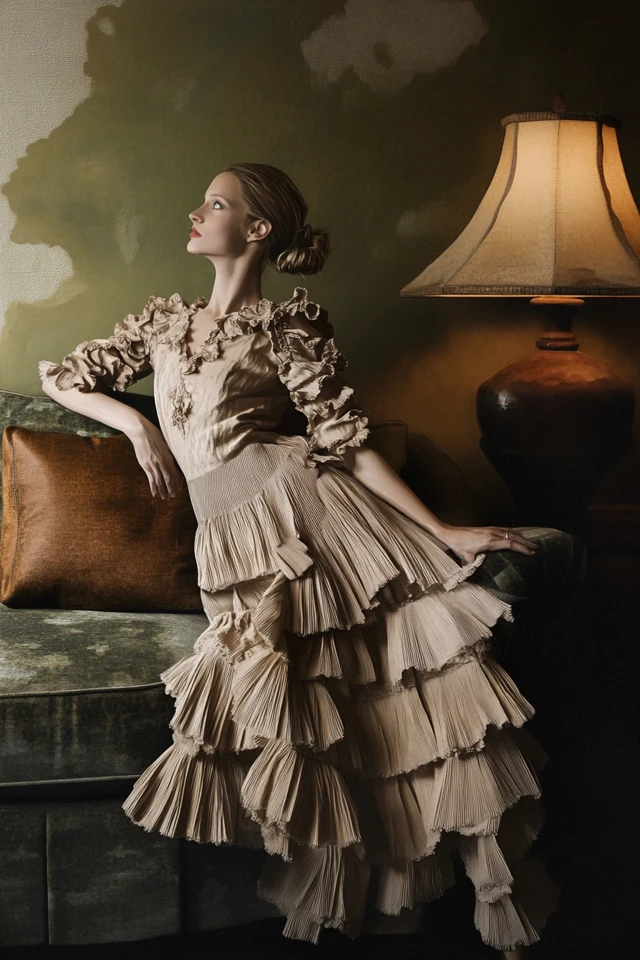
What is the difference between ruffles and pleats?
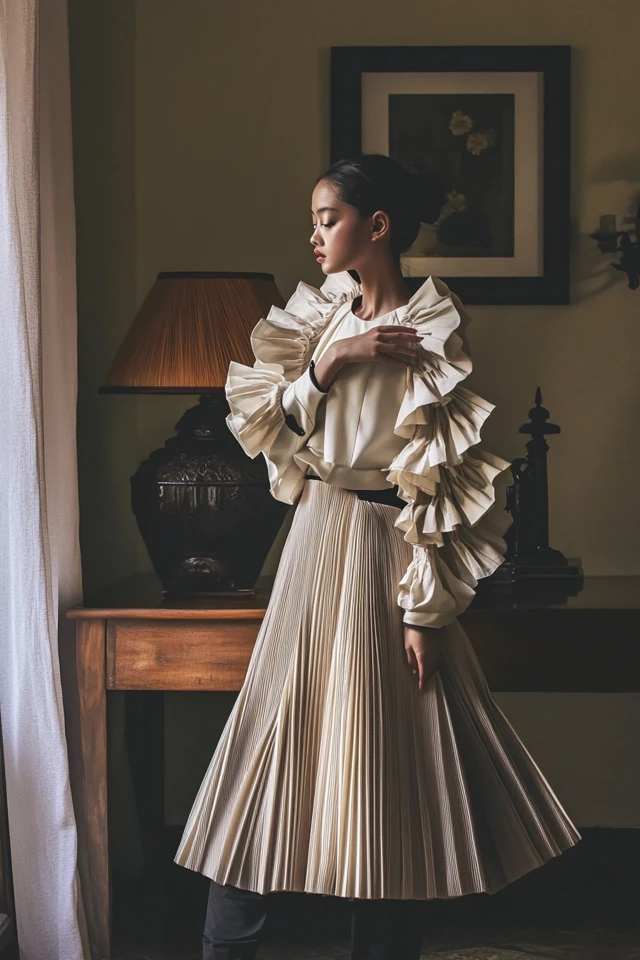
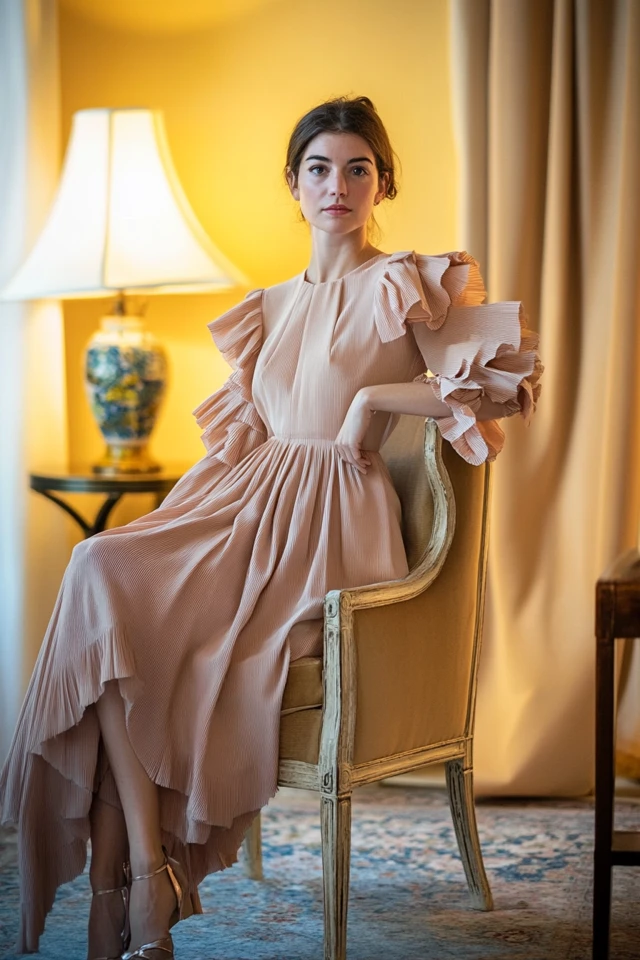
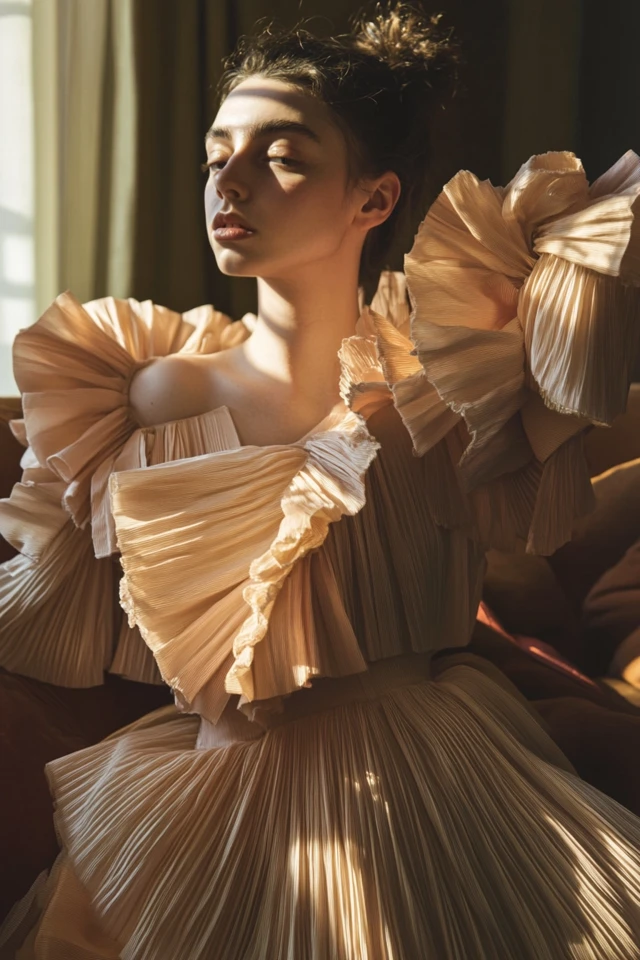
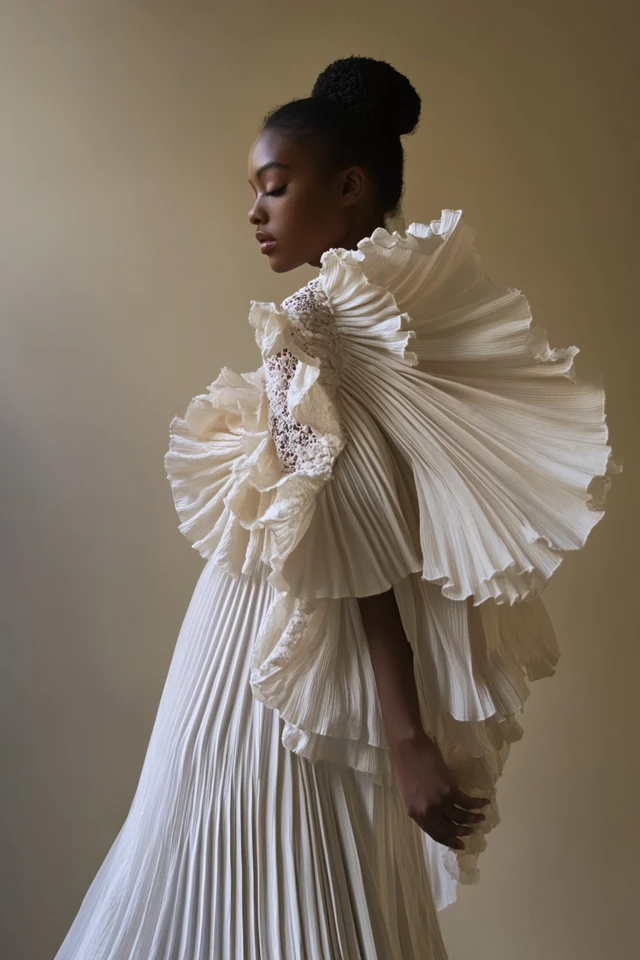
A ruffle is a strip of fabric that is gathered or folded and sewn onto a garment, so it stands away from the body and looks frilled. It reads as soft, playful and a little romantic.
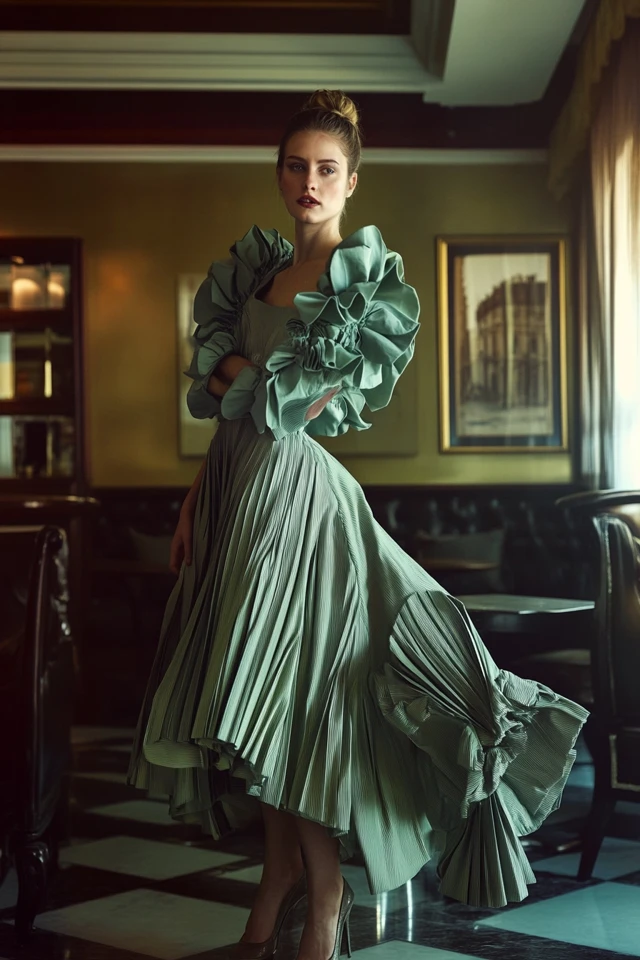
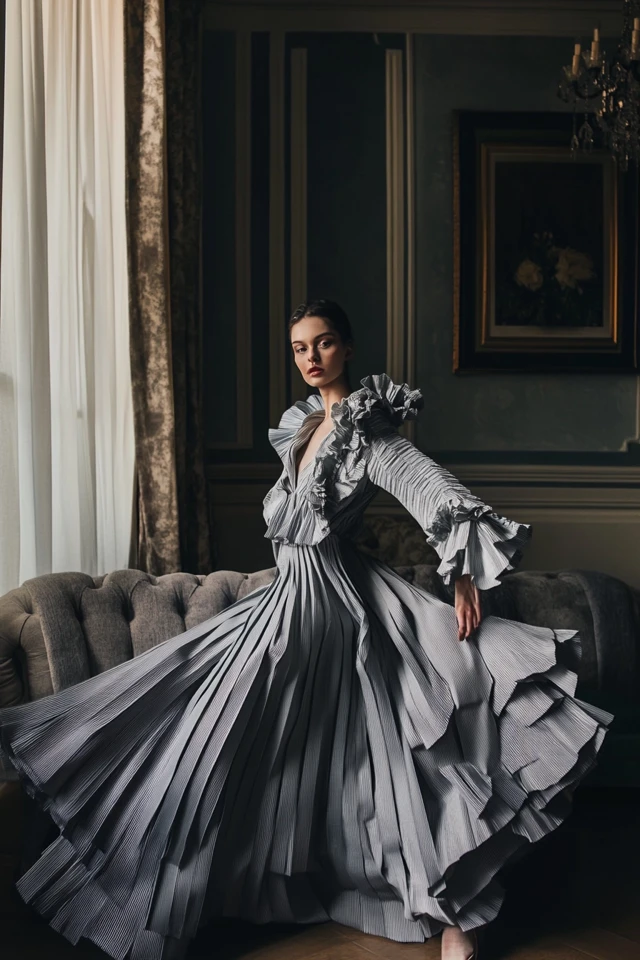
A pleat is a fold pressed or stitched into the fabric itself. Knife pleats lie flat in one direction, box pleats fold in two directions, and accordion pleats are narrow and evenly spaced. Pleats read as orderly and tailored, even in a light fabric.
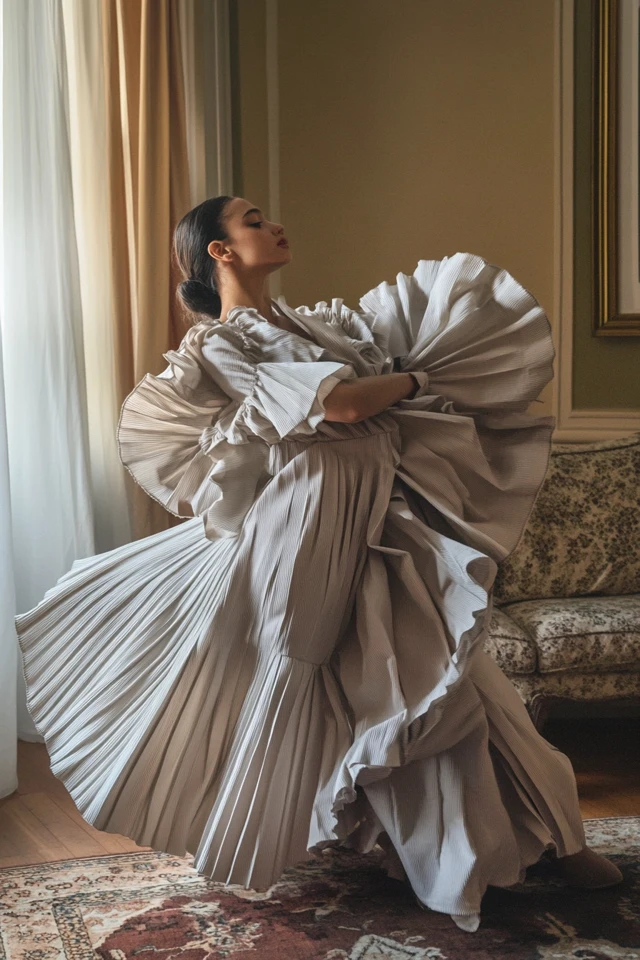
Both add dimension, but in different ways. Ruffles break up an outline. Pleats organize it into lines.
Why do they change how an outfit looks?
Folded and gathered fabric catches light unevenly, so the surface shows light and shadow instead of one flat tone. Through the lens of evidence-based design, I'd treat that as the main effect: the same color looks deeper and more varied on a pleated skirt than on a smooth one, because the eye reads the shadows between folds.
They also pull attention. A ruffled neckline draws the eye up to your face and shoulders. A pleated hem draws it down and adds swing when you walk.
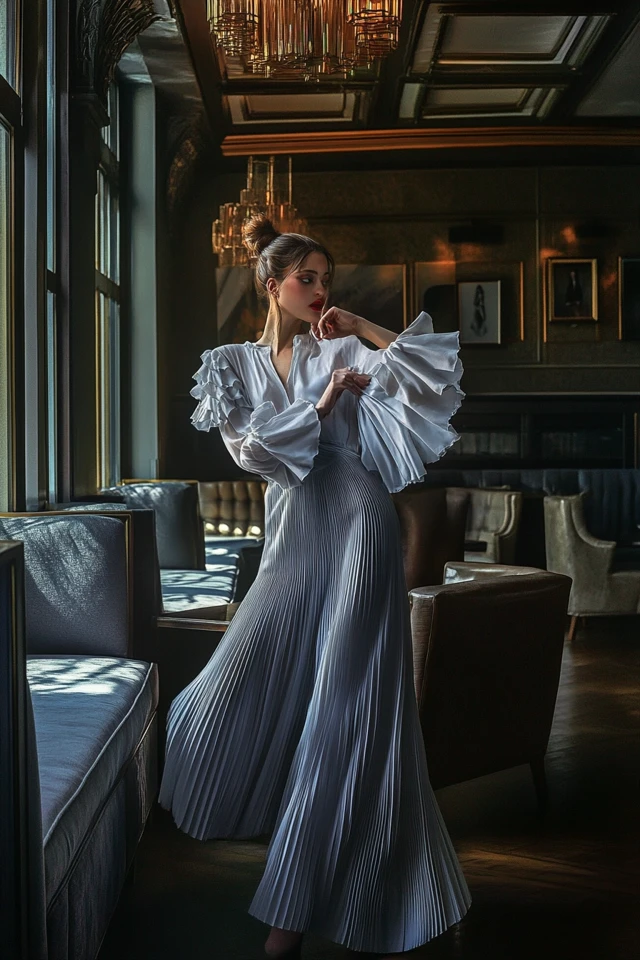
Which ruffled and pleated pieces are worth buying first?
Ruffled blouses and tops
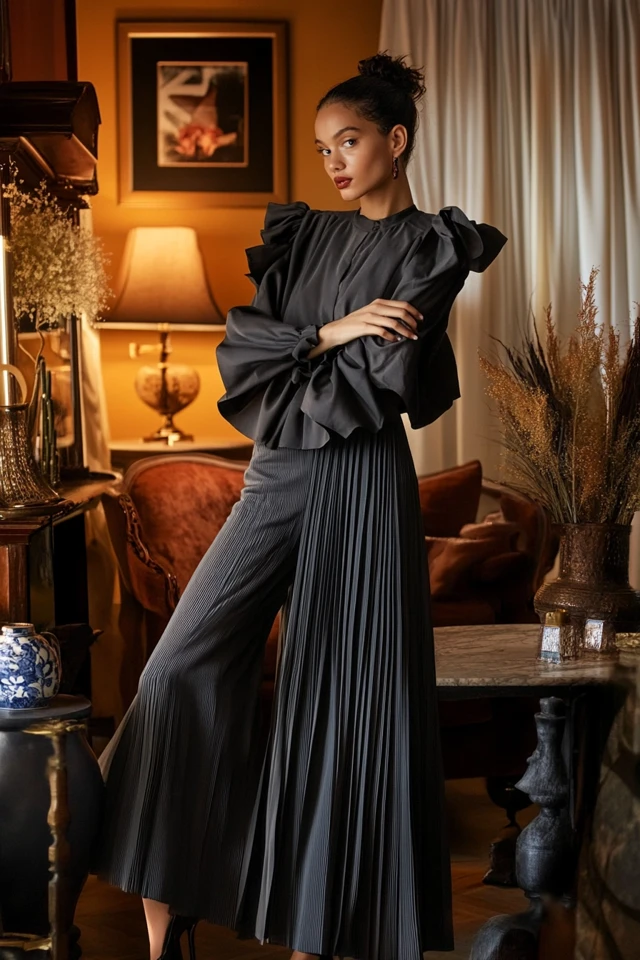
A ruffle at the neckline or cuff is the easiest way in. Tuck it into high-waisted trousers for the office, or wear it with jeans on the weekend. If you want more options, see these easy ruffle blouses for romantic looks and these peasant tops with soft ruffles.
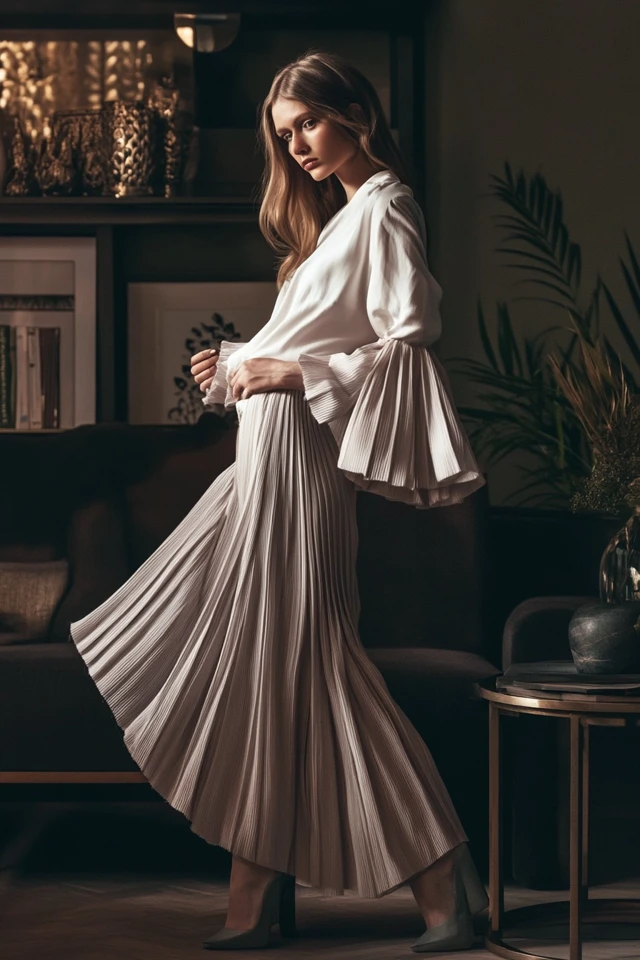
Pleated skirts
A pleated midi is the most flexible piece in this group. It works with a tucked blouse and heels, or with a graphic tee and ankle boots. Check that the pleats hang flat at the hip. If they flare open there, the skirt is too small and will pull.
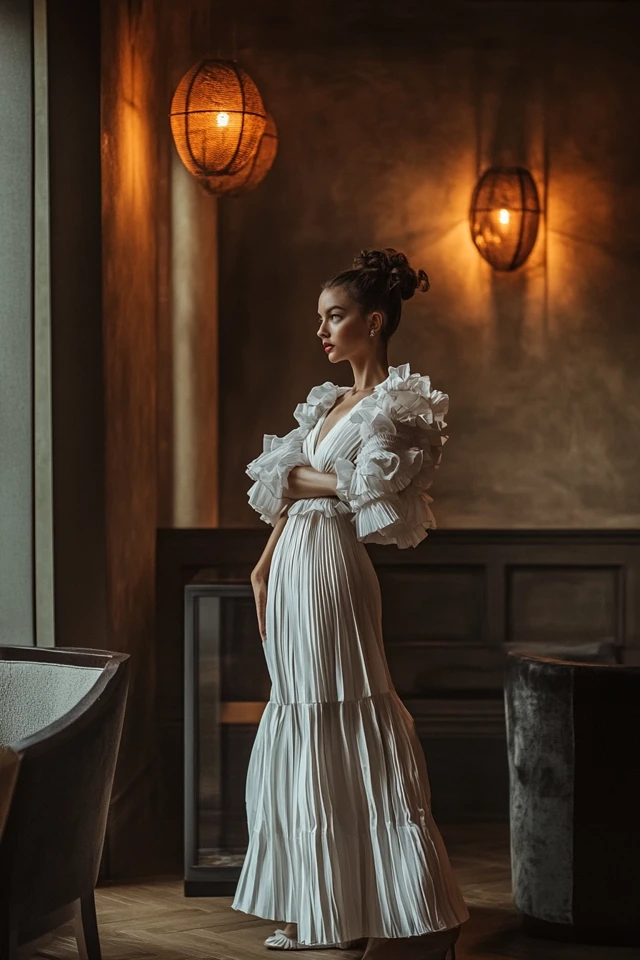
Ruffled dresses
A dress carries the detail for you, so you need little else. Sandals and small jewelry are enough. For date-night ideas, look at these flirty ruffle dresses.
Pleated trousers
Pleats at the waist give a wider leg room to hang and move. They suit a fitted top and a clean shoe. If the fabric puckers at the pleats when you stand, size up or look for a heavier weave.
Accessories and outerwear
A ruffled scarf or a pleated bag adds texture with little commitment, which makes them good for testing the look. A pleated coat or jacket works best over slim layers, since pleats already add bulk.
How do you balance ruffles and pleats in an outfit?
Pair them with structure
Soft details look sharper next to firm ones. A ruffled blouse under a tailored blazer, or a pleated skirt with a leather jacket, keeps the outfit from tipping into sweet. The cropped jackets for adding edge to dresses follow the same logic.
Mix textures, but keep one detail busy
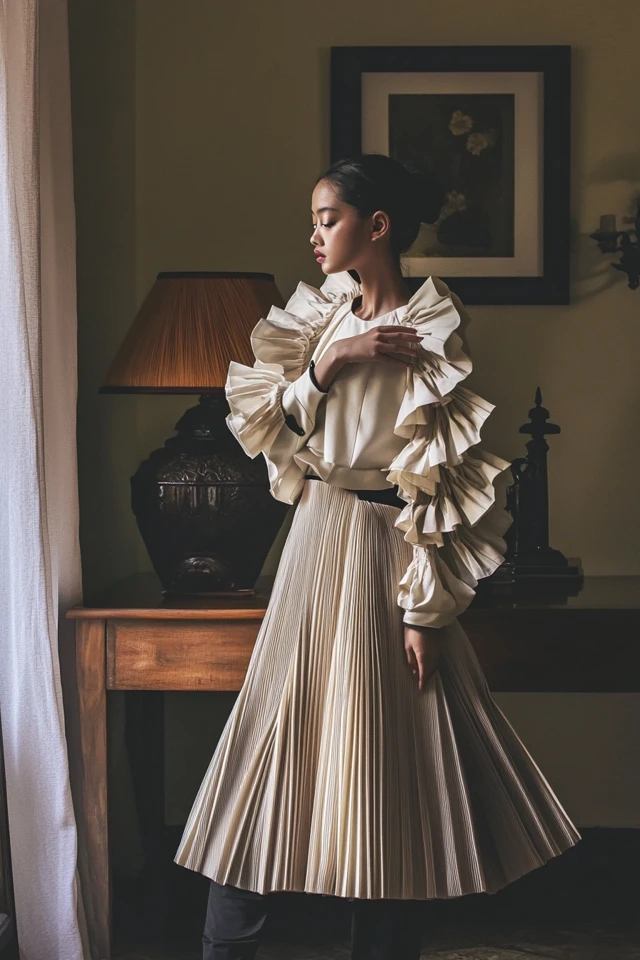
Denim, leather, knit and silk all sit well beside folds. The limit is one hero: if the skirt is pleated, keep the top smooth. If you want to layer two detailed pieces, give them the same color so they read as one shape.
Choose color by how much detail you want to show
Solid, mid-to-dark colors show the folds clearly. Busy prints hide them, so a print is better on a gathered piece than on a pleated one. A bright ruffled top over neutral bottoms lets the color lead. Dark pleats look quieter, which suits the office.
Pick the spot you want noticed
As an architect trained in evidence-based design, I'd treat the placement as the main decision. A ruffle at the neckline brings the eye to your face. A pleated skirt that starts at the natural waist defines the narrowest point. A tiered skirt adds volume at the hem, as in these layered ruffle skirts. A wrap shape adds a diagonal line, as in these draped wrap skirts with ruffle details.
Outfit formulas to start from
- Office: white ruffled blouse, black pleated pencil skirt, gray blazer, pointed-toe heels.
- Casual day: denim jacket with ruffled sleeves, striped tee, high-waisted jeans, white sneakers.
- Evening: black pleated midi dress, strappy heels, statement earrings, metallic clutch.
- Brunch: floral ruffled blouse, pleated A-line skirt, ankle boots, straw hat.
- Smart casual: pleated blazer, fitted turtleneck, beige chinos, loafers.
If you like delicate surfaces too, lace details pair well with both techniques.
How do you care for ruffles and pleats?
Follow the garment's care label first. Delicate ruffles usually do better with a gentle cycle or hand washing, and pleats keep their shape best when the garment is hung or laid flat to dry. Press with a cloth between the iron and the fabric, and check the label for the right heat, since some pleats are heat-set and some fibers scorch easily.
Frequently asked questions
How can I wear ruffles and pleats without looking overdone?
Keep one detailed piece per outfit and make the rest plain. A ruffled blouse with straight-leg jeans or a pleated skirt with a simple tee lets the detail stay an accent.
What colors work best for ruffled and pleated clothes?
Black, white, beige and navy are easy to pair and show the folds clearly. Bolder colors like red or emerald work well on a single piece with neutral items around it.
Can ruffles and pleats be worn in every season?
Yes. Choose light fabrics for spring and summer, and heavier ones such as pleated trousers or ruffled blouses under sweaters for cooler months.
Are ruffles and pleats suitable for work?
They can be. Pick a small ruffle at the neckline or cuff, or a pleated skirt in a solid color, and pair it with tailored pieces.
Filed under Fabrics & Textures