Chenille Fabric Outfits: Papaya Velour Brunch Looks
- Words by
- Julio Arco
- Published
- Reading
- 5 min
Chenille and velour are both good choices for brunch clothing, as long as you pick the right piece. Velour gives you a smooth, softly shiny surface that dresses up easily. Chenille gives you a fuzzy, tactile one that reads cozier. Papaya, that coral-orange shade, works in either, and it is the color this post builds its outfits around.
Below: how the fabrics differ, where each one falls short, and five outfit formulas you can copy.
Is chenille a good fabric for clothes?
Yes, for the right garments. Chenille yarn has a soft, raised pile, so chenille fabric for clothing works best in sweaters, cardigans, loungewear sets and relaxed layers where softness matters more than crisp structure. It feels warm and drapes loosely.
It is less suited to anything that needs a sharp line, like a fitted pencil skirt or tailored trousers. The pile tends to soften edges and add visual bulk, so keep chenille pieces relaxed and let the rest of the outfit be simpler.
Chenille vs velvet vs velour: what is the difference?
The short version is about surface and structure. Velvet has a dense, short pile and a deep, light-catching sheen; it usually feels heavier and more formal. Velour is a knitted fabric that looks like velvet but stretches more and tends to feel casual. Chenille is defined by its yarn, which is fuzzy and caterpillar-like, so the surface looks plusher and less uniform.
In chenille vs velvet, the practical difference is shine. Velvet reflects light in smooth sweeps, while chenille scatters it, so the same color looks softer and more muted in chenille. Through the lens of evidence-based design, I'd treat that as a texture decision first: the surface changes how a color reads before the color itself does.
| Fabric | Look | Feel | Best for |
|---|---|---|---|
| Chenille | Fuzzy, matte-soft | Plush, warm | Sweaters, cardigans, loungewear |
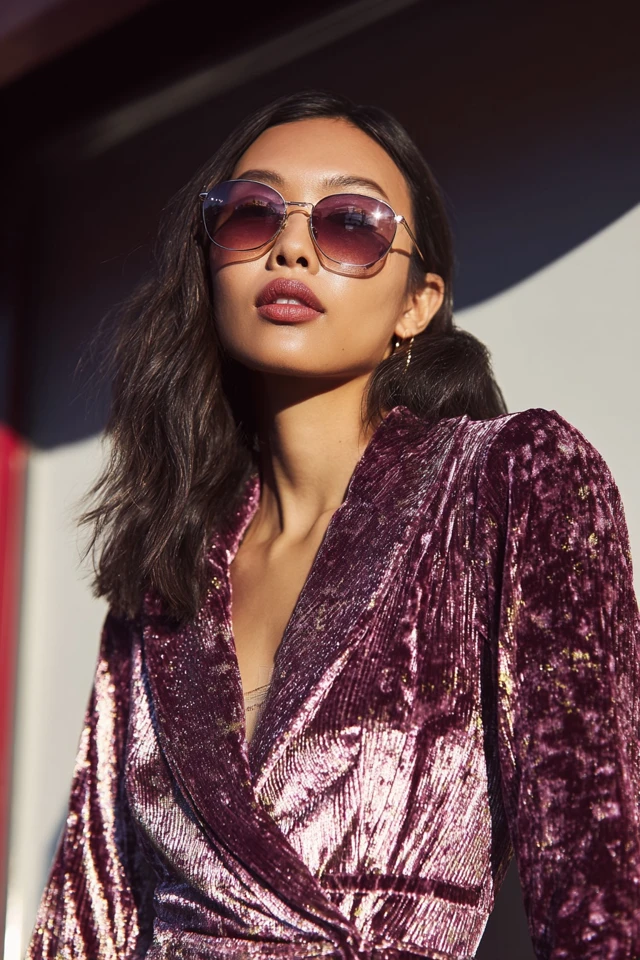
| Velour | Smooth, gentle sheen | Stretchy, soft | Co-ord sets, wrap dresses, jumpsuits |
| Velvet | Deep, rich sheen | Denser, heavier | Evening dresses, blazers |
Cotton velour or chenille: which should you choose?
When choosing between cotton velour or chenille, think about the occasion and the weather. Cotton velour is smoother and usually easier to dress up, so it suits wrap dresses, skirts and sets for a daytime meal. Chenille suits cooler mornings and casual plans, especially as a top layer.
For a warm-weather brunch, pick velour in a loose cut, such as a skirt, a sleeveless top or an open-back dress. Save chenille for a cardigan you can take off.
Downsides of chenille fabric
The downsides of chenille fabric are mostly practical, and worth knowing before you buy:
- It can snag. Loops of yarn catch on jewelry, rings and rough surfaces.
- It can shed or pill with friction, especially under a bag strap.
- It runs warm, so it is a poor fit for hot days.
- The pile can look flattened if washed or ironed carelessly.
Always follow the garment's care label. As a general habit with plush fabrics, turn the piece inside out, wash cold, air dry, and smooth wrinkles with a steamer rather than pressing the pile flat.
Is chenille fabric high end?
It can be, but the fabric name alone does not tell you. Quality shows in the yarn density, how evenly the pile sits, and how the piece holds its shape after you wear it. A dense, even chenille looks polished. A thin, patchy one looks tired fast. Run your hand across it: the pile should spring back, not stay flattened.
Papaya velour outfit formulas for brunch
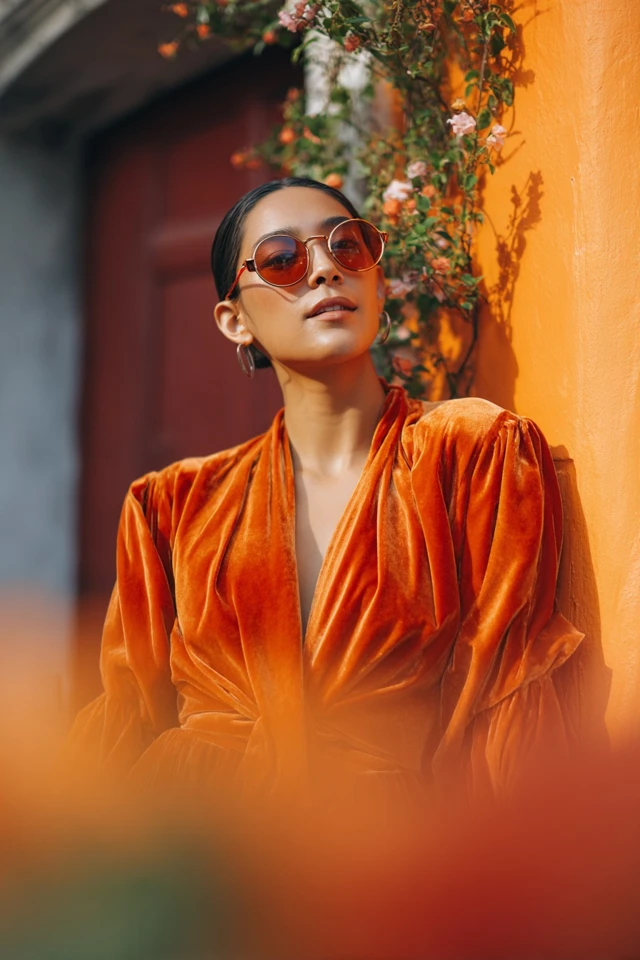
Papaya sits between orange and coral, so it is warm and bright without the harshness of a pure red. Pair it with quiet neutrals and it becomes the one loud note in the look.
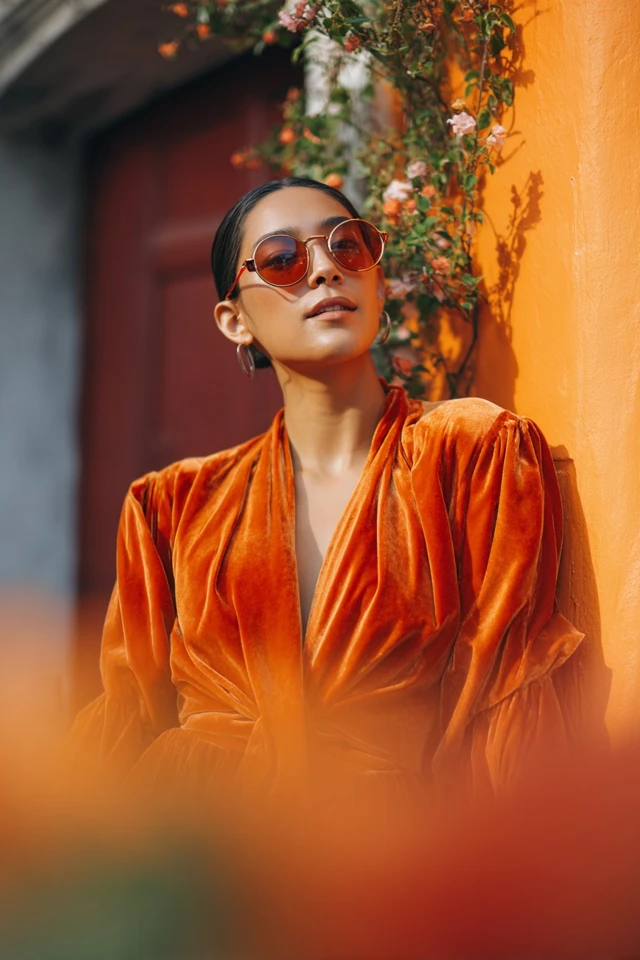
1. The co-ord set
A papaya velour top and flared or wide-leg pants, with tan mules and a woven bag. Keep it from reading as pajamas by choosing a defined waist and polished accessories.
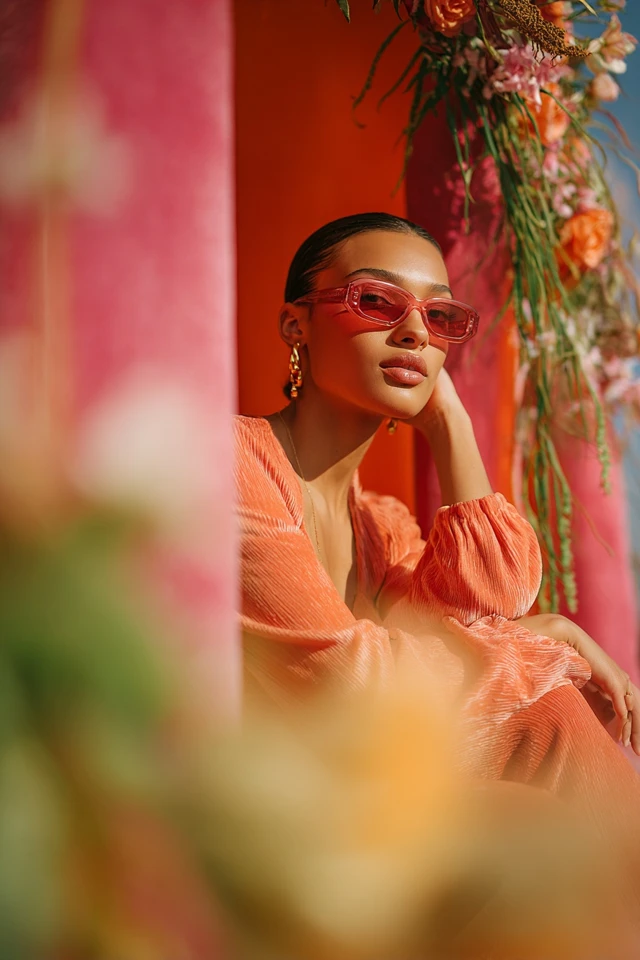
2. The wrap dress
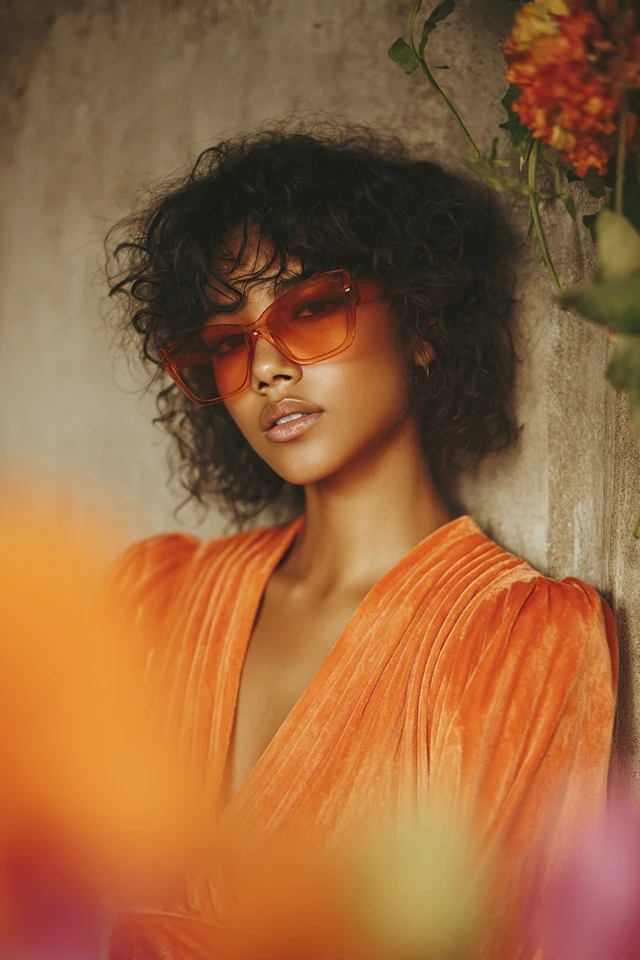
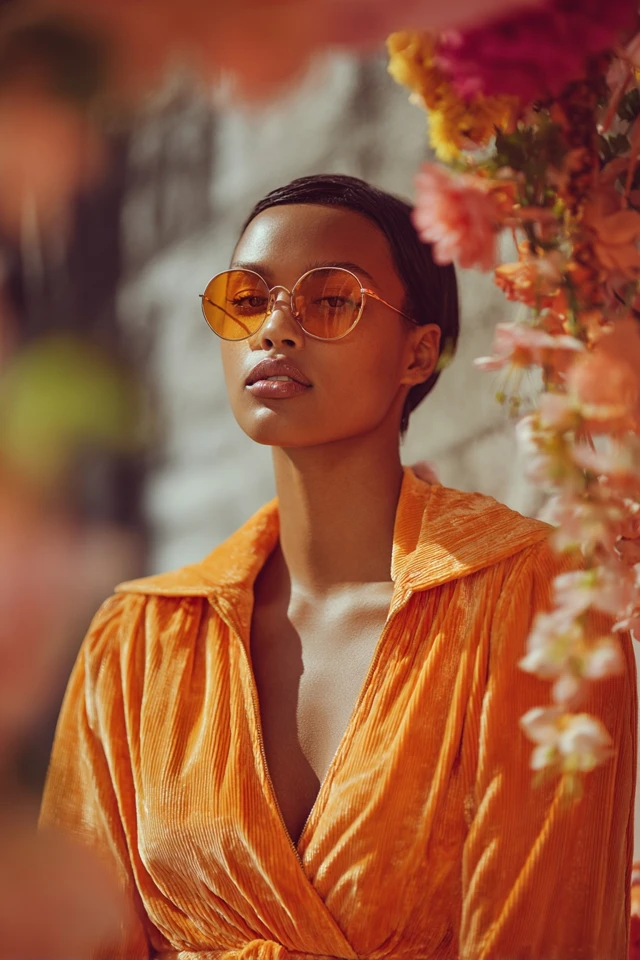
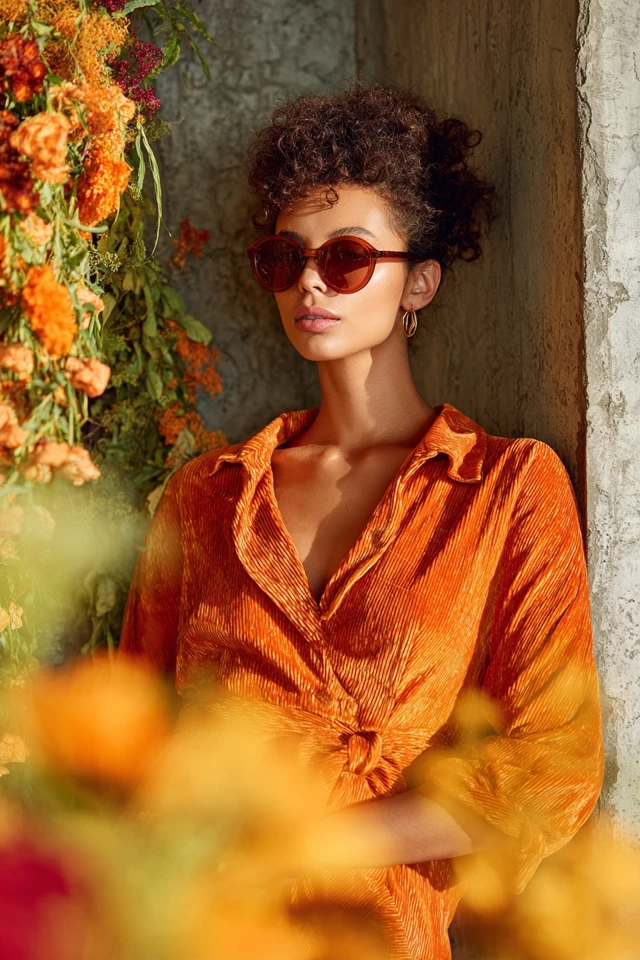
A wrap dress is the easiest way to dress velour up. Add gold hoops and flat or platform sandals. For the neckline and waist, the wrap does the shaping, so you need very little else.
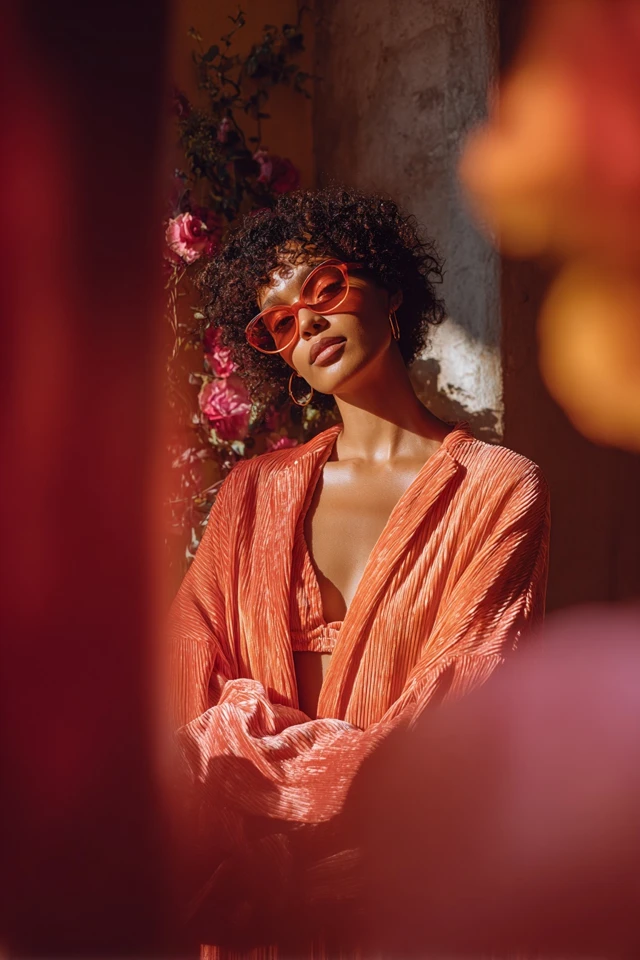
3. The chenille sweater outfit with denim
For a chenille sweater outfit with denim, pick a cream or sand chenille sweater and straight or wide-leg jeans in a mid or light wash. The sweater's fuzzy surface contrasts nicely with flat denim. Add a papaya scarf or bag if you want the color.
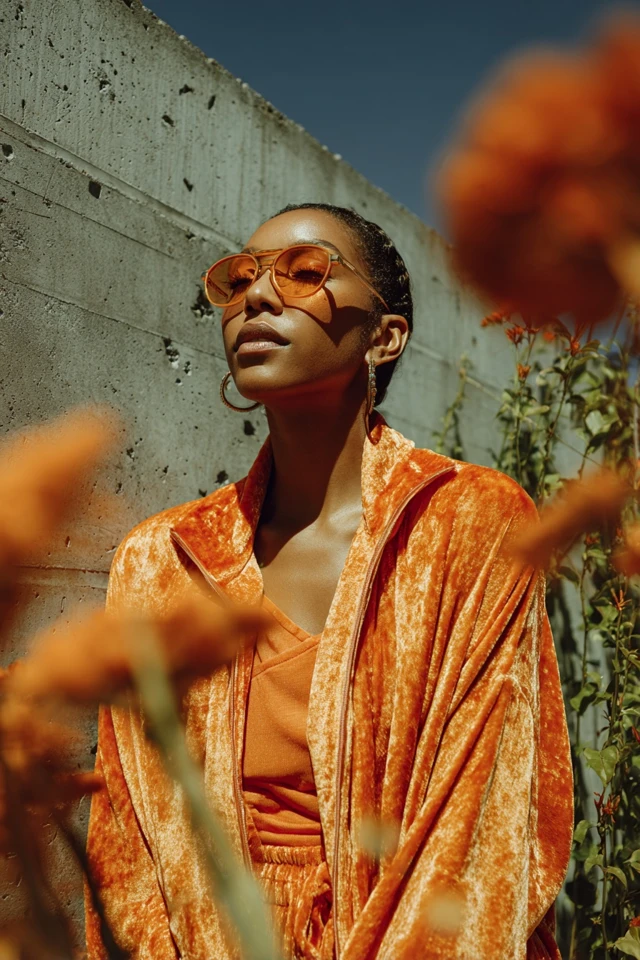
4. The velour skirt and blouse
A papaya velour midi skirt with a slit, a white or cream puff-sleeve blouse and neutral sandals. For a more classic version, swap the blouse for a white button-down and a pencil skirt.
5. The cardigan layer
A papaya velour or chenille cardigan over a white tee and light trousers gives you color with less commitment, and it comes off when the patio warms up.
How to style papaya velour so it looks intentional
- Keep accessories matte or textured, such as raffia, wood or brushed gold. Velour already reflects light.
- Ground the color with white, sand, camel or a muted mint.
- Choose one statement piece. Head-to-toe velour reads as loungewear unless it is clearly a matched set.
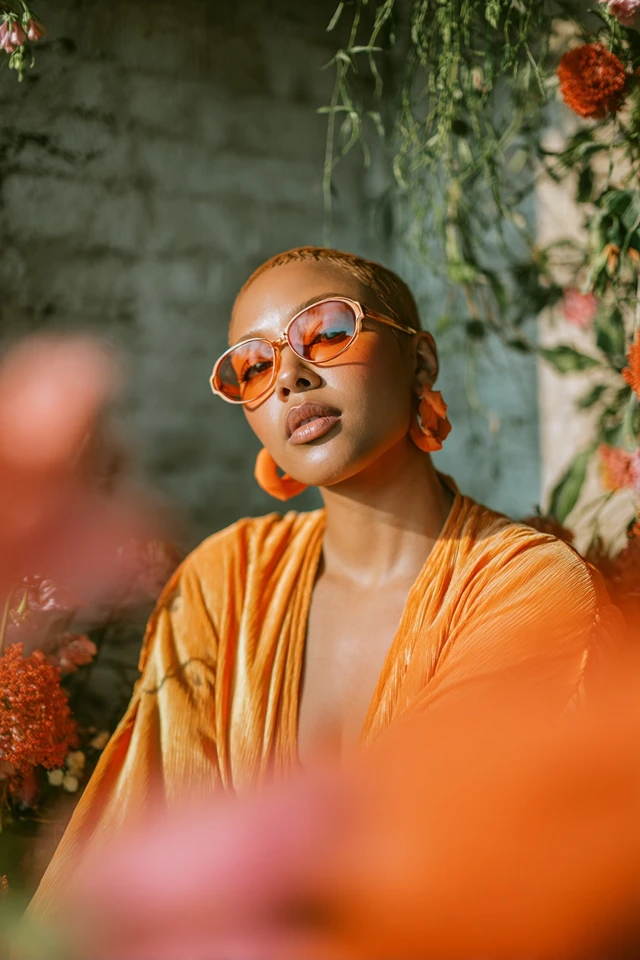
- Keep jewelry fine and makeup soft. The color does the talking.
Fit matters as much as color. A wrap or belted waist suits most shapes because it defines the middle without clinging. Wide-leg pants balance a fuller hip, and a cropped top with a high waist is a good proportion if you are petite. If a piece pulls across the hips or shoulders, that is a fit problem, not a you problem: go up a size or choose a looser cut.
As an architect trained in evidence-based design, I'd treat papaya as a warm accent near the face, such as a top or scarf, if you are unsure. Colors close to the face are the first thing people notice, so it is the lowest-risk place to try a bold shade.
For more brunch ideas, see these chenille brunch looks in ultramarine, ivory poplin options for a crisper feel, or colorful birthday brunch dresses. If you prefer a quieter palette, try elegant brunch looks.
Frequently asked questions
What are the downsides of chenille fabric?
It can snag, shed or pill with friction, and it runs warm. The pile can also look flattened if washed or pressed roughly, so check the care label.
Is chenille a good fabric for clothes?
Yes, particularly for sweaters, cardigans and loungewear where softness matters. It is less suited to sharply tailored pieces.
Is chenille fabric high end?
It depends on the quality. Dense, even pile that springs back when touched looks polished, while thin or patchy chenille looks worn quickly.
Is velour too heavy for warm weather?
Not if you choose lightweight blends and loose cuts like skirts, sleeveless tops or open-back dresses.
Filed under Outfit Ideas