Warm Winter Wool Dresses: How to Pair Wool and Silk
- Words by
- Julio Arco
- Published
- Reading
- 4 min
The easiest way to get warm winter wool dresses that still look dressed up is to pick wool for the body and silk for the parts that touch you or move: a lining, sleeves, or a skirt panel. Wool holds the warmth and the shape. Silk adds drape and a soft sheen.
Below: what each fiber does, which cuts and colors work, how to style the dress, and how to care for it.
Why do wool and silk work together in winter?
Wool is a good insulating layer and has body, so it holds a tailored line. Silk is smooth and light, so it falls and moves where wool would stand away from the body. Used together, each covers what the other lacks.
Through the lens of evidence-based design, I'd think about how the two surfaces read side by side. Matte wool absorbs light and looks calm. Silk reflects it and looks brighter, even in the same color. That contrast is why a small silk panel feels dressy without any embellishment.
Merino wool dresses for women are worth looking at if regular wool itches you, since merino fibers are usually finer and feel softer. Wool and silk both need gentle care, which I cover at the end.

Which silhouette should you choose?
Match the cut to where you will wear it.
- A-line: a wool bodice with a silk skirt looks polished and moves easily.
- Sheath: a fitted wool dress with silk sleeves or a silk insert suits the office.
- Fit-and-flare: a fitted top and a flowing skirt are comfortable and a little romantic.
- Wrap: adjustable, so it forgives changes in fit and layering.
- Maxi: a long wool dress with a silk overlay works for evening events.
For everyday winter wear, midi warm winter wool dresses are the practical middle: the hem lands below the knee, so boots cover the rest of your leg. Wool sweater dresses are the softer, casual option. For a slouchier take, see oversized sweater dresses with slouchy fits.

What colors and patterns suit wool and silk?
Neutrals such as gray, cream and taupe are the easiest and pair with almost any coat. Navy, charcoal and black read formal. Deep jewel tones like emerald, sapphire and burgundy look good on silk because the sheen deepens them. Icy blue or blush suit a softer look.
For pattern, keep the busier element small. Herringbone or tweed in the wool adds texture, while a delicate print on a silk panel adds interest without competing. A two-tone dress, such as gray wool with a blush silk skirt, gives contrast with no print at all.

Which details are worth looking for?
- A silk lining, which makes wool feel smoother against tights and skin.
- Sheer silk sleeves, for coverage with a lighter feel.
- Pleated silk skirts, which add movement against a structured bodice.
- Asymmetrical hems, if you want something more dramatic.
As an architect trained in evidence-based design, I'd treat the neckline as the first thing the eye reads. A high wool neck with a fluid silk skirt keeps attention up and balanced.

How do you style a wool and silk dress?
Coats and layers
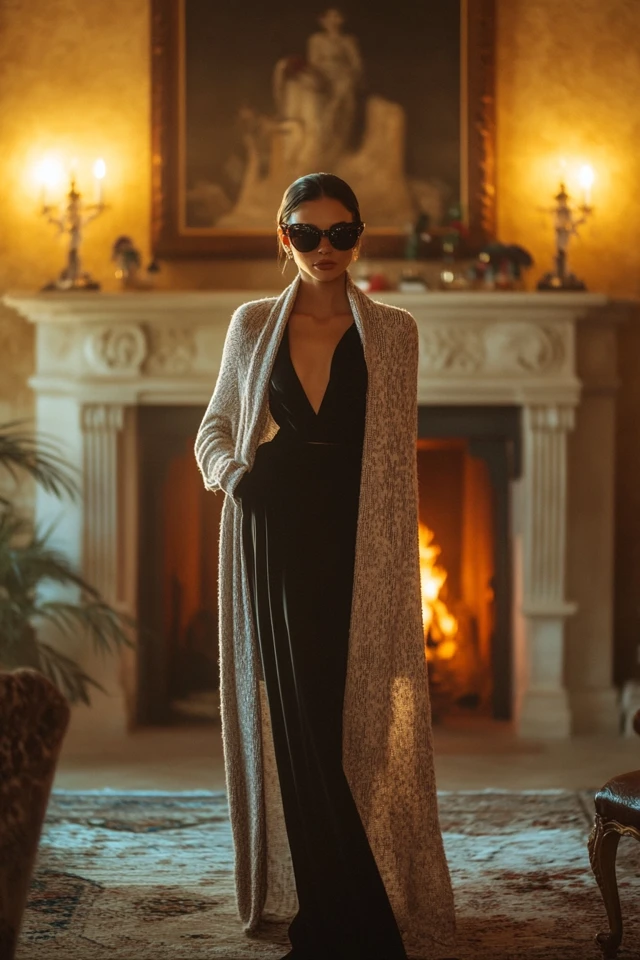
A long tailored coat in a neutral color is the simplest choice. A cape or wrap in a matching texture keeps the line clean. If you add a faux fur stole for evening, keep the rest simple. For more fiber combinations, wool and cashmere is a natural next step.
Next to the skin, Howdy Health at Texas A&M advises avoiding cotton because it absorbs moisture and can keep it next to your skin, making you cold. That is written for cold-weather exercise, but it is a fair reason to choose a silk or wool base layer for a long day outside.

Shoes
Leather or suede ankle boots suit shorter and midi hems in the daytime. Knee-high boots add warmth under an A-line or sheath. Pointed pumps work for formal evenings, though check the forecast first.
Jewelry and bags
Keep jewelry simple so the two textures stand out. Studs or small drops suit silk detailing, and a statement necklace suits a high-neck wool dress. A structured leather tote works for the day, and a small metallic or silk clutch for the evening.

Three outfit formulas
- Classic: navy wool sheath with ivory silk sleeves, navy suede pumps, silver earrings, and a camel coat.
- Romantic: blush A-line wool dress with a pleated silk skirt, nude heels, pearl studs, and a soft gray wrap coat.
- Modern: charcoal wool fit-and-flare with a black silk panel, heeled ankle boots, a gold cuff, and a black structured cape.

How do you care for wool and silk?
Follow the care label first. Most wool-and-silk dresses are dry-clean or hand-wash only, so skip the machine unless the label allows it.
For spills, treat them right away. The University of Georgia Extension notes that stains set by heat will be difficult to remove, so avoid hot water and the dryer on a fresh stain. The same page warns that ammonia damages silk and wool. If a stain is stubborn, take the dress to a professional cleaner.
Frequently asked questions
Can wool and silk dresses be machine-washed?
Usually not. Check the care label, and if it says dry-clean or hand-wash, follow that.
Are wool and silk dresses warm enough for outdoor events?
They can be, with a tailored coat or wrap over the top. A silk lining adds a little warmth without bulk.
Can I wear a wool and silk dress casually?
Yes. Choose a simpler sheath or wrap and pair it with ankle boots or flats.
Filed under Fabrics & Textures