Shirt Dress Outfits: How to Style an Oversized Shirt
- Words by
- Julio Arco
- Published
- Reading
- 4 min
An oversized button-down worn as a dress needs one decision to look intentional: where the waist goes. Belt it, leave it loose, or layer it, and the same shirt reads as three different outfits.
Below is how to style a shirt dress for the situations people ask about most: weekends, work, cold weather and dressier plans. Everything here works with a borrowed shirt or one bought as a dress.
What to wear with a shirt dress
Start with the shoe, since it sets the mood fastest. White sneakers or flat sandals keep the dress casual. Loafers make it school-or-office neat. Ankle or knee-high boots add structure to a loose shape.
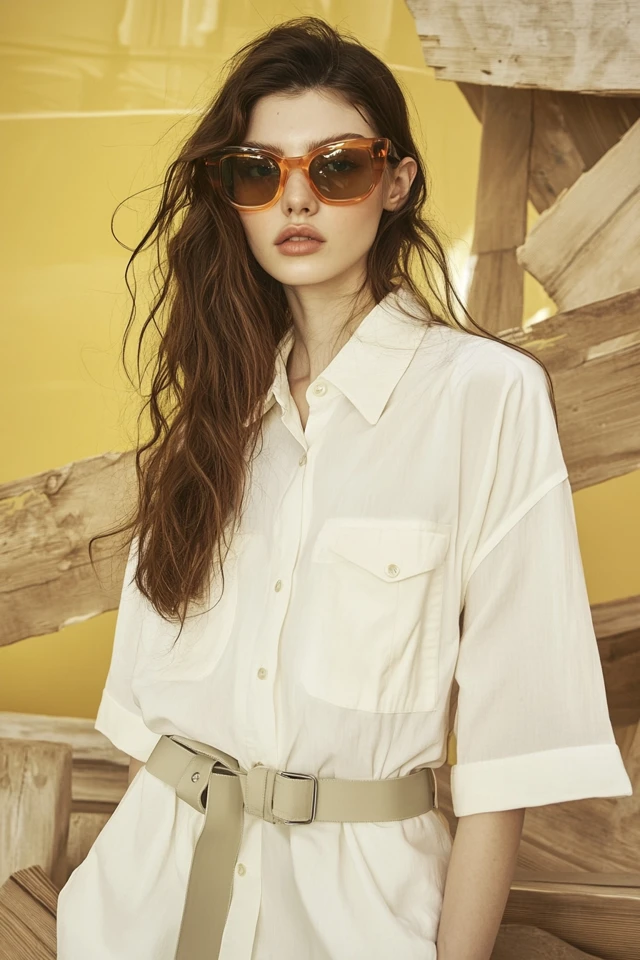
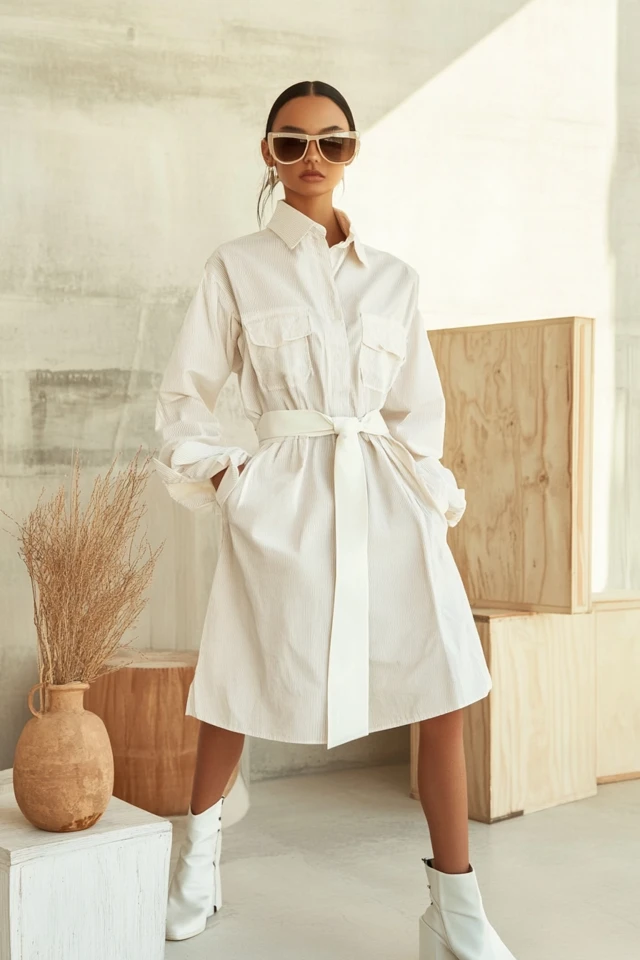
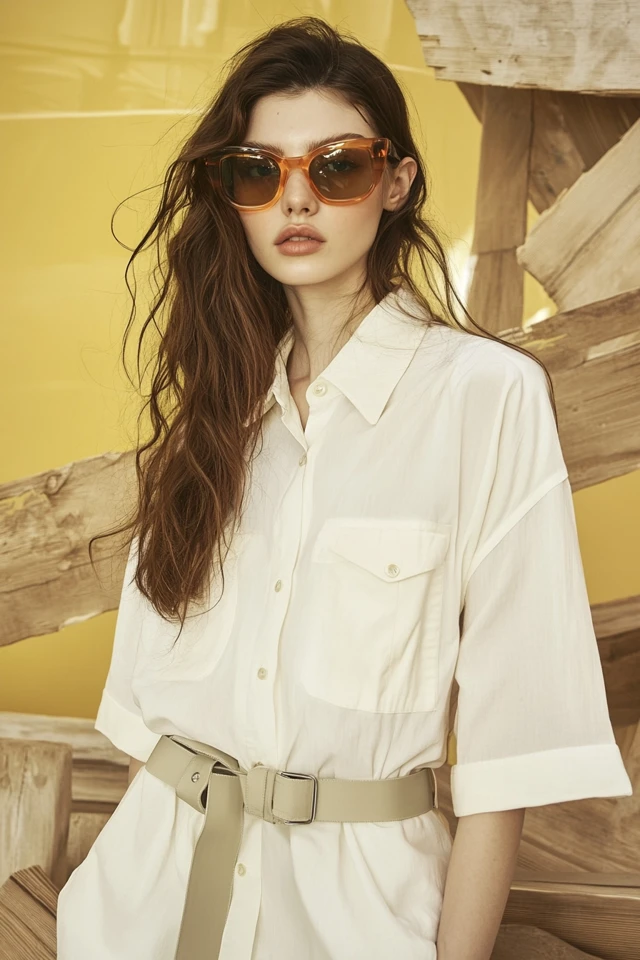
Then decide on the waist. A boxy shirt with no definition can swallow a frame, so a thin or medium belt at your natural waist is the simplest fix. Leave it unbelted when the fabric is stiff enough to hold its own shape, such as crisp poplin.
Keep accessories to one or two statements. A woven or leather bag, a watch, and a pair of earrings is plenty on a plain white shirt.
Which fabric and color work best?
Fabric decides how the shirt hangs. Linen and cotton poplin stay cool and hold a crisp line, while softer chambray and lightweight denim drape more and wrinkle less visibly. The 1970s offer a historical nod here: the FIT Fashion History Timeline describes a Halston dress as reminiscent of 1950s shirt dresses but made modern with ultrasuede, so the shape has been reworked in new materials before.
Through the lens of evidence-based design, I'd think about texture before color. A matte linen white and a glossy satin white are not read as the same color, because the surface changes how light reaches the eye.
- White: clean and flexible, and it takes any belt or shoe color.
- Pastels: soft against neutral sandals or white sneakers.
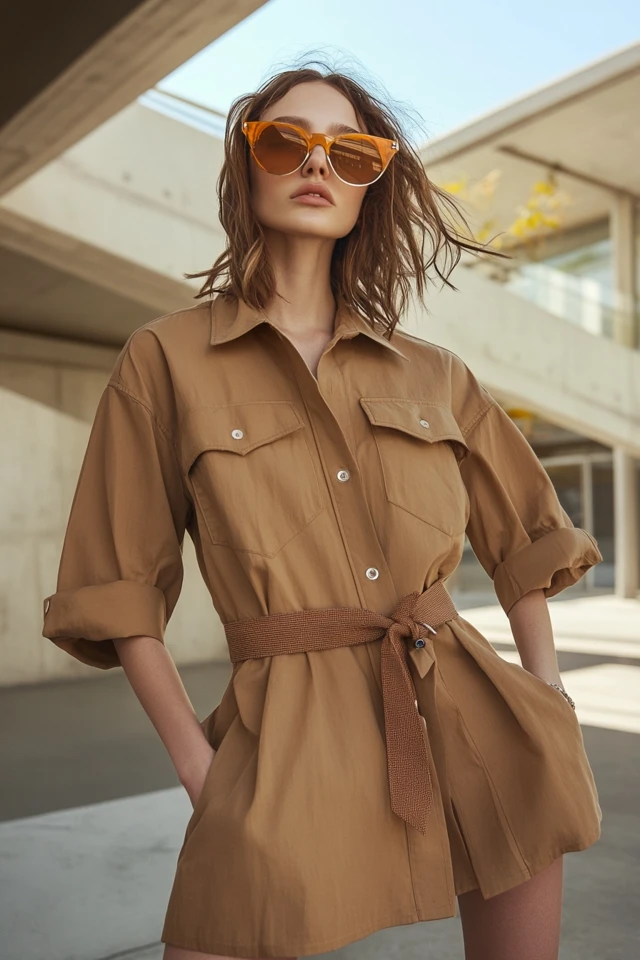
- Olive, camel and rust: warm tones that sit well with brown boots.
- Stripes and plaid: add interest on their own, so keep the accessories quiet.
- Denim and chambray: relaxed by default, easy with sneakers or boots.
How to choose the right length and fit
Check the shoulder seam first. On an oversized shirt it can drop a little, but the collar and yoke should still sit flat. If the shirt pulls across the chest or buttons gape, that is a sizing problem, not a body problem.
Length is where proportion shows up:
- Petite frames usually look balanced when the hem lands above the knee, with a belt to mark the waist.
- Tall frames can wear mid-thigh or longer, and can carry bigger cuffs or an uneven hem.
- Curvier shapes often like a shirt with a little shaping at the waist, or one that takes a belt without bunching.
- Straighter builds can add dimension with pleats, ruching or fuller sleeves.
As an architect trained in evidence-based design, I'd treat the hemline as the line the eye reads last, so it is worth getting right.
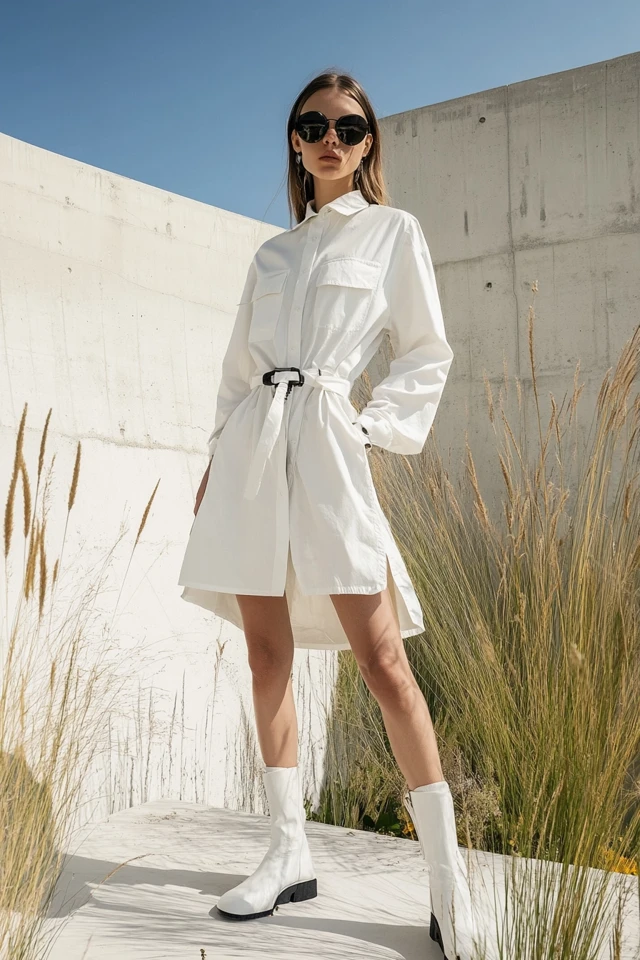
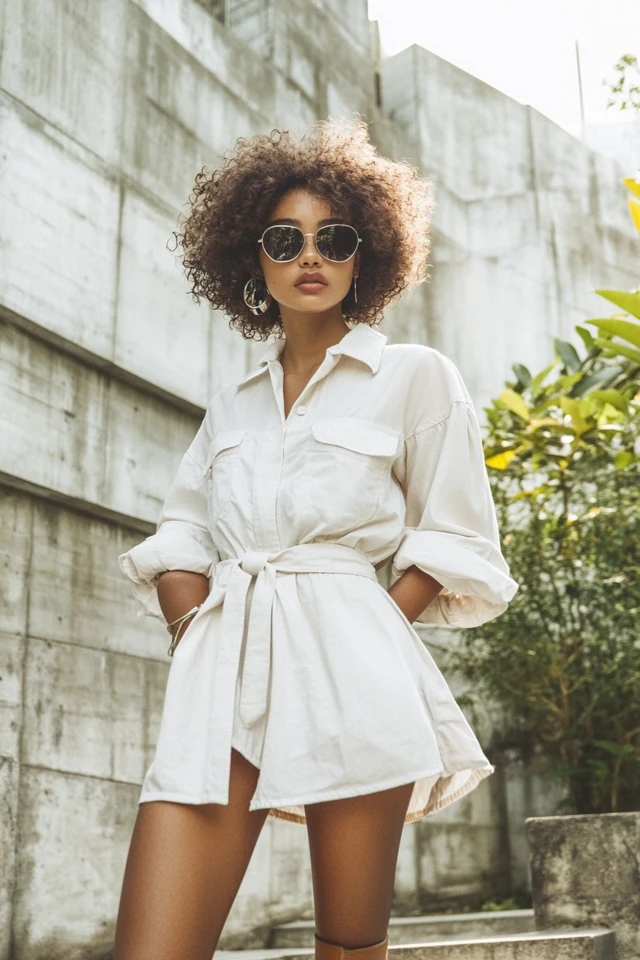
How to style a shirt dress for work
Choose a shirt dress in a solid or fine stripe, with a hem that sits at or just above the knee. Add a fitted blazer, opaque tights and loafers or low ankle boots. Button it higher than you would on the weekend and keep the belt slim.
If your office is more relaxed, a long cardigan or a trench over the top works with flats. For more layering ideas, see oversized button-down shirts for layering ease.
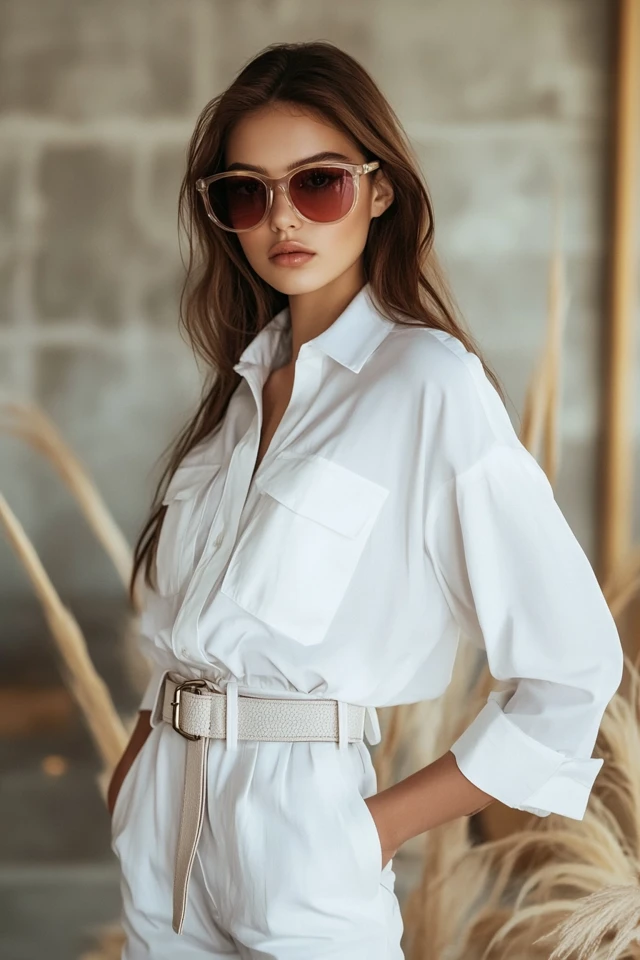
How to wear a shirt dress with tights and in cold weather
Opaque tights in black, navy or brown add warmth and keep the look continuous down to the shoe. Match the tights to your boots for a longer line. Leggings under a longer shirt also work, as long as the hem sits well past the top of the leggings.
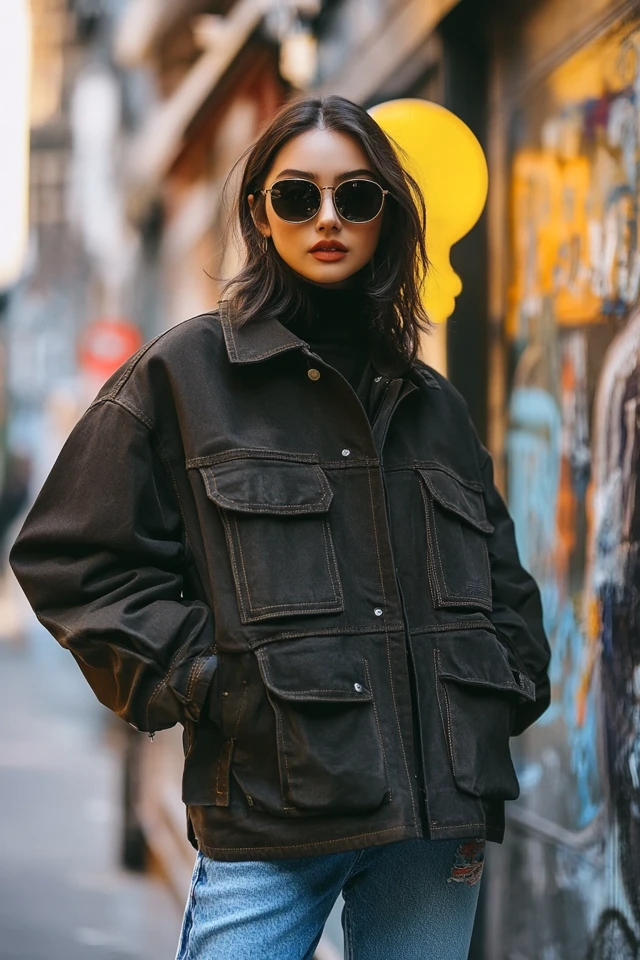
Over the dress, a denim jacket, cropped puffer or tailored coat all work. Turtlenecks layered underneath add warmth: wear a slim one in a neutral and let the collar show. Check the sleeves of the shirt will fit under the outer layer before you leave the house.
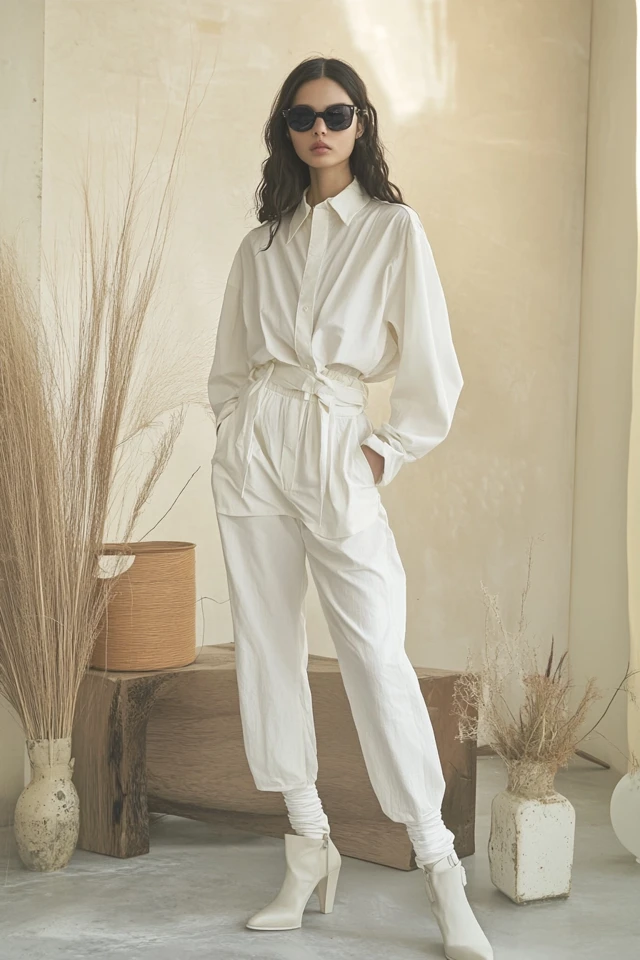
How to dress up a shirt dress
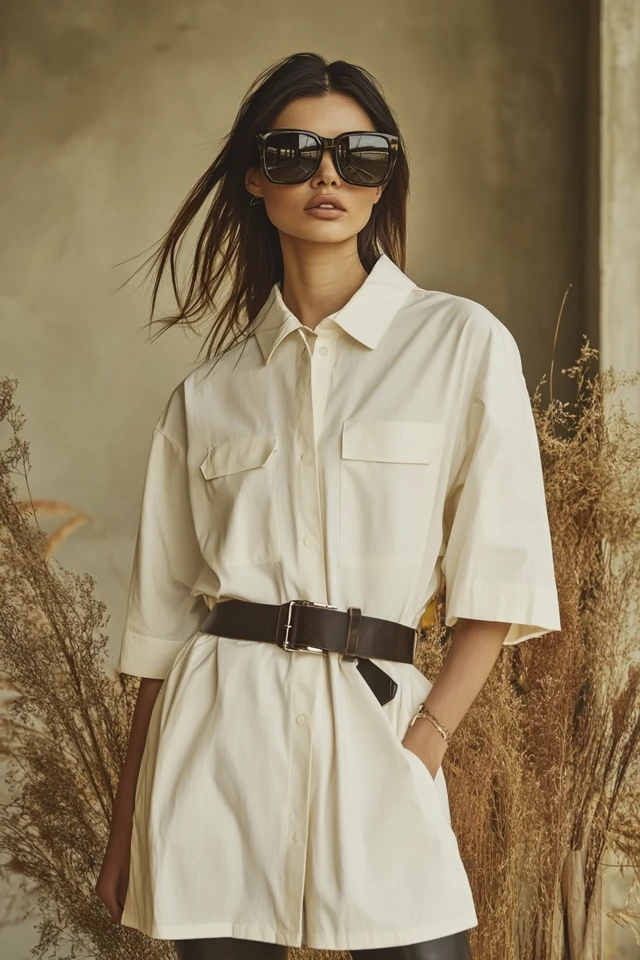
Three changes do most of the work: a wide belt in leather or a structured fabric, a heel or sleek boot, and polished jewelry such as gold hoops or a chunky necklace. A crisp, pressed shirt in a smooth fabric looks dressier than a wrinkled one, so steam it first.
For dressier events like a wedding, pick a solid color in a smoother fabric, add a heel and a small bag, and check the venue's dress code. For white shirts specifically, see dressing a white shirt up and down.
How to wear a shirt dress all year
In summer, wear it loose with sandals and a straw hat, or open over a swimsuit. In spring, pair it with a light jacket and sneakers. In fall and winter, add tights, boots and a coat. You can find more warm-weather ideas in crisp white button-down dresses for summer and oversized button-downs for spring.
Care is simple: follow the label, steam linen rather than ironing it hard, and hang the shirt on a padded hanger so the shoulders keep their shape.
Frequently asked questions
What can you wear with a shirt dress?
Sneakers, sandals, loafers or boots all work, depending on the occasion. Add a belt to define the waist, and layer with a blazer, denim jacket or trench when it is cooler.
How do you dress up a shirt dress?
Add a wide belt, a heel or sleek boot, and polished jewelry, and steam the fabric so it looks crisp. A solid color in a smooth fabric reads dressier than a casual stripe.
Are shirt dresses appropriate for the office?
Yes, in a tailored cut with a knee-length hem. Pair with opaque tights, a blazer and loafers, and keep colors neutral.
Can you wear an oversized shirt dress without a belt?
Yes, especially with a stiffer fabric that holds its shape. If it looks shapeless on you, a slim belt at the natural waist is the quickest fix.
Filed under Style & Fit