Beach Color Combinations for an Old Money Look
- Words by
- Julio Arco
- Published
- Reading
- 5 min
The beach color combinations that read as polished, old money style are low-contrast and built from the shoreline itself: ivory with navy, sand with olive, soft white with pale blue. Pick two or three colors, keep one of them neutral, and let texture do the rest.
Below are the pairings I'd start with, how to choose between them, and a few notes on fabric and sun cover so the outfit works for a whole day outside.
What colors look best on the beach?
Colors that borrow from sand, sea and sky look best, because they sit quietly against the scenery instead of fighting it. That means warm whites, sand, soft blues, navy and muted greens. Saturated neon or very busy prints tend to pull the eye away from you and toward the fabric.
These are also the popular beachy colors in most coastal wardrobes, which is why they are easy to mix. If a piece you own is close to one of them, it will probably work.
Sandy neutrals and warm whites
A neutral coastal color palette is the safest place to begin. Ivory, cream, beige and camel sit close together in tone, so the outfit looks calm even when the pieces are different.
Through the lens of evidence-based design, I'd vary the texture before adding a second color. A linen shirt, a cotton shorts set and a woven straw hat in near-identical sand tones look layered and rich because each surface catches light differently.
- Ivory shirt with beige linen trousers and tan leather sandals
- Cream cover-up over a camel one-piece
- White shorts with a sand knit top
One caution: pure optical white can look stark in strong sun. Warm white and ivory are softer next to skin.
Ocean blues and navy with white
Navy and white is the classic. Navy gives you a dark anchor, white keeps it light, and the contrast is clear without being loud. It suits a beach beautifully because both colors echo water and foam.
For a gentler version, swap navy for a dusty or chambray blue and pair it with cream instead of white. Light blue with ivory is easy to wear all day, and a navy blazer or lightweight jacket over a swimsuit handles the walk from beach to dinner.
Which colors go with beach blue?
These are the colors that go with beach color when that color is blue: white, cream, sand, camel, soft yellow and olive. Blue and a warm neutral, like sand, is the pairing I'd reach for first, since warm and cool balance each other.
Soft yellows and sun-kissed accents
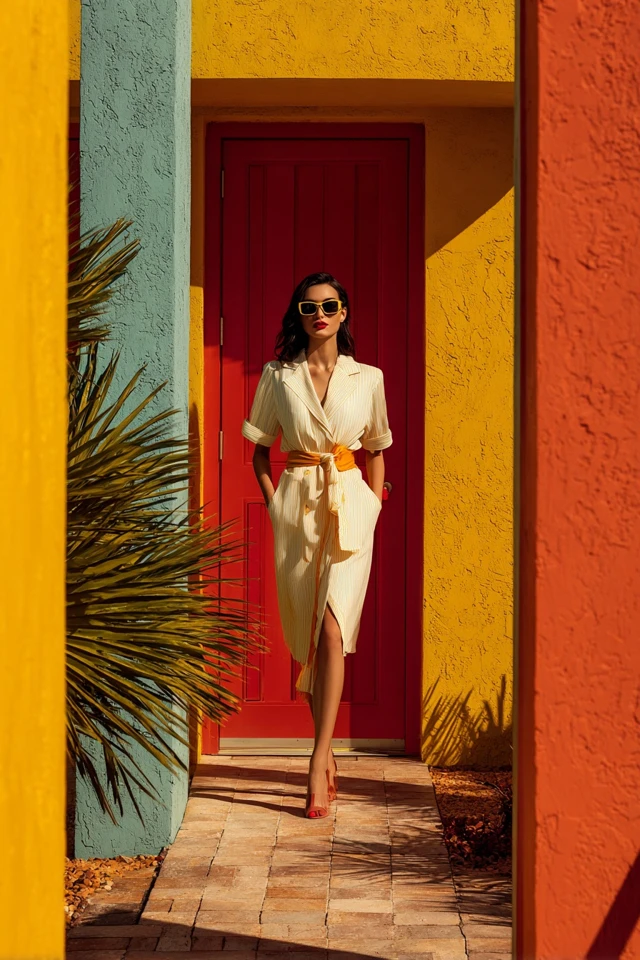
A butter or pale lemon yellow is the easiest bright beach color palette to wear. Keep it to one piece, such as a shirt or a scarf, and let the rest be white, navy or sand.
Yellow next to blue reads fresh. Yellow next to beige can look washed out, so add a stronger anchor like navy or a darker brown sandal.
Sage, olive and seaside greens
Muted green sits between the sea and the dune grass, so it fits naturally. Sage with ivory is soft. Olive with beige is earthier and a little more tailored. Dusty rose with camel is a warm option if blue is not your color.
If you are choosing by complexion, a common starting rule is cool-toned navy and icy neutrals for cooler skin and camel and olive for warmer skin. Treat it as a starting point and check it in daylight, since sunlight changes how every color reads.
How do you choose a beach color palette for clothes and dresses?
For beach color combinations in clothes, use a simple formula: one dominant neutral, one supporting color, one small accent. A white linen dress with a navy bag and tan sandals follows it. So does a sand shirt dress with a sage scarf.
For a dress specifically, solid colors or very small prints look more refined than large tropical ones. If you want a pattern, keep it in the same palette as your accessories.
Beach color palette for family photos
Pick one palette and let everyone choose within it: white, cream and light blue, or sand, navy and sage. Matching exactly looks stiff. Related shades look relaxed and photograph cleanly against sand and water. Avoid neon and heavy logos.
Fabric and fit matter as much as color
Linen, cotton and silk breathe in heat and drape softly, which is part of why this style looks effortless. Fit matters more than the label: shoulders that sit where your shoulder ends and trousers that skim rather than cling.
A looser silhouette also helps comfort. Wide-leg trousers, a wrap dress or a relaxed linen shirt suit most body shapes, and a belt lets you define the waist if you want to.
Sun protection that fits the palette
A long-sleeve shirt, a wide-brim hat and a cover-up fit this aesthetic and also protect you. According to the Skin Cancer Foundation, a UPF of 30 to 49 offers very good protection, while UPF 50+ offers excellent protection. Dermatologist Anna L. Chien, MD, notes on the same page: "A hat with a 3-inch brim protects the top of your scalp, ears and face."
Check the label for a UPF rating if you want it, and ask your dermatologist about anything specific to your skin.
Where to go next
If you like this palette, the casual old money looks and the old money capsule wardrobe use the same colors off the sand. For a livelier take, compare the Y2K beach day wardrobe edit, and for something softer see romantic old money outfit ideas.
Frequently asked questions
Which color goes with beach color?
White, cream, sand and navy go with almost any beach shade. Soft yellow and olive work as accents against blue or sand.
What are some popular beachy colors?
Sandy beige, ivory, ocean blue, navy, sage green and soft yellow are the most common. They all come from the sea, sand and sky.
What colors look best on the beach?
Low-contrast, natural tones such as warm white, sand, light blue and muted green look best. They blend with the scenery and photograph cleanly.
How many colors should a beach outfit have?
Two or three is usually enough: a dominant neutral, a supporting color and a small accent. More than that can look busy.
Filed under Outfit Ideas