Workwear Blouse Color Palettes for Work and Weekend
- Words by
- Julio Arco
- Published
- Reading
- 4 min
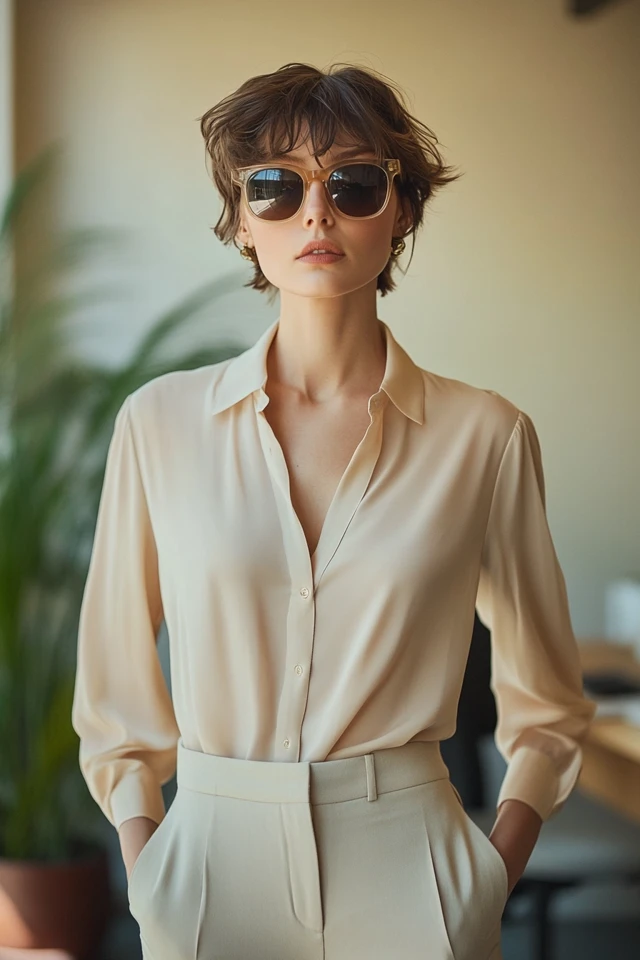
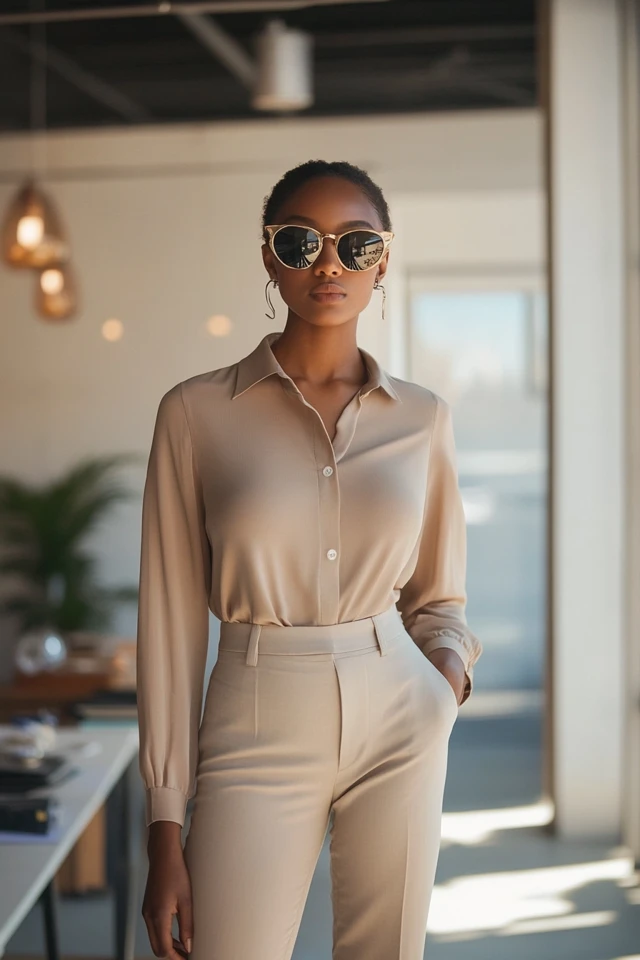
The safest base for workwear blouse color palettes is a neutral: white, ivory, beige, taupe or soft gray. These shades read as clean and professional, sit well under a blazer, and look relaxed enough with jeans on Saturday.
Below you'll find which neutrals to choose, how to build a palette around them, which accent colors work, and how to restyle one blouse for the weekend.
What is the best color for work shirts?
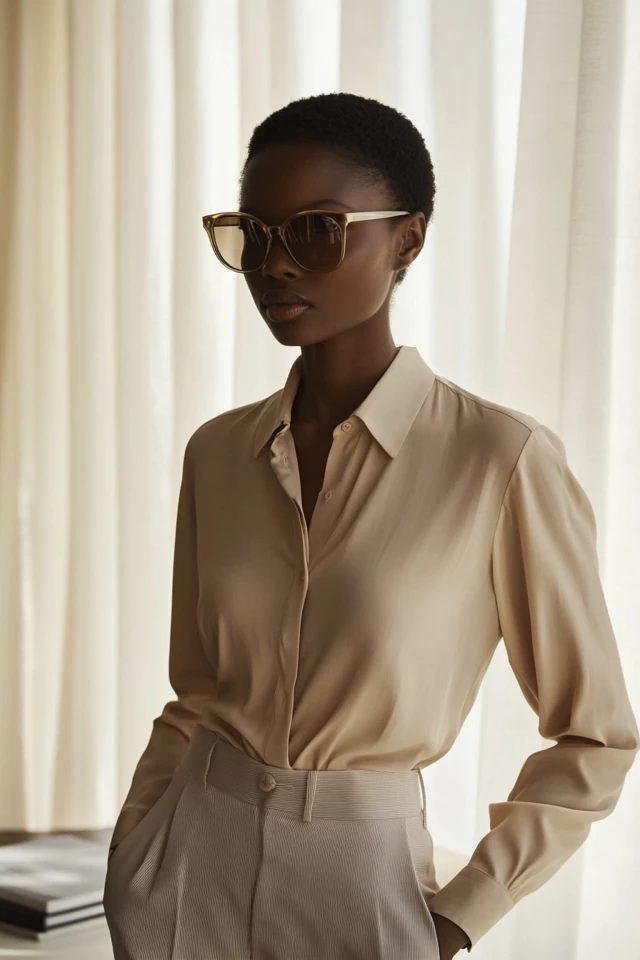
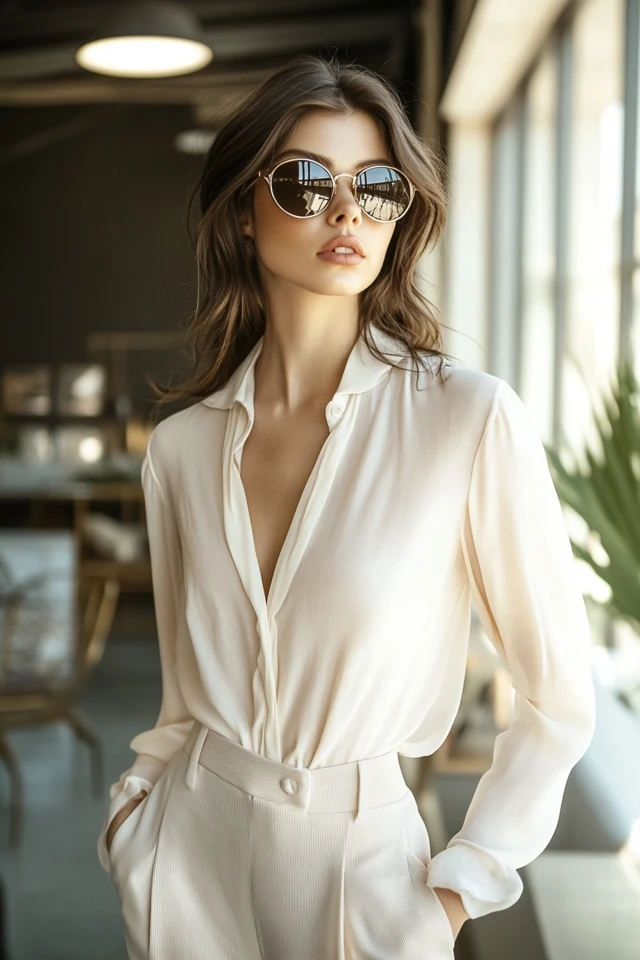
For most offices, the best color for work shirts is white or ivory, followed by soft gray and light beige. They are low in contrast with tailoring, so the eye reads the whole outfit before it reads the blouse.
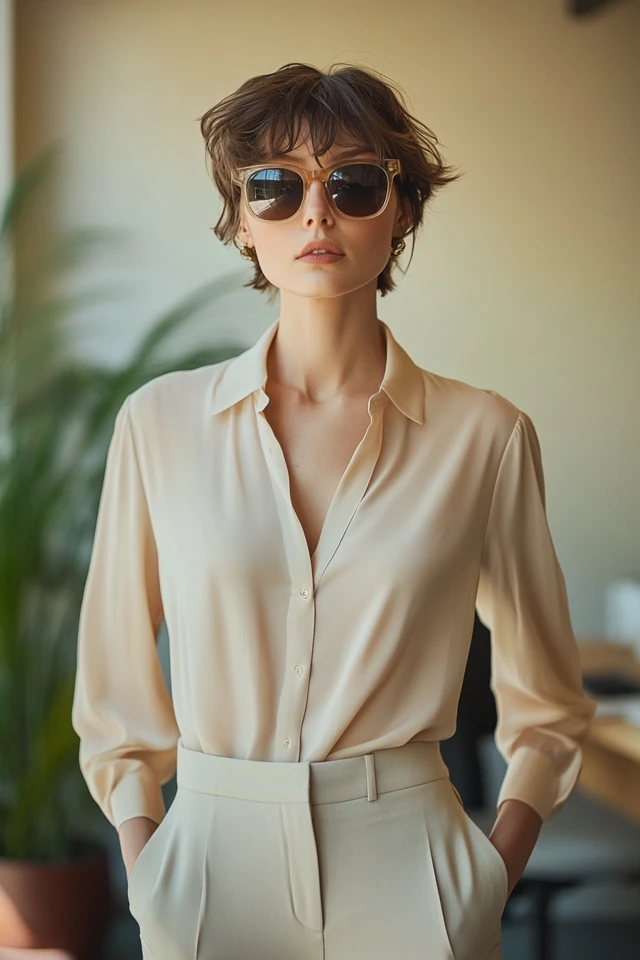
Pick by how the shade sits next to your face. Crisp white gives the most contrast. Ivory and cream are softer and tend to look warmer. Cool gray looks sharp but can feel flat if you're tired, so it often does better with a bit of texture or a brighter accessory near the face.
Blush and very pale pink work as neutrals too, as long as the tone stays muted.
Neutrals that anchor a professional work wardrobe
Think of professional work wardrobe colors as a foundation plus a few accents. Two or three neutral blouses cover most weeks.
- White or ivory: the crispest option, good under navy, black and charcoal.
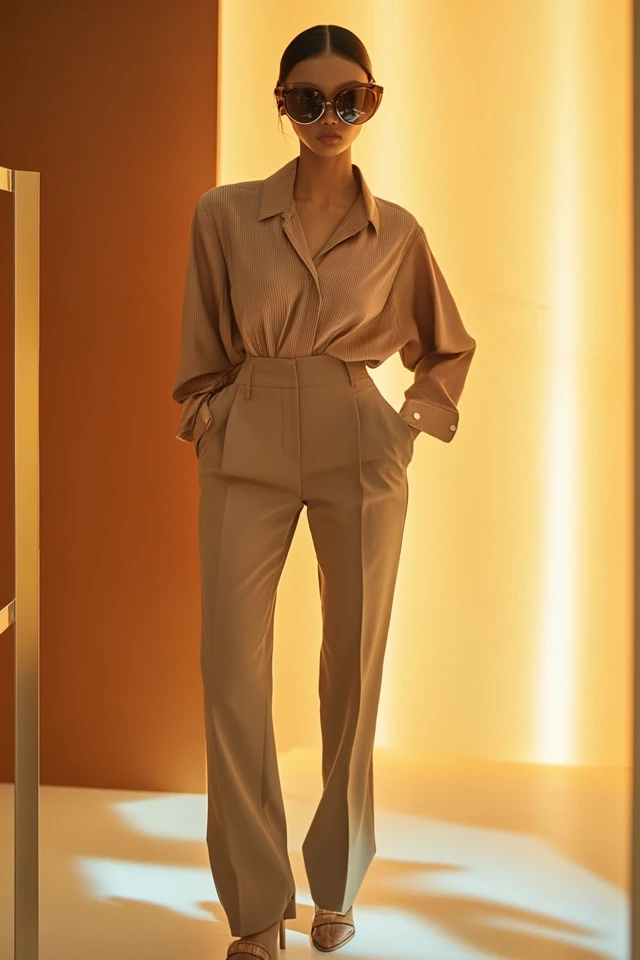
- Beige or taupe: warmer and softer, pairs with camel, brown and olive.
- Gray: cool and modern, works with black, navy and burgundy.
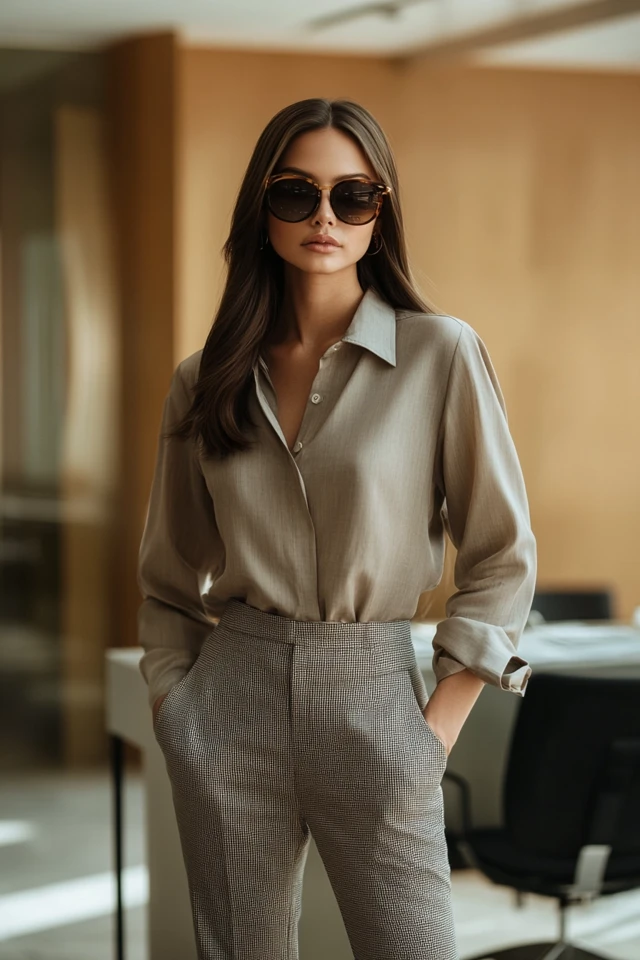
Through the lens of evidence-based design, I'd look at texture before shade. A matte cotton poplin and a glossy satin in the same ivory do not read as the same color, because the surface changes how light reaches the eye. Satin looks dressier, poplin looks more businesslike.
How to build a work outfit color palette
A simple method is the 3-3-3 idea people search for: roughly three tops, three bottoms and three layers or accessories that all mix with each other. There is no official rule, so treat it as a planning aid, not a law.
In practice, pick one dark base (navy, charcoal or black), one or two neutral blouses, and one accent color. Everything then combines without much thought.
Combinations that work
| Blouse | Pair with | Effect |
|---|---|---|
| Ivory | Navy trousers, camel blazer | Soft and classic |
| White | Charcoal suit | Sharp and high contrast |
| Taupe | Olive or chocolate brown | Warm and tonal |
| Gray | Burgundy cardigan or blazer | Modern with one rich accent |
Which accent colors suit the office?
Accents are where a neutral blouse gets personality. For a navy and burgundy work outfit, keep the blouse ivory or light gray, then wear navy trousers with a burgundy blazer or belt. The two dark tones sit close in depth, so the look stays calm.
Teal with off-white is another clean pairing, covered in this post on teal and off-white work blouses. Muted greens, dusty blues and deep reds are all reasonable colors to wear to the office. Keep them one step softer than you'd wear out at night.
Colors to avoid, or use carefully
Neon shades, very glossy fabrics and strongly sheer materials tend to pull attention away from the person. Pure bright red can work, but in small doses. If a color feels loud in the mirror, move it to a scarf or a bag.
Clothing also carries expectations. In a Frontiers in Psychology study on uniforms, wearing a Red Cross uniform led to more prosocial behavior compared to civilian clothing. That study is about uniforms, not blouses, but it shows that what we wear can shape how we act as well as how we are read.
Fabric, neckline and fit
Silk and satin drape well and suit formal settings. Cotton poplin is crisp and breathable. Linen is relaxed and wrinkles, which some offices accept and others don't. Chiffon and georgette layer well.
For necklines, a collared button-up is the safest for work. A V-neck is flattering with jewelry, and a pussy-bow adds polish. As an architect trained in evidence-based design, I'd treat the neckline as the first thing the eye reads, so choose it before you worry about shade.
If a blouse pulls across the shoulders or gapes at the bust, that is a fit problem, not a you problem. Check the shoulder seam first, then size up or try a style with a bit of stretch. More ideas are in timeless button-up blouses.

Turn a work blouse into a weekend look
- Workday: tuck into tailored trousers, add loafers and a blazer.
- Weekend: untuck, roll the sleeves, wear with high-waisted jeans and sneakers.
- Dinner: pair with a satin midi skirt or leather pants and heels.
- Cool weather: layer under a chunky cardigan or coat with ankle boots.
Shoes do much of the switching, so see the best shoes to transition between work and weekend. For a wider base, try a capsule wardrobe for weekend looks.

Care so neutrals stay crisp
Light shades show wear quickly. Follow the care label, since silk often needs hand washing or dry cleaning. Spot-clean small marks, steam or iron before wearing, and hang blouses on padded hangers.
For a deeper look at tonal outfits, see neutral blouses for polished workwear.
Frequently asked questions
What is the 3-3-3 rule for clothing?
It is an informal planning idea: choose about three tops, three bottoms and three layers or accessories that all mix together. It is a way to keep a work wardrobe simple, not an official rule.
What is the best color for work shirts?
White, ivory, soft gray and light beige are the most dependable. They match navy, black and charcoal tailoring and rarely clash with accents.
Can I wear a neutral blouse casually?
Yes. Untuck it, roll the sleeves and wear it with jeans and sneakers.
How do I add personality to a neutral blouse outfit?
Use one accent: a scarf, statement earrings, a belt or colored shoes. Keep everything else quiet.
Filed under Wardrobe Basics