Color Blocking Outfits: How to Wear Bold Colors Together
- Words by
- Julio Arco
- Published
- Reading
- 4 min
Color blocking means wearing two or more solid, contrasting colors in large, clean sections instead of small prints or tiny accents. The quick formula: pick two or three colors, keep each one in a solid piece, and let one of them lead.
If bold color feels risky, start with one bright piece next to a neutral. You can add a second bright color once that feels natural.
What is color blocking in an outfit?
It is an outfit built from big fields of flat color. A cobalt top with tomato-red trousers is color blocking. A navy blazer with a tiny coral scarf is a color pop, which is a gentler cousin of the same idea.
The idea is older than most people think. The Fashion Institute of Technology's timeline describes parti-color, the combination of different colors within the same garment along the vertical axis, and notes that the fashion was prevalent in Medieval Europe from the late twelfth century until the end of the fifteenth century. Today's version is simply split across separate pieces.
How to color block outfits: a simple method
- Choose an anchor piece, such as a trouser, skirt or dress, in a color you already like.
- Add a second color in a top or jacket. Keep the pieces solid so the colors read clearly.
- Break the blocks with one neutral: shoes, a belt or a bag in white, black, tan or denim.
- Check the result in daylight and in a mirror from across the room. If your eye jumps around, remove one color.
Fabric matters here. Through the lens of evidence-based design, I'd match the finish of your pieces before worrying about the colors. A matte knit beside a glossy satin in the same hue will not look like a matching pair, because the surface changes how light reaches your eye.
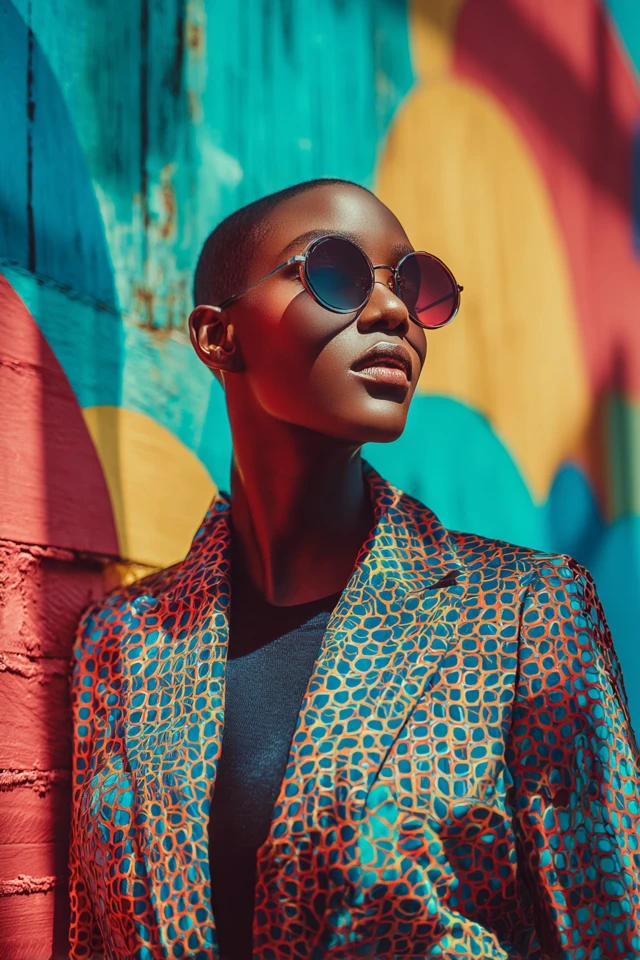
Which colors go together?
Use the color wheel as a starting point
Opposites on the wheel give the loudest contrast: blue and orange, purple and yellow, red and green. Neighbors, such as teal and green or pink and orange, feel softer and are easier to wear. Navy with coral and olive with mustard are two pairings that work on most people.
Keep saturation consistent
Two colors at the same intensity look planned. A neon pink next to a dusty sage looks like two different outfits. Match brights with brights and muted tones with muted tones.
Warm vs cool tone color blocking
Warm colors (red, orange, mustard) tend to advance and feel energetic. Cool colors (blue, green, violet) tend to recede and feel calmer. Pairing one of each creates tension, which is the point. Pairing two warm or two cool shades gives a quieter, more blended result.
For skin tone, I'd treat the color nearest your face as the one that matters most. Hold the top up in natural light and see whether it makes you look rested or tired, then let the lower half be the bolder or safer choice as you prefer.
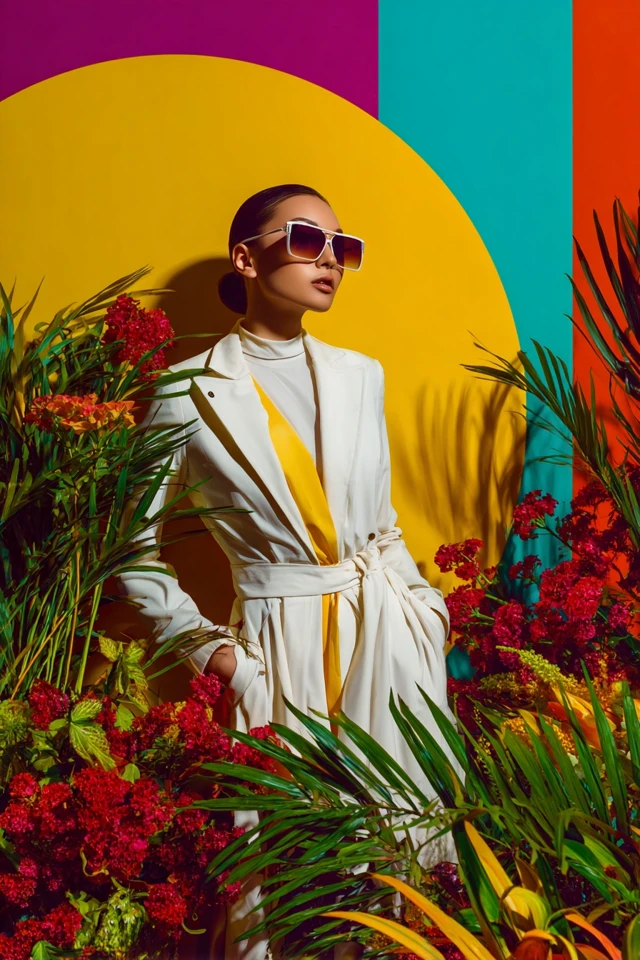
Color blocking examples to try
- Cobalt blouse with camel trousers and white sneakers.
- Tomato-red knit with pink skirt, a combination that works because the colors are neighbors.
- Emerald dress under a cream trench, with a cognac bag.
- Lilac matching set with a butter-yellow bag for a softer, pastel version.
- Navy blazer, orange tee and straight-leg jeans for work or weekends.
For summer, lighter fabrics like linen and cotton in pastels or bright primaries feel cooler to look at and to wear. Men can use the same logic: a rust overshirt over a blue tee with stone chinos is color blocking in quiet form.
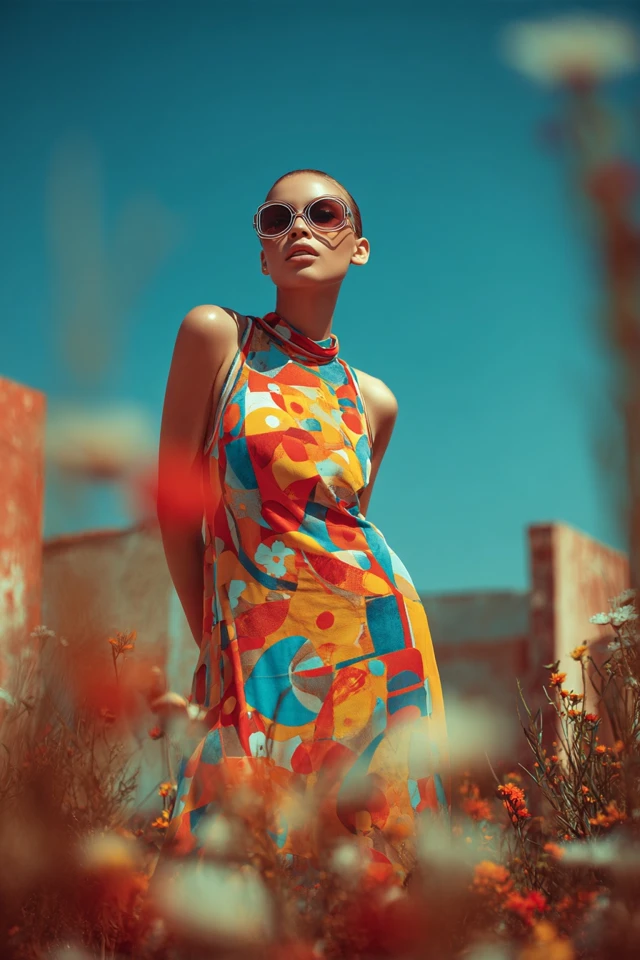
Color blocking do's and don'ts
Do
- Limit yourself to two or three colors.
- Choose tailored or clean-lined separates so the blocks stay crisp.
- Use a belt, shoes or a bag as a small block that ties the halves together.
- Anchor with a neutral if you want the colors to stand out more.
Don't
- Mix busy prints into the blocks; they muddy the effect.
- Put your boldest color where you want less attention. A bright block sits where the eye lands first.
- Use four or more competing colors unless you are deliberately going for a loud look.
A note on proportion: a top and bottom of equal visual weight cut you at the middle. If you prefer a longer line, try a column of one color with a contrasting jacket or shoes.
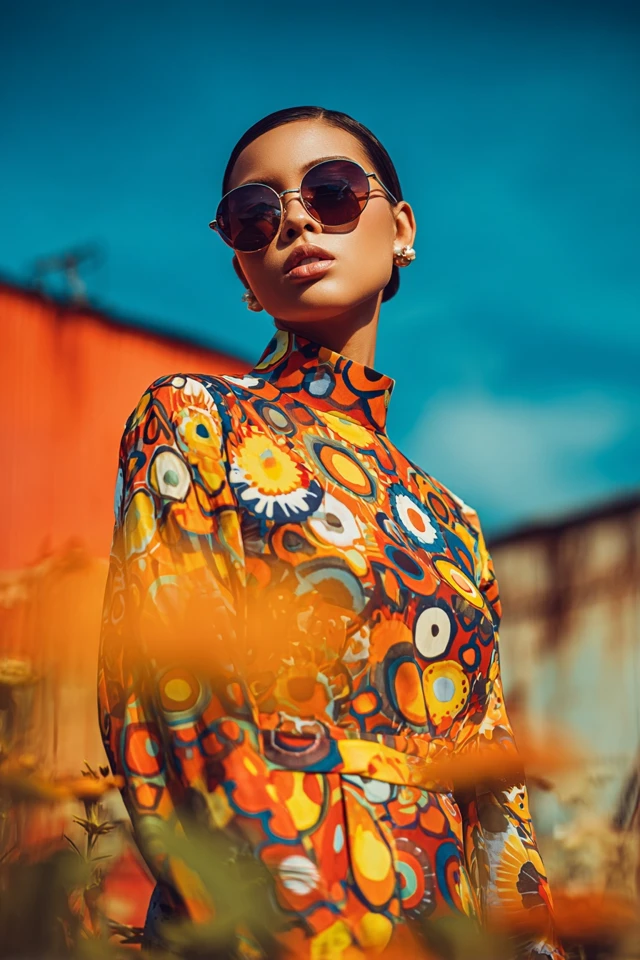
Keep going with related ideas
If you want to start with less color, see neutral outfits with a pop of color and minimalist color pop looks. For all-in brights, monochrome bright colors styling tips covers the single-hue approach, and the color pop capsule wardrobe shows how to build a small set of pieces that mix easily.
Frequently asked questions
What is color-blocking in an outfit?
It is wearing large solid areas of contrasting colors together, usually in separate pieces such as a bright top and different-colored trousers.
Is color-blocking outdated?
The idea has been around for centuries and keeps returning in new forms. Simple, well-fitted pieces in colors you like rarely look dated.
What is the 3-3-3 rule for outfits?
It usually means building an outfit from three tops, three bottoms and three pairs of shoes that all mix. It pairs well with color blocking because a small set of colors is easier to combine.
Filed under Outfit Ideas