Minimalist Winter Outfits: A 10-Piece Capsule Guide
- Words by
- Julio Arco
- Published
- Reading
- 5 min
Minimalist winter outfits come down to a small set of neutral pieces that all work together: a couple of knits, one pair of good trousers, dark jeans, a coat and boots. With about ten items in a tight palette, almost any combination looks finished.
If your closet feels full but getting dressed still feels hard, that is a system problem, not a taste problem. Below is a simple ten-piece plan, then the formulas that make it work.
What is a minimalist winter wardrobe?
It is a small, cohesive set of clothes chosen so that every top works with every bottom. Minimalism in fashion has been around for a while: the Fashion History Timeline from FIT notes that in the 1990s women's fashion became more streamlined as minimalism became de rigueur. Calvin Klein described it in an exhibition at the Museum at FIT as "a philosophy that involves an overall sense of balance, knowing when to take away, subtract."
For winter, that means fewer pieces but better fabric, because the clothes carry warmth and texture, not just color.
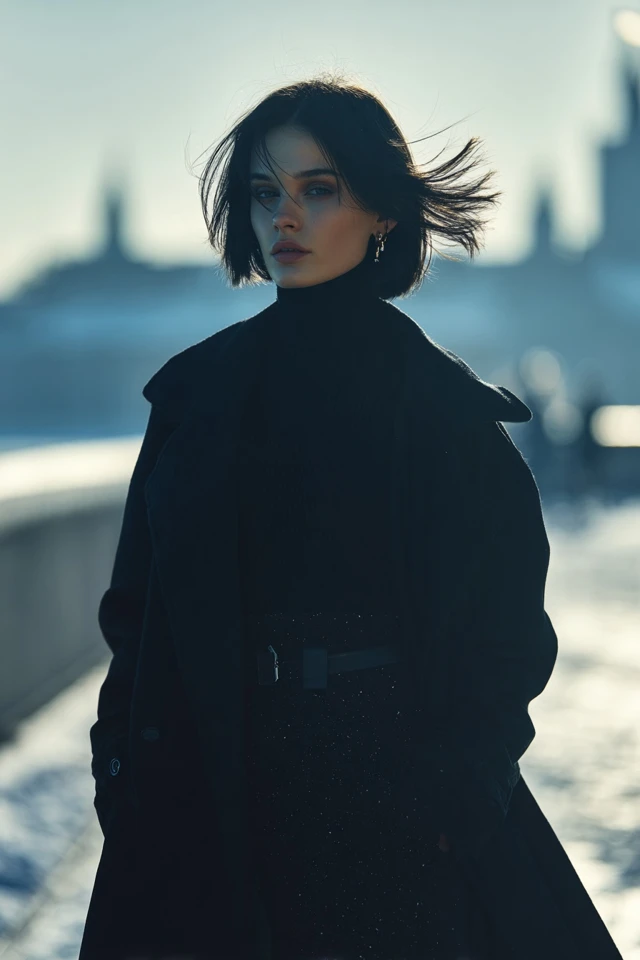
The 10-piece winter capsule wardrobe
This is a starting list for a minimalist winter capsule wardrobe. Swap items to suit your climate and work.
- A fine-gauge crewneck or turtleneck in black, charcoal or navy
- A chunkier knit in cream or oatmeal
- A crisp white or pale blue shirt
- A long-sleeve base tee in a soft, thin fabric
- Tailored trousers in charcoal or black
- Dark, straight-leg jeans
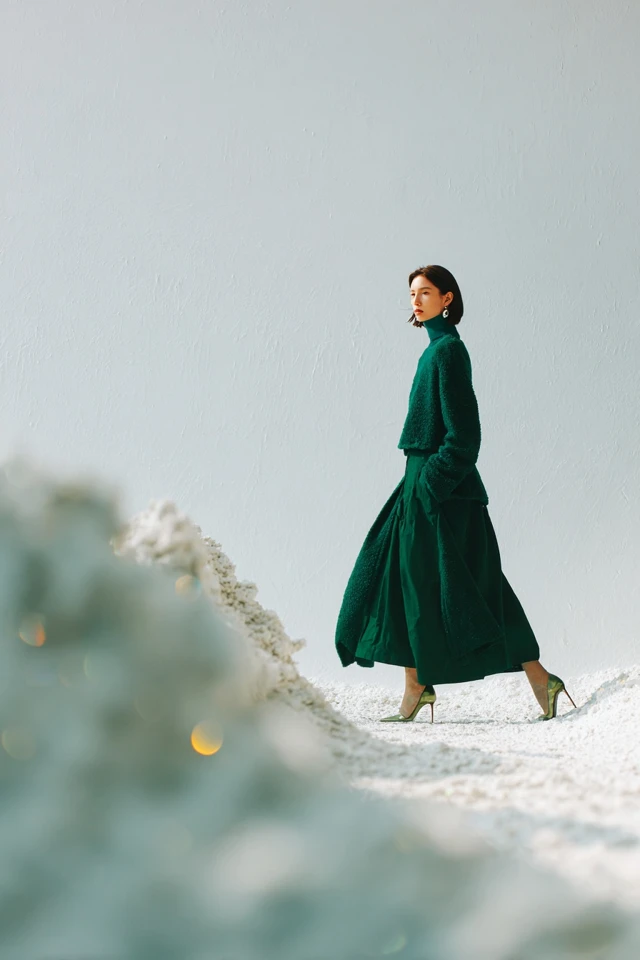
- A midi skirt or knit dress in a neutral
- A wool coat in camel, gray or black
- Leather ankle boots
- One scarf in a textured wool
Gloves and a hat are extras, and they are the easiest place to add a single accent color.
Staple tops and knitwear
Knits do most of the work in winter, so fit matters. The shoulder seam should sit at the edge of your shoulder, and the hem should land at the hip or just below. A sweater that pulls across the upper arm is a fit problem, not a you problem.
Through the lens of evidence-based design, I'd pick a matte, slightly textured knit over a shiny one for the main layer. Texture changes how a color reads: the same charcoal looks deeper and calmer in a brushed wool than in a smooth, glossy yarn.
Jeans, pants and skirts
Stick to two bottoms in dark neutrals and one third option. Straight or slightly tapered legs balance both chunky knits and slim ones. Trousers should skim the top of your boots or sit just above the ankle bone.
A midi skirt with tall boots or tights gives you a change of silhouette without adding a new color.
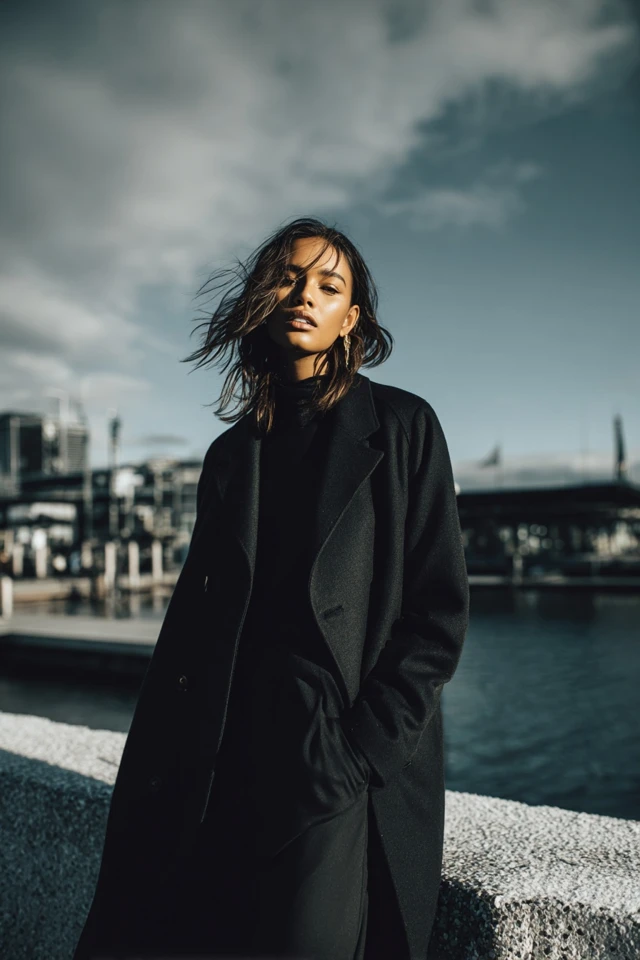
Outerwear: coats and jackets
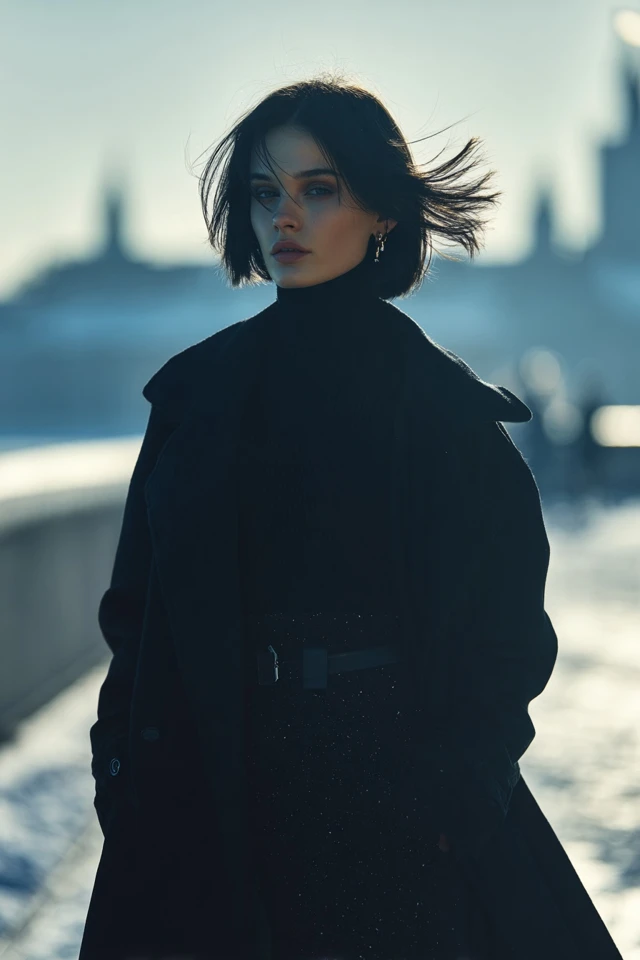
One good coat is the anchor. Choose a length between hip and mid-calf, and check that you can move your arms and fit a thick sweater underneath without the shoulders pulling. Camel and gray work with nearly everything in the list above, while black is the safest for a mostly dark palette.
As an architect trained in evidence-based design, I treat the coat as the largest block of color in the outfit, so I'd choose it first and build the rest around it.
Shoes and boots for cold weather
Leather ankle boots with a low block heel or a flat sole cover most days. If your winters are wet or icy, look for a grippy sole and check the care instructions for waterproofing. Keep the boot color close to your trouser or coat color so the leg line stays long.
Layering without bulk
The layer closest to your skin matters most for comfort. Texas A&M's Howdy Health advises that the layer closest to your skin should be comprised of moisture wicking materials, and it also says to avoid cotton because it absorbs moisture. That guidance is written for exercise, but it is a useful rule if you walk a lot outdoors.
On top, add one structured mid-layer and then your coat. Keep each layer slightly longer or shorter than the one below so the outline stays tidy. For more on cozy layering, see the sweater vest guide and the minimalist cardigan guide.
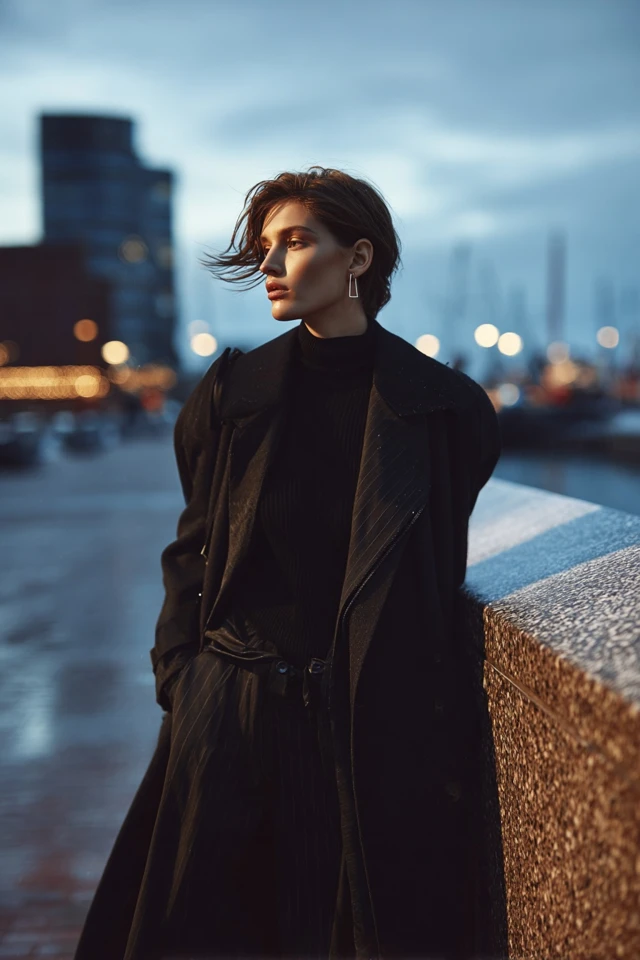
Minimalist outfit formulas for winter
Here are formulas that rely only on the ten pieces above.
- Turtleneck + straight dark jeans + wool coat + ankle boots
- Chunky cream knit + charcoal trousers + scarf + boots
- White shirt under a fine knit + trousers + coat
- Knit dress + tights + boots + coat
- Base tee + midi skirt + chunky knit over the top + boots
If you like a bit of warmth in the palette, try navy with camel, or charcoal with ivory. Keep to two or three colors per outfit and let texture supply the interest. For a different take on cold-weather dressing, try the winter jumpsuit guide or the coastal winter guide.
Accessories like scarves and jewelry
Keep jewelry small: thin hoops or a simple chain show up well against knitwear. A scarf in a textured wool adds depth against a smooth coat. If you want a color accent, make it one item only, such as a burgundy hat or plum gloves.
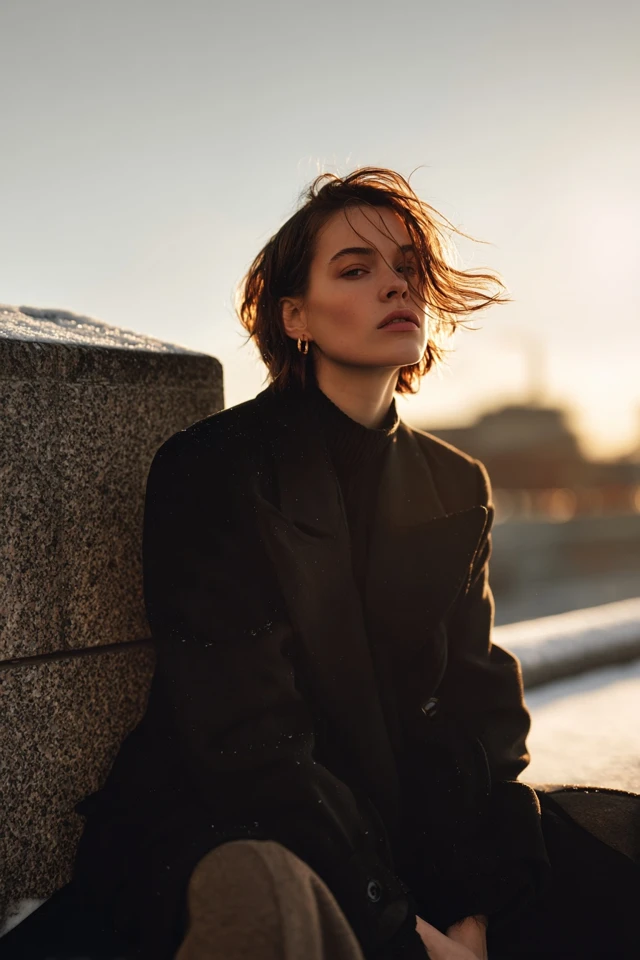
Does this work as a minimalist winter wardrobe for men?
Yes, the same logic carries over. Swap the skirt and dress for a second pair of trousers, and use a crewneck, a roll neck, an overshirt and a wool overcoat in the same neutral palette. The fit checks (shoulder seam, sleeve length, hem) are identical.
Frequently asked questions
What is a capsule wardrobe?
It is a small group of versatile pieces in a shared color palette that mix and match easily. For winter, that usually means knits, trousers or jeans, a coat and boots.
How can I layer without looking bulky?
Start with a thin base layer, add one structured mid-layer and finish with a well-fitted coat. Avoid stacking several loose, thick pieces.
Are neutral colors boring in winter?
Not if you vary texture. Wool, brushed knit, leather and denim in the same palette give plenty of contrast without adding colors.
How do I update a winter wardrobe on a budget?
Replace one piece at a time, starting with the item you wear most. Scarves and hats are the cheapest way to refresh a palette.
Filed under Outfit Ideas