Short Haircuts for Women: Cuts, Textures and Upkeep
- Words by
- Julio Arco
- Published
- Reading
- 4 min
The best short haircuts for women are the ones where the cut matches your hair's natural texture. Pixies and cropped cuts suit fine, straight hair. Bobs work with almost any density. Layered shags and choppy cuts add movement to hair that looks flat. Choose the shape first, then decide how much styling you want to do each morning.
This page is a short map of the main options, with a closer look at the medium shag, since texture is what makes that cut work.
Which short haircut suits your hair type?
Start with what your hair already does when it dries without help. Does it bend, wave, lie flat or puff out? A cut that works with that habit needs less product and fewer minutes.
- Fine or thin hair: blunt bobs and cropped pixies make the ends look denser.
- Thick hair: layers remove weight, so the shape doesn't turn triangular.
- Curly hair: cut it dry or ask the stylist to shape it curl by curl, so the shortest layers don't spring up unexpectedly.
- Straight, heavy hair: a one-length cut looks clean, and a few long layers add some movement.
Pixie and very short cuts
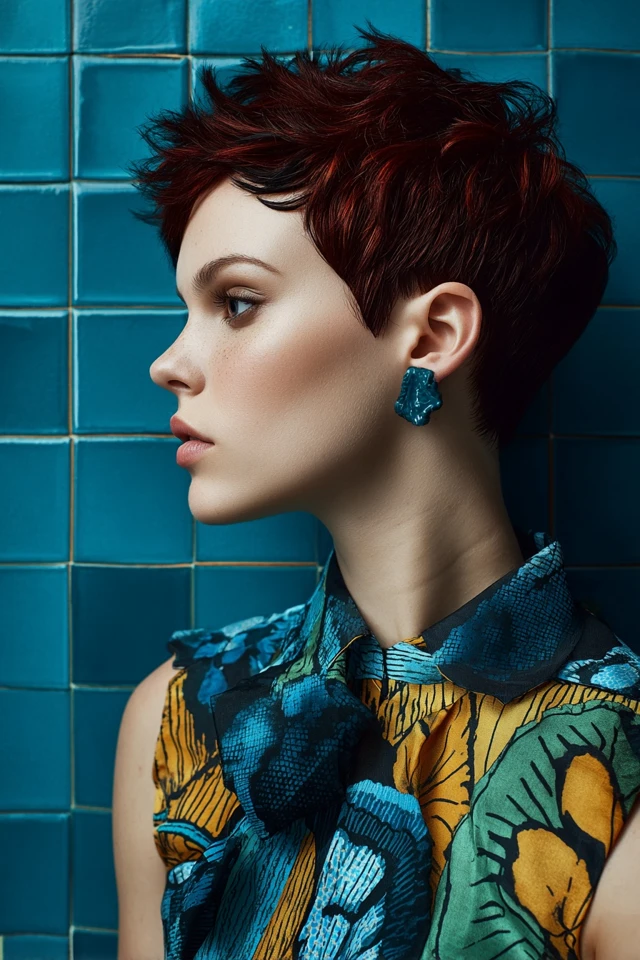
Very short haircuts for women put all the attention on the face, so the neckline and the fringe do the work. A longer top with short sides gives you room to style it up, sideways or forward. Expect a trim about every 4-6 weeks, since the shape disappears quickly as it grows.
Through the lens of evidence-based design, I'd treat the fringe as the first thing the eye reads on a pixie. A wispy, broken fringe feels softer next to the skin than a blunt, straight one.
Bobs: blunt, chin-length and soft
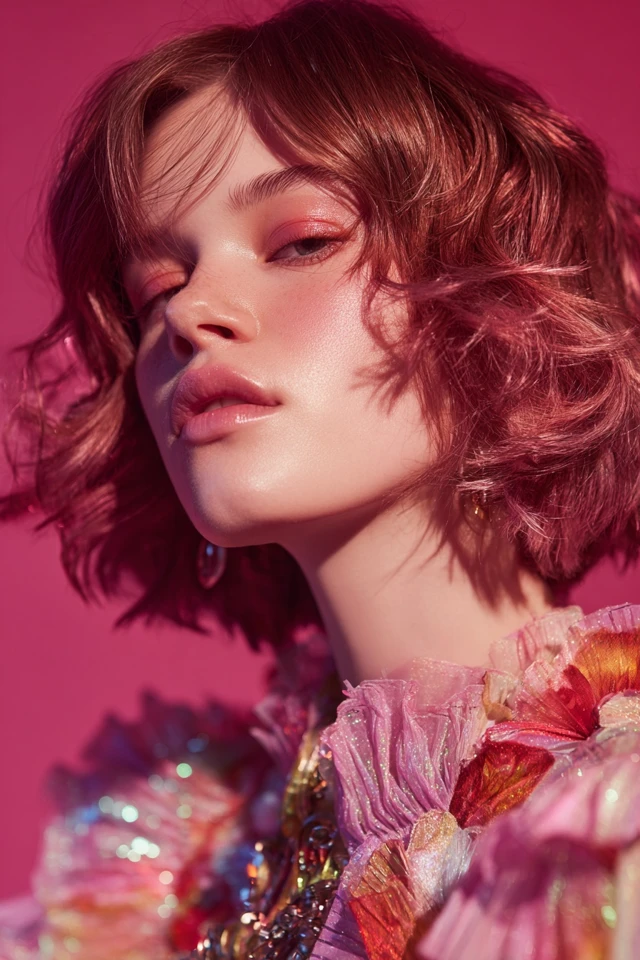
A blunt bob at the jaw reads crisp and graphic. Taper the ends or add light layers and it turns softer. Short haircuts for thin hair often do best here, because a single strong line makes the hair look fuller than long layers would.
If you want more length than a bob but still less than a long cut, the medium short hairstyles on this blog are a good next step. Compare the shoulder-skimming cut with the clean one-length cut.
How does a shag create texture?
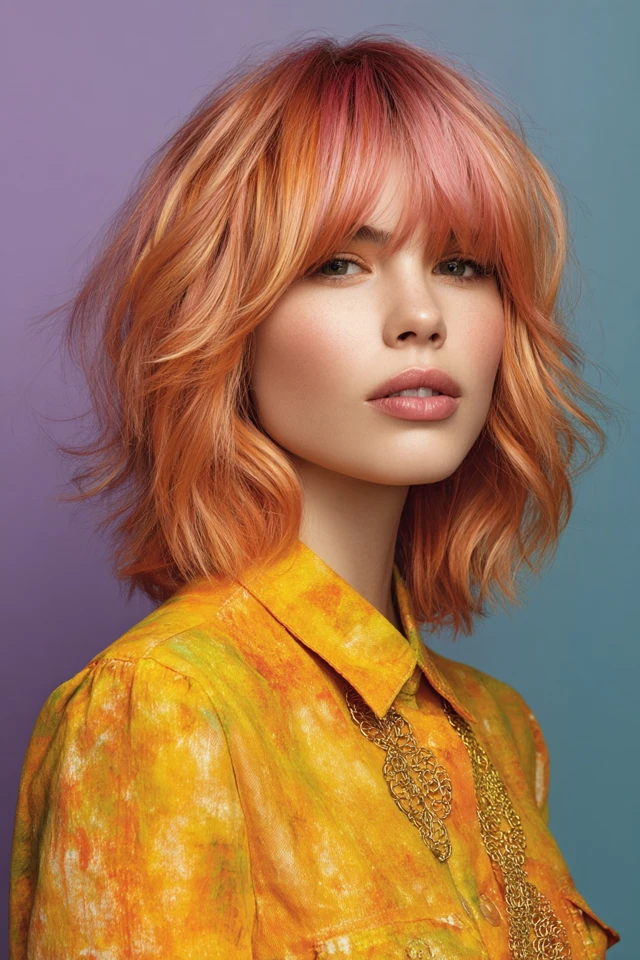
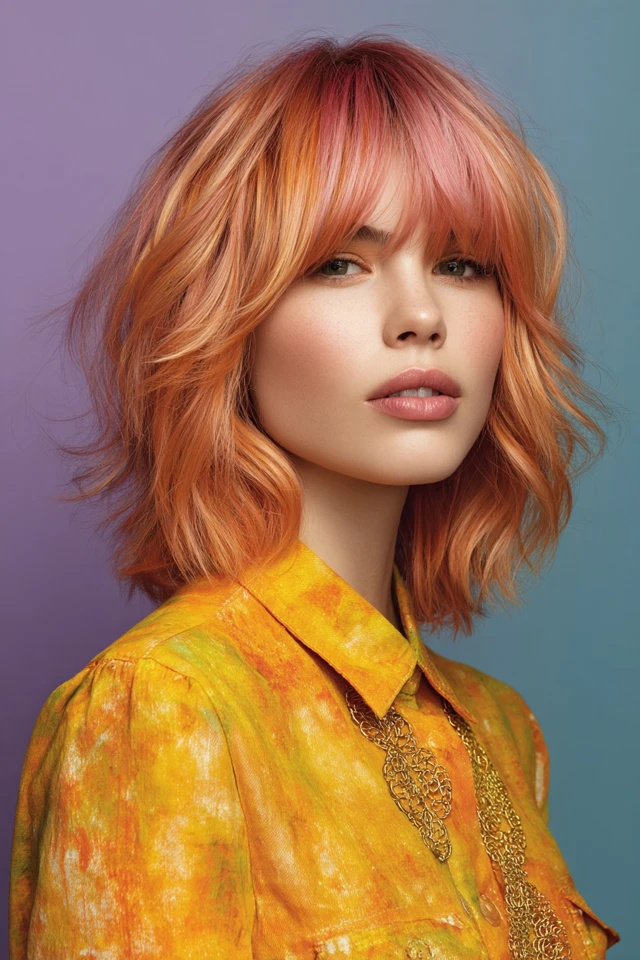
A shag is cut in many short, uneven layers, mostly around the crown and face, so the hair stacks and flips instead of hanging straight. The result is volume without any heavy backcombing. Medium versions sit near the collarbone or just above it, which keeps the shape but leaves enough length to tie back.
Texture changes how color reads, too. Choppy layers break up light, so a single shade looks deeper and more varied than the same shade cut blunt. As an architect trained in evidence-based design, I'd pick a shag when your hair is one flat color and you want dimension without adding highlights.
Related cuts to compare: the collarbone-length shag, medium choppy layers and the medium textured cut.
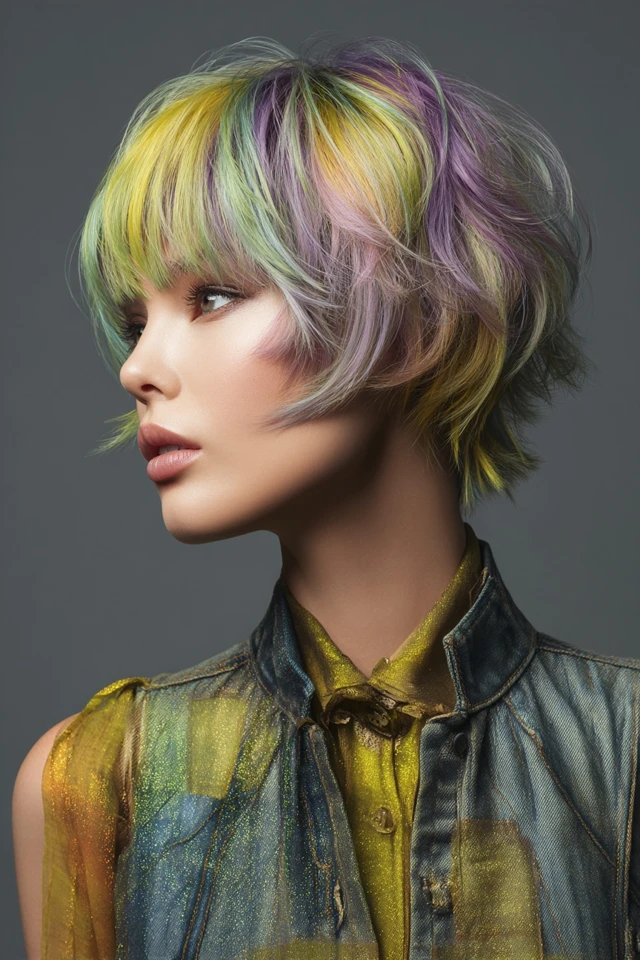
Short layered haircuts that are easy to style
Short layered haircuts easy to style share one trait: the layers are cut to fall into place as the hair dries. Ask for long, soft layers rather than sharp short ones, and for the stylist to check how the hair moves when you shake it out. Air-dry with a little cream, then correct only the crown or the fringe.
Layers also help in a few other ways:
- Fine hair gets lift at the roots.
- Thick hair loses bulk at the ends.
- Waves find a pattern instead of fighting the cut.
For fuller, softer shapes, see the medium layered cut.
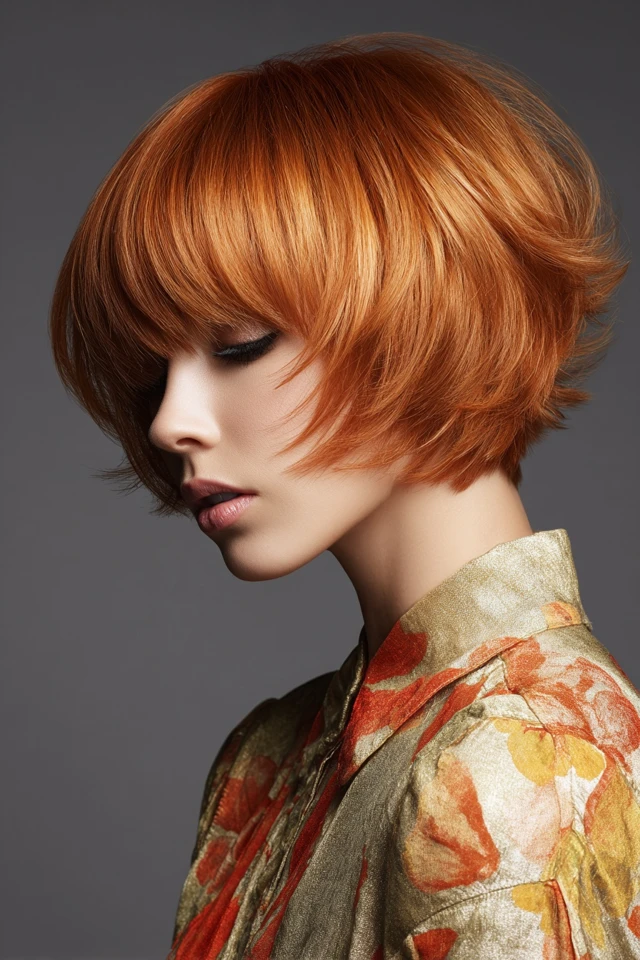
Short haircuts that require little upkeep
Low upkeep means a cut that grows out gracefully. Bobs with a slight taper and shags with loose layers forgive a missed trim far better than a precise pixie. Plan on a trim every 6-8 weeks for most short shapes.
Daily care can stay simple. The American Academy of Dermatology says that hair never needs 100 brush strokes a day, so a quick comb-through is enough. If you use a flat iron, the AAD advises dry hair, low or medium heat and no more often than every other day. For detangling after a wash, a wide-tooth comb is gentler than a brush on wet hair.
For scalp or hair-health concerns, check with a dermatologist.
Parts, fringe and finishing touches
A part changes the cut more than most people expect. A center part looks calm and symmetrical, and a deep side part adds lift at the crown. Try both on dry hair before you decide: the center-part version and the deep-part version read quite differently.
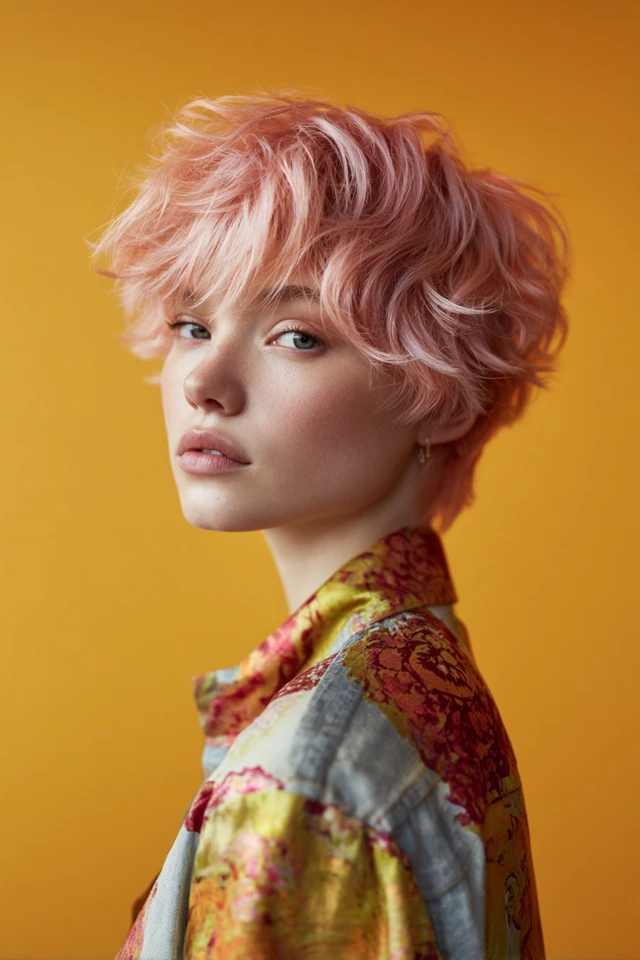
Short hair has a long history of turning heads. An 1883 Indianapolis newspaper article, covered in this BYU ScholarsArchive paper, described a woman cutting off her long hair as sacrificing virtue to the "Moloch of the present mode." Today the cut is a styling choice, and the practical question is simply which shape you will enjoy wearing.
Frequently asked questions
What is the best short haircut for seniors over 60?
A soft, layered bob or a longer pixie is usually easiest, since both add lift to fine hair and need little daily styling. Ask the stylist to match the layers to your hair's natural direction.
What is the most popular short haircut?
The bob is the most common short cut because it adapts to straight, wavy and curly hair and to different face shapes. Pixies and shags are the usual alternatives.
Can short haircuts work for thin hair?
Yes. Blunt bobs and cropped cuts make fine ends look denser, while heavy layering can make thin hair look sparse.
How often should I trim a short haircut?
Most short cuts hold their shape for about 6-8 weeks. Pixies and sharply cut bobs may need a trim closer to 4-6 weeks.
Filed under Haircuts