Leather Accessories Styling: Match Belts, Bags and Straps
- Words by
- Julio Arco
- Published
- Reading
- 4 min
The simplest rule for leather accessories styling: keep the leather in the same color family, vary the texture a little, and let one piece lead. Belt and shoes should agree, the bag can echo them or contrast on purpose, and everything else stays quiet.
Below is how to apply that to belts, bags, watch straps, gloves and boots, plus how to care for them so they keep looking good.
How to match leather accessories with an outfit
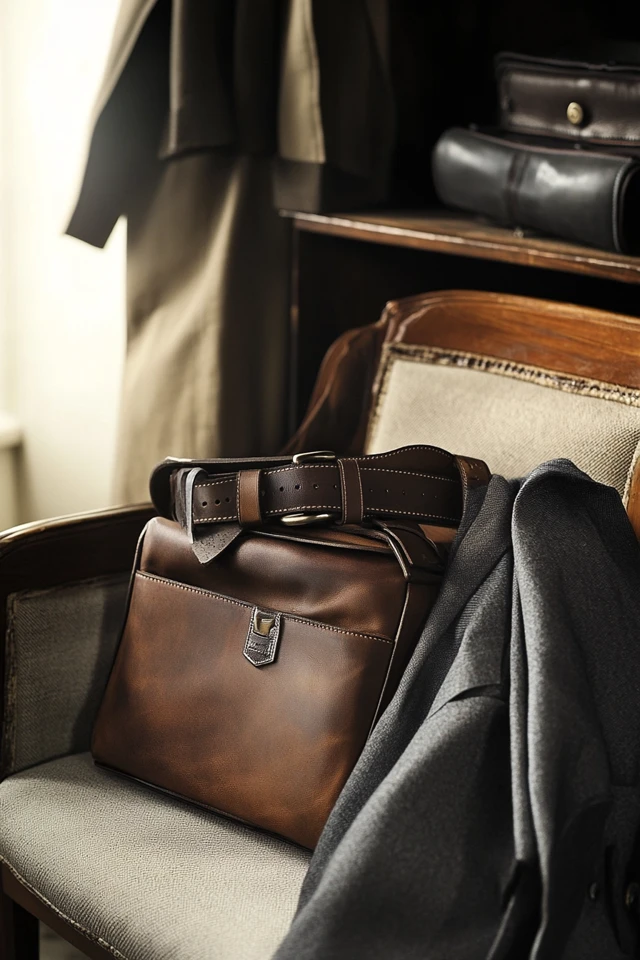
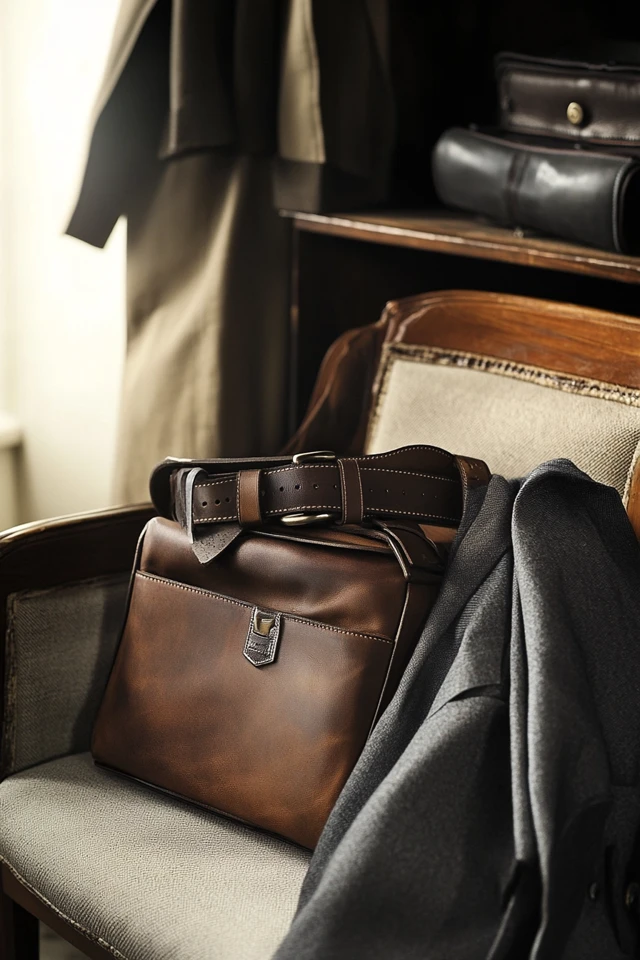
Start with the pieces closest to each other. Your eye reads a belt and shoes as a pair, so they should sit in the same color family. Black with black, or brown with brown, is the safe call. Tan and cognac are close enough to work together; black and dark brown side by side usually look like a mistake.
Then look at the clothes. Leather in a neutral shade (black, tan, cognac, dark brown) goes with nearly any color you wear. A bold leather piece, such as a red bag, works best when the rest of the outfit is calm.
You do not need an exact match. Matching undertones is enough: warm browns with warm browns, cooler blacks with cooler metals.
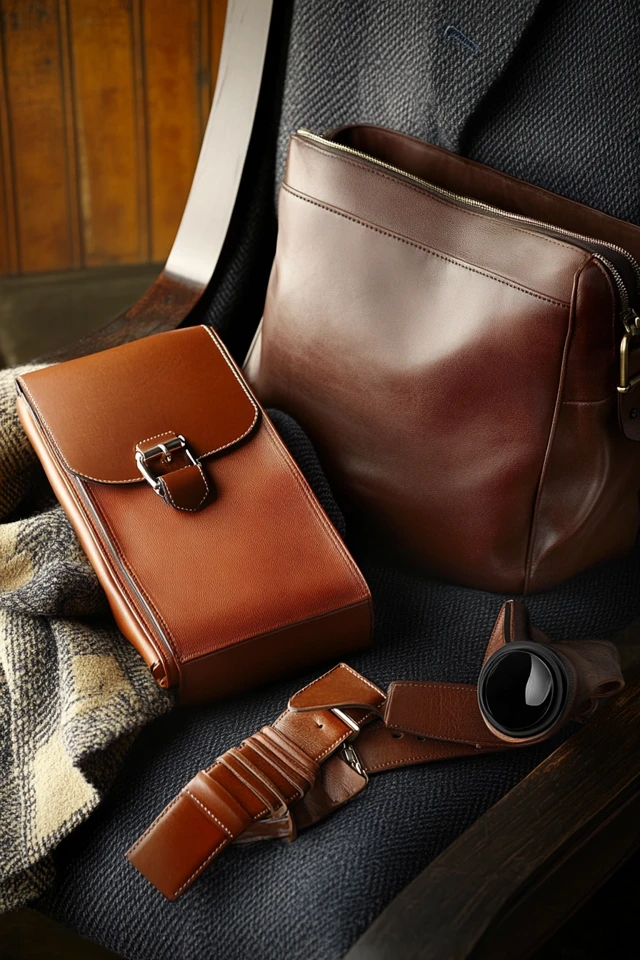
Matching leather belt, shoes and watch strap
This trio is where mismatches show most. A workable approach:
- Match the belt to your shoes in color, and roughly in finish.
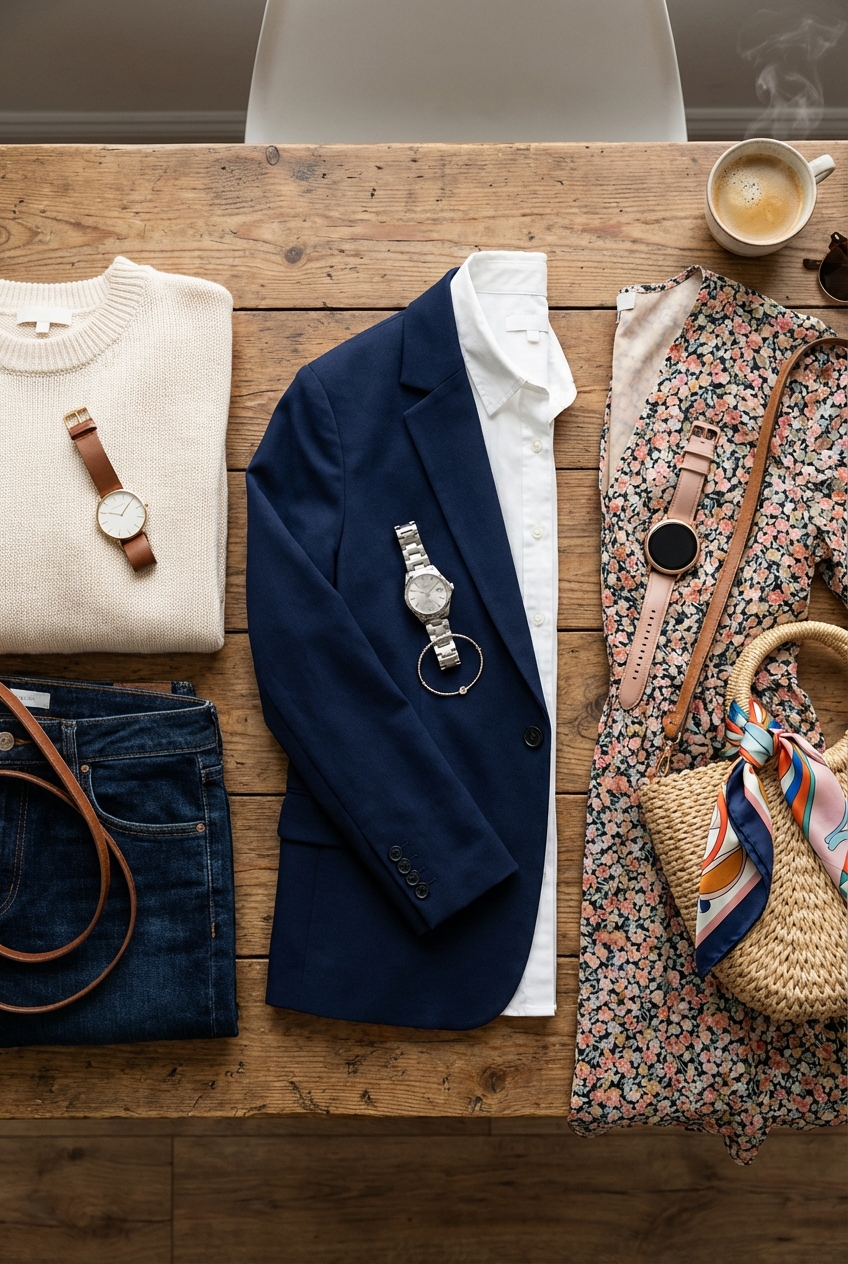
- Let the watch strap match the belt, or at least stay in the same family. It sits near your hands, so it is noticed less often than the belt.
- Metal hardware (buckle, watch case) should agree where you can manage it: silver with silver, gold with gold.
If you are wearing sneakers, the belt rule relaxes. A brown belt with white sneakers is fine, and a watch strap can take over as the leather accent.
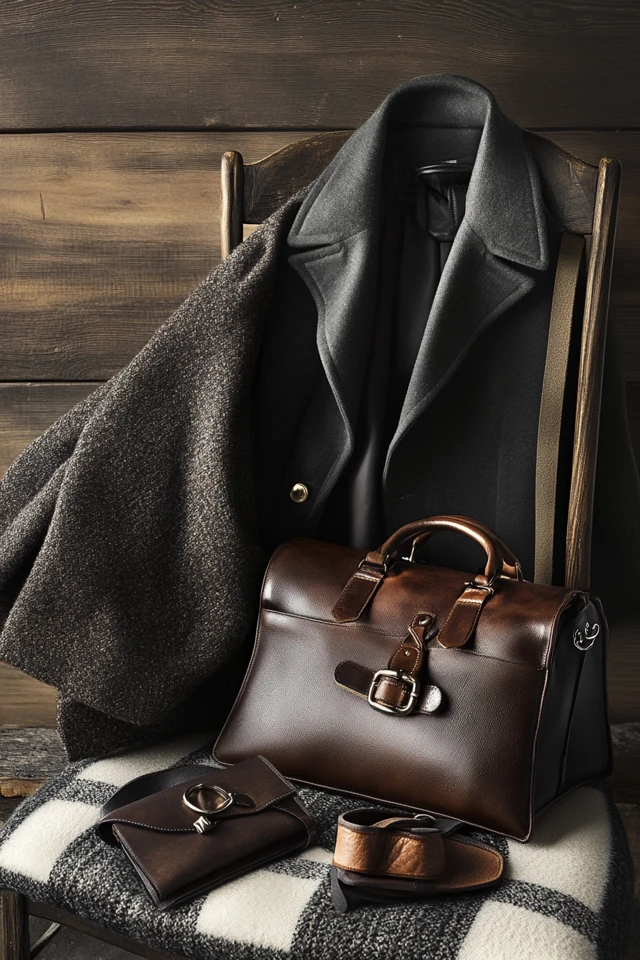
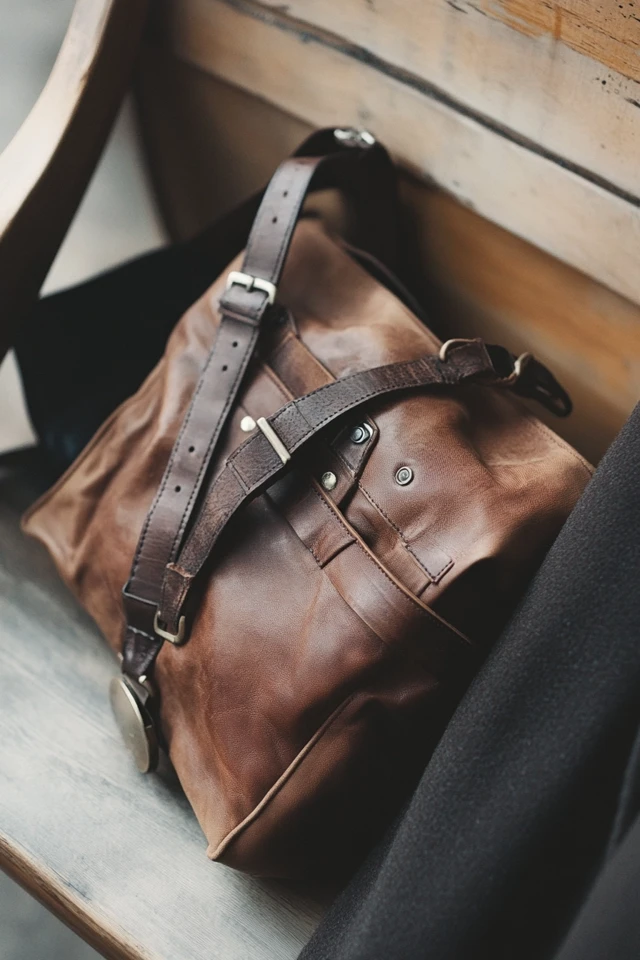
How do you coordinate a leather bag with your outfit?
A bag has more freedom than a belt. Three options work reliably:
- Echo your shoes or belt for a polished, put-together look.
- Pick a neutral that contrasts with your outfit, such as a tan bag with a navy coat.
- Use the bag as the one color accent against a plain outfit.
Size matters too. A structured tote reads work-ready, a crossbody reads casual, and a small clutch reads evening. Choose the shape for the occasion first, then the color.
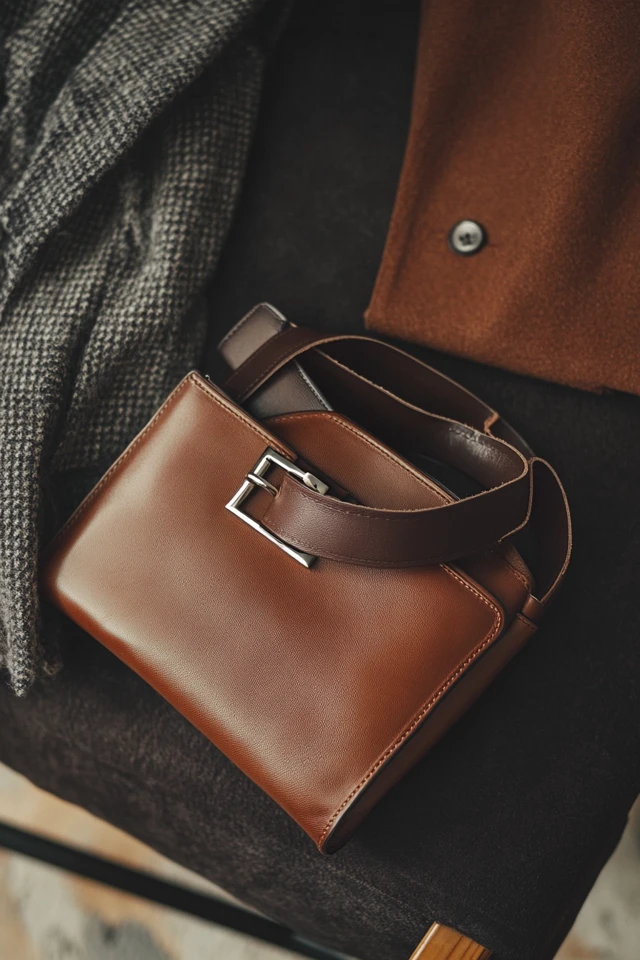
Matte vs gloss leather finishes
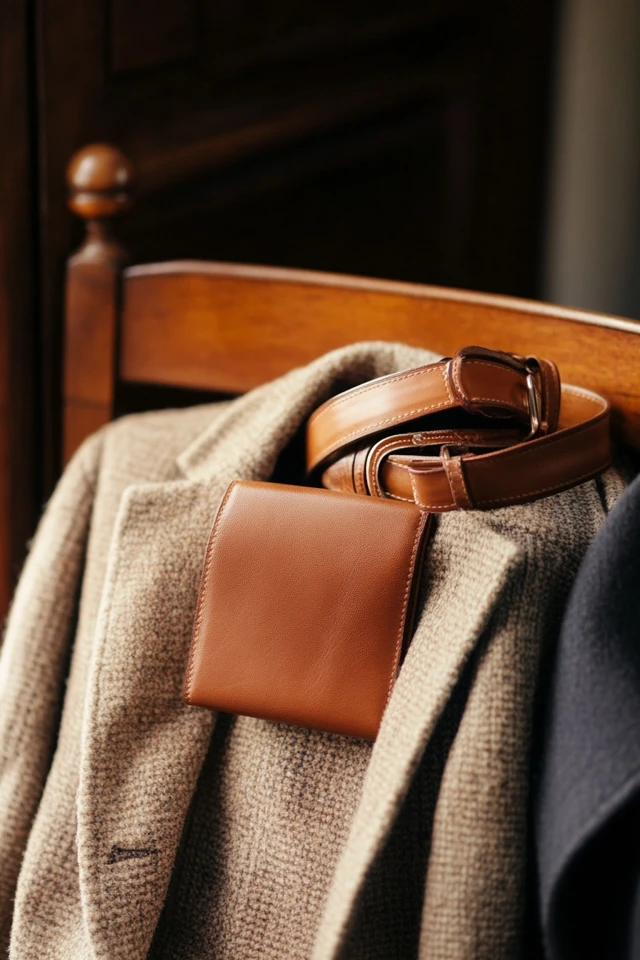
Finish changes how a color looks. Through the lens of evidence-based design, I'd think about it as light: a glossy surface reflects it sharply and draws the eye, while a matte surface absorbs it and looks softer and darker. The same black can read as relaxed in a matte grain and dressy in patent.
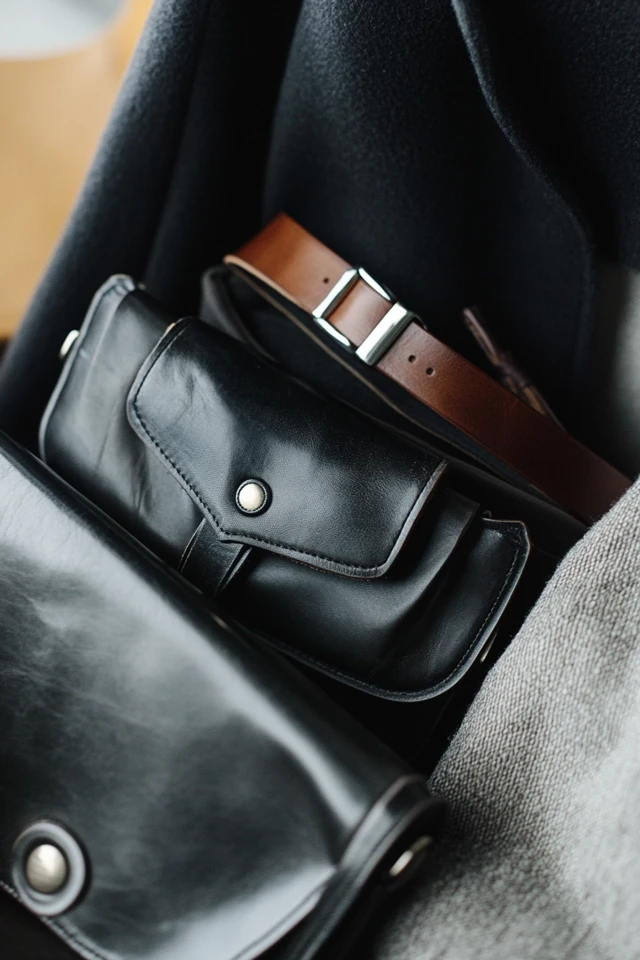
For everyday outfits, matte or lightly textured leather is the easier choice, because it blends with knits, denim and cotton. Gloss suits evening, tailoring and anywhere you want a sharper edge. Try not to mix a high-shine belt with a heavily grained, scuffed boot; the contrast looks accidental.
How to layer leather accessories without overdoing it
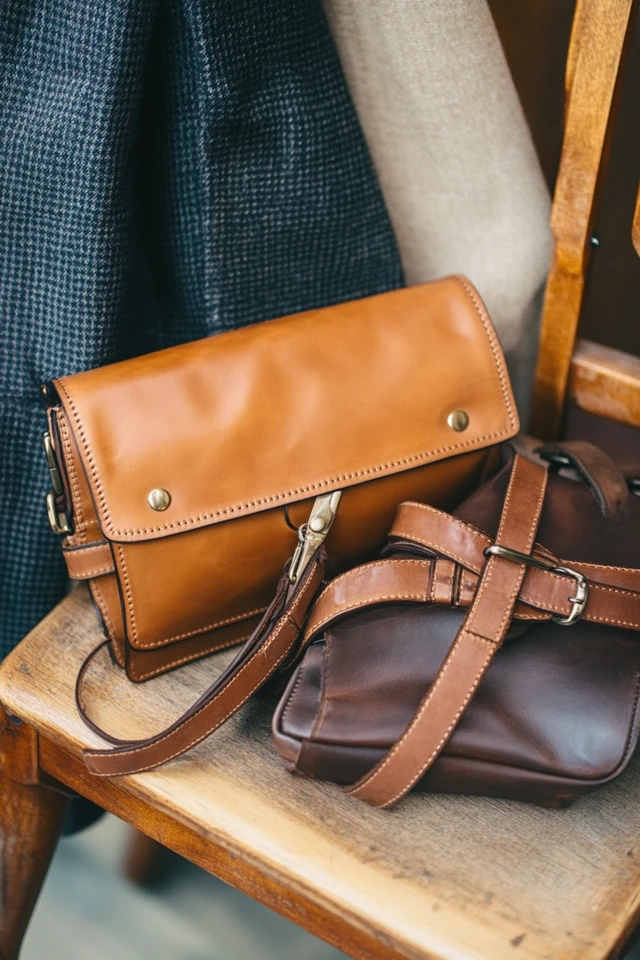
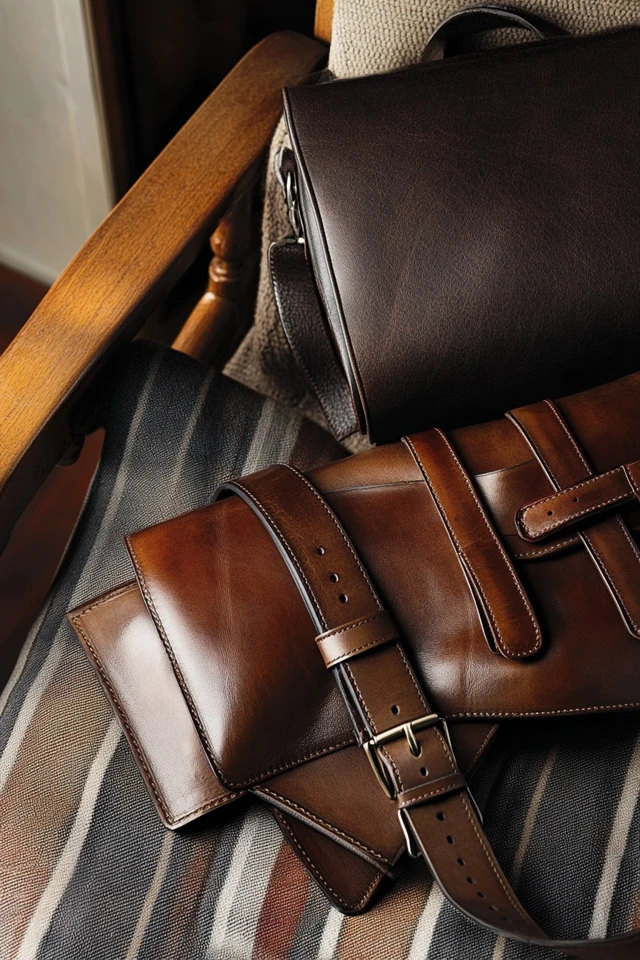
Layering works when each piece has its own job. A belt defines the waist, a bag sits at the hip, gloves or a strap finish the edges. A leather jacket plus belt plus bag plus boots is a lot of leather, so vary at least one piece in color or texture.
- Pair leather with softer fabrics like cotton, silk or cashmere so the outfit does not feel stiff.
- Wear a wide belt over an oversized blazer or a loose dress to give the shape a waist.
- With a leather jacket, keep the bag and belt in matching neutrals. For more ideas, see edgy accessories for leather jacket outfits.
As a rough check, if you notice the leather before you notice the person, take one piece off.
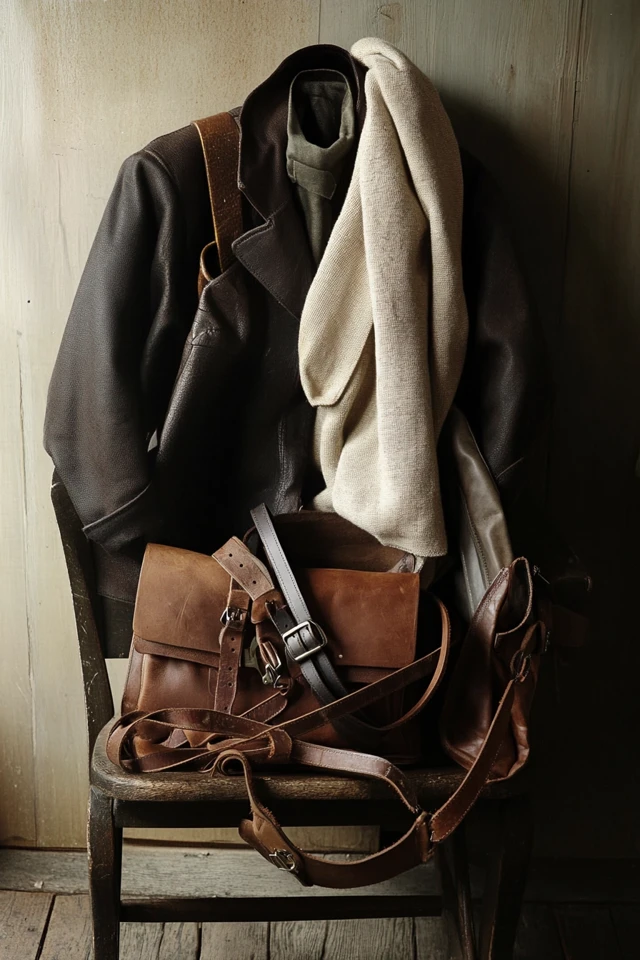
Timeless leather pieces for your wardrobe
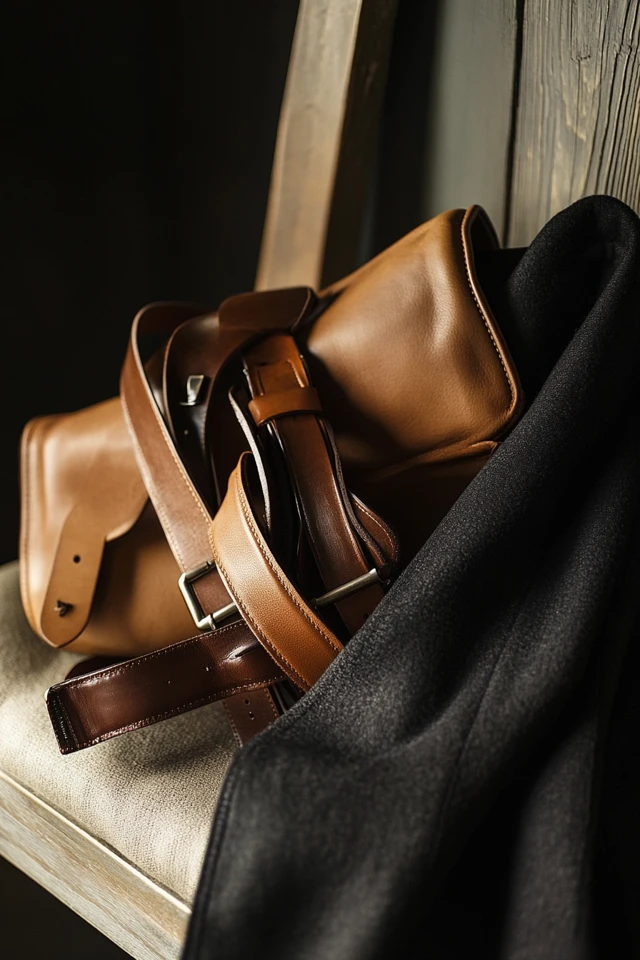
If you are building from scratch, these earn their place:
- A belt in black or brown, whichever your shoes usually are.
- A structured bag in a neutral shade.
- A slim wallet or cardholder, ideally matching the bag.
- Leather gloves for cold months, in black or brown.
- Ankle or Chelsea boots for everyday wear.
These fit naturally into a pared-down closet. Capsule wardrobe tips and styling capsule pieces with accessories show how to build outfits around a few pieces. If you want a louder direction, try leather accessories for a rock-chic look.
Seasonal leather styling
Lighter leather, such as tan or light grey, feels at home in spring and summer. Richer tones like chocolate, burgundy and black suit fall and winter. Leather works year-round, but color and weight shift the mood.
Boots and gloves carry the cold months. Knee-high boots look best with skirts and dresses; ankle boots work with jeans.
Caring for leather accessories
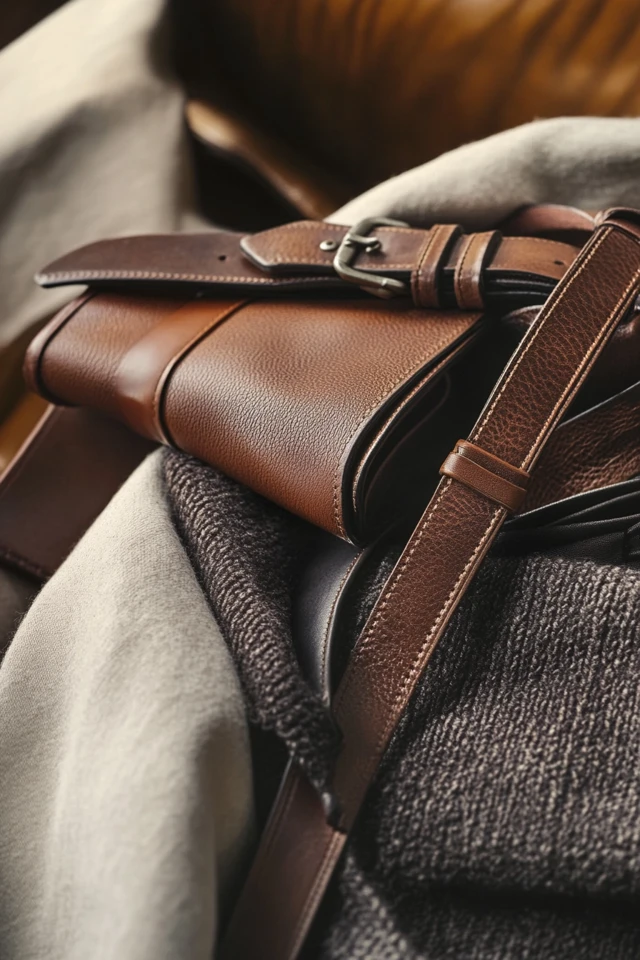
- Wipe with a soft, slightly damp cloth to remove dust. For deeper cleaning, use a leather cleaner and test it on a hidden spot first.
- Condition every few months, following the product's directions, so the leather stays supple.
- Store away from direct sun, in a cool, dry place. Use dust bags for handbags, and avoid hanging jackets for long periods.
- Avoid overloading bags so they keep their shape.
For deep scratches, stains or anything valuable, ask a professional leather repair shop rather than experimenting.
Frequently asked questions
How do I know if leather is high quality?
Look for full-grain or top-grain leather, which tends to wear better and develop a patina. Be cautious with products described as bonded leather.
Do my belt and shoes have to match exactly?
No. Staying in the same color family and a similar finish is enough. Exact shade matching matters less than avoiding clashes like black with dark brown.
Can I wear leather accessories year-round?
Yes. Choose lighter shades for warm weather and deeper tones in fall and winter.
Are there vegan alternatives to leather?
Yes, many brands make leather alternatives from plant-based or recycled materials. Check the product description for what it is made of and how it wears.
Filed under Accessory Trends