Abstract Nail Designs: Layered Swirl Ideas to Try
- Words by
- Julio Arco
- Published
- Reading
- 4 min
Layered swirls are one of the easiest abstract nail designs to wear: two to four colors, curved lines that overlap, and no need for a perfect pattern. Start with a sheer or pale base, add one or two swirls in contrasting shades, and finish with a glossy top coat.
Below you will find what abstract nail art is, five swirl looks to copy, a simple method for doing it at home, and what to know before choosing gel or acrylic.
What is abstract art on nails?
Abstract nail art skips recognizable pictures like flowers or hearts. Instead it uses shapes, lines, blotches and color relationships: squiggles, dots, color splashes, overlapping curves. Nothing has to match from nail to nail, which is why it forgives uneven hands and shaky brushwork.
Layered swirls are the curved-line branch of the style. Each swirl sits partly over the last, so the design reads as depth rather than a flat stripe.
Five layered swirl looks to try
These are starting points for abstract nail art ideas, not strict recipes. Swap the colors for whatever sits well with your wardrobe.
Black and white swirls
Abstract nail art in black and white is the safest place to start. One white base, one loose black swirl per nail, and it goes with nearly everything. It is also a good first test of how much contrast you like.
Soft pastel ombre swirls
Pink, lilac and cream blended into each other read gentle and calm. Keep the lines thin and let the colors overlap slightly. Short nails suit this well because the swirl stays close to the nail bed.
Navy with pearly white
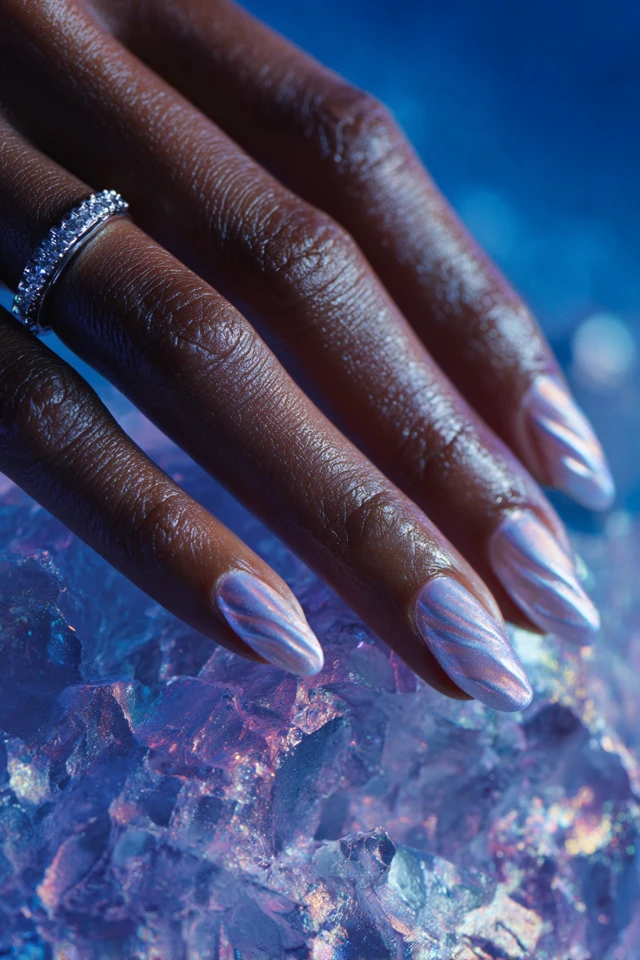
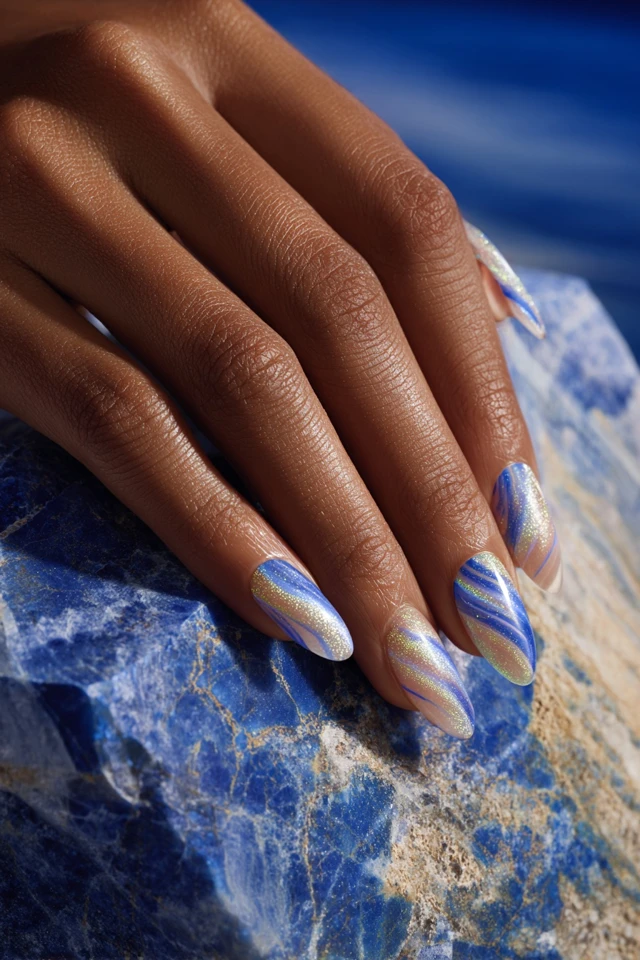
A dark base with a pale pearlescent swirl gives the most contrast for the least effort. Pearl finishes shift in the light, so the design looks a little different from every angle.
Neon accents on a neutral base
Nude or beige nails with one bright swirl on two fingers keep things wearable. Bright color pops hardest against a quiet background, so resist adding a third or fourth shade.
Marble-style swirls
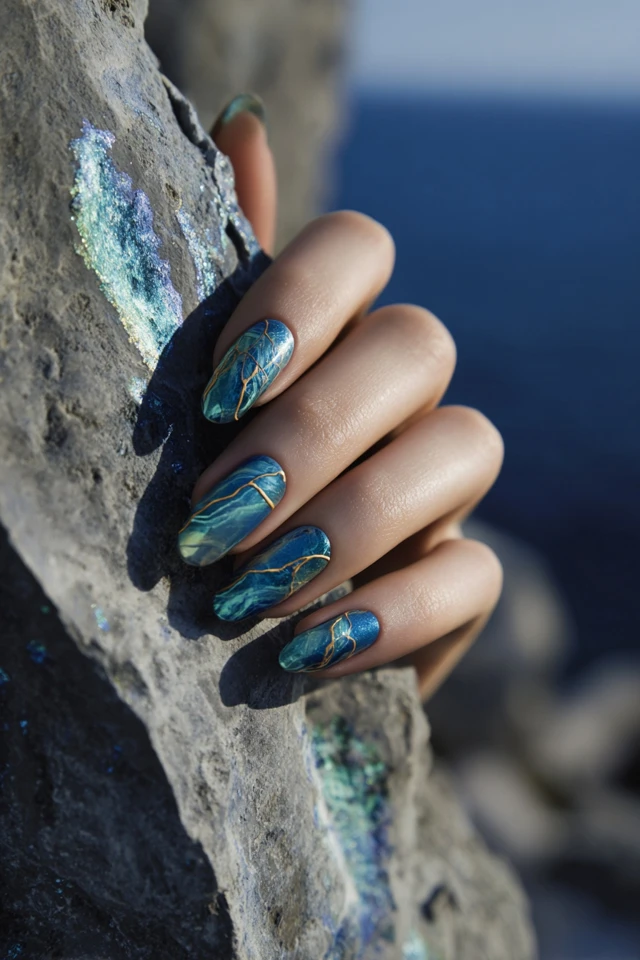
Gray, white and a hint of gold, dragged together while still wet, look like stone. This is a polished option for work or formal outfits.
How to keep it simple and minimalist
For simple abstract nail designs, limit yourself to two colors plus a clear base. Put the swirl on one or two accent nails and leave the rest bare or in a single sheer shade. That is the core of minimalist abstract nail art: one gesture, lots of empty space.
Through the lens of evidence-based design, I'd pay attention to contrast before pattern. A swirl in a shade close to your base reads as soft texture, while a high-contrast swirl reads as a graphic mark. Decide which one you want before you pick polish.
Easy abstract nail art at home
- Shape and clean your nails, then apply a base coat.
- Paint two thin coats of your base color and let them dry fully.
- Dip a thin brush or a toothpick in a second color and draw one loose curve across the nail.
- Add a third shade over part of the first curve so the lines cross.
- Seal with a glossy top coat, or a matte one for a flatter, more modern finish.
Work on one hand at a time and wipe the brush often. Mistakes in abstract art are easy to disguise: turn a wobble into a longer curve and keep going.
Matching swirls to your outfit and skin tone
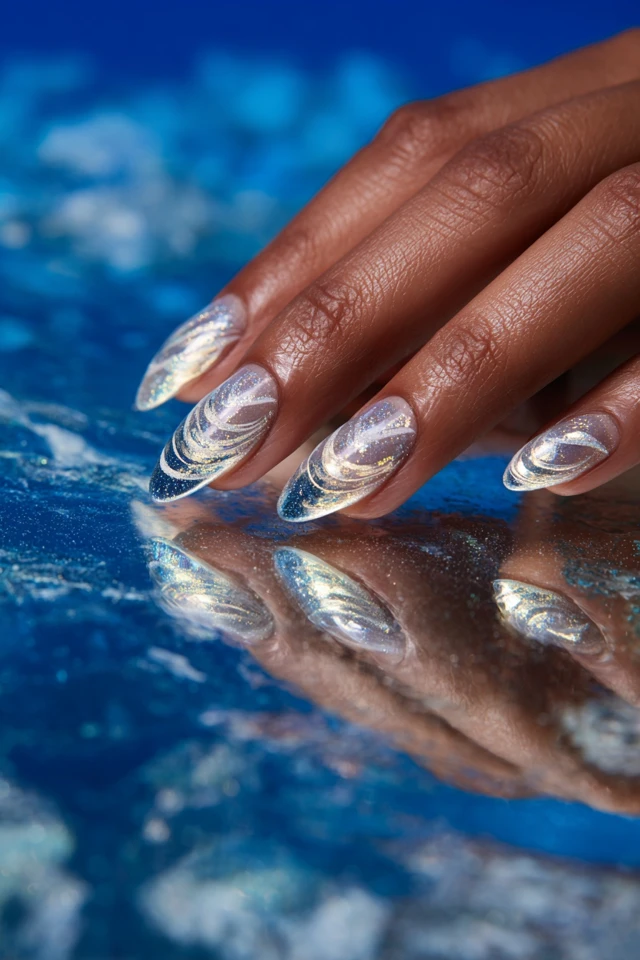
Color reads differently next to skin and fabric, so test before you commit. Cooler shades such as blue, violet and emerald tend to look crisp against cool undertones. Coral, gold and olive often look warmer and brighter on warm undertones. If you are somewhere in between, you have more room to play.
Finish matters too. Glossy swirls look dressier next to silk, satin or velvet, while matte nails sit comfortably with cotton and linen. As an architect trained in evidence-based design, I'd treat texture as part of the color: the same navy looks deeper in gloss and softer in matte.
For more swirl ideas, see Layered Swirl Mani, Fluid Swirl Concept Nails and Chroma Swirl Craft Nails. If you prefer a calmer palette, Serene Swirl Canvas Nails is a good next stop.
Gel, acrylic and removal: protect your nails
Longer-lasting formulas hold intricate swirls well, but they come with upkeep. The American Academy of Dermatology notes that getting acrylic nails to stick means filing your natural nails until they feel rough, which thins them and makes them weaker. If you wear artificial nails for more than a few weeks, the same page says you will need touch-ups every 2 to 3 weeks.
Removal is where most damage happens. The Cleveland Clinic says removing gel polish carelessly can temporarily damage nails, with cracking and peeling the most common issues. For home removal, the AAD describes acetone as the most effective way to take off gel polish.
Dermatologist Chris Adigun, MD, FAAD, says in the AAD's dip powder guidance: "Looking closely at your nails after removing the color helps you spot a problem early." If your nails look unusual after a manicure, check with a dermatologist.
Frequently asked questions
What are some abstract nail art designs?
Common ones are squiggles and swirls, dots and color splashes, neutral minimalist lines, matte finishes, neon color pairings, and gold foil or glitter accents. Layered swirls combine several of these in one design.
What is abstract art on nails?
It is nail art made from shapes, lines and color rather than recognizable images. The pattern does not need to repeat or match across nails.
Can I do abstract nail designs on short nails?
Yes. Thin swirls and one or two accent nails work well on short nails, and a pale base keeps the look open and light.
How do I add glitter to an abstract design?
Place a small amount of glitter polish or foil along one swirl rather than over the whole nail. Seal it with a top coat so the edges do not catch on fabric.
Filed under Nail Design