Ruffled Dresses for Latin Dance Nights: How to Choose
- Words by
- Julio Arco
- Published
- Reading
- 5 min
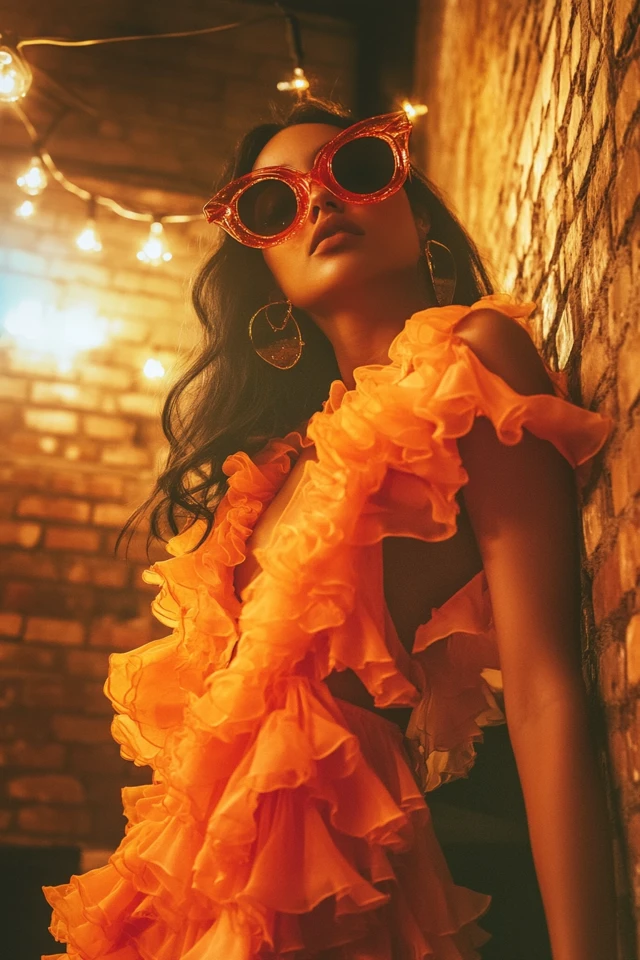
For a Latin dance night, choose a fit-and-flare or asymmetrical dress with ruffles at the hem, in a lightweight fabric like chiffon or jersey. Ruffles exaggerate every turn, so the skirt does part of the dancing for you.
Comfort decides the rest. If you can raise your arms, take a full step and spin without the dress riding up or pulling, it will work for salsa, bachata or merengue.
Why do ruffles work so well for Latin dance?
Dance is movement, and ruffles make movement visible. A smooth skirt swings as one piece, while layers and frills trail slightly behind your body and catch up, which makes a turn look longer and bigger than it is.
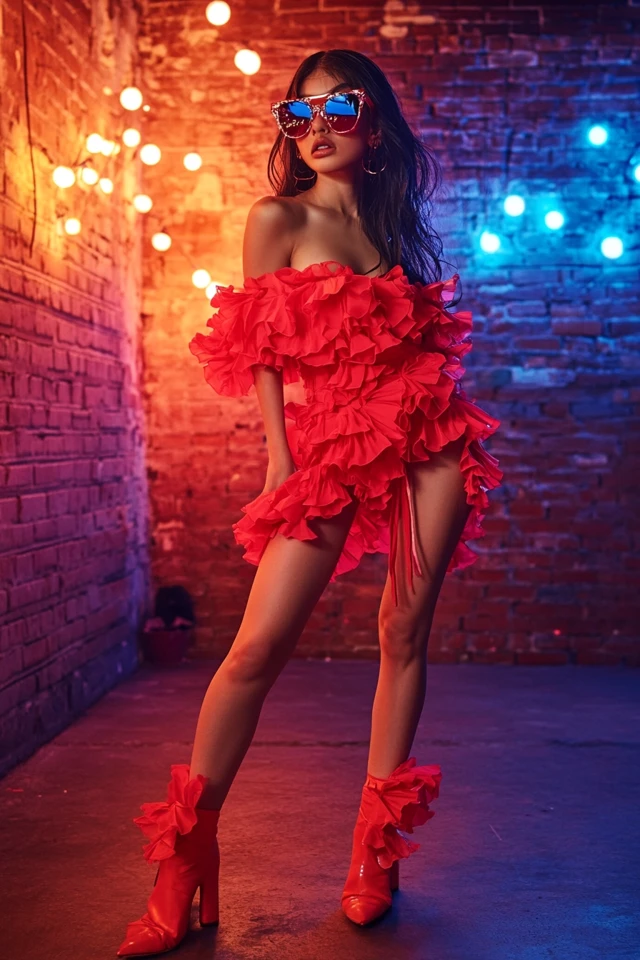
Through the lens of evidence-based design, I'd also point to texture. Ruffles break a surface into many small folds, and each fold catches light differently, so the color seems to shift as you move. That is why the same red looks flat on a hanger and alive on a dance floor.
Which silhouette moves best?
Pick the shape by how much you plan to spin and how much coverage you want.
- Fit-and-flare: fitted bodice, full skirt. The easiest choice for turns and the most forgiving for beginners.
- Asymmetrical hem: a hem that is longer on one side adds drama without extra bulk, and it reads well from across the room.
- Wrap dress with ruffles: adjustable at the waist, so it stays put when you move.
- A-line: a classic, relaxed flare that suits social dancing.
- Bodycon with placed ruffles: a sleeker look, but check that you can take a full stride.
- Maxi with a high side slit: gives dramatic motion, though the hem needs to clear your shoes so you don't step on it.
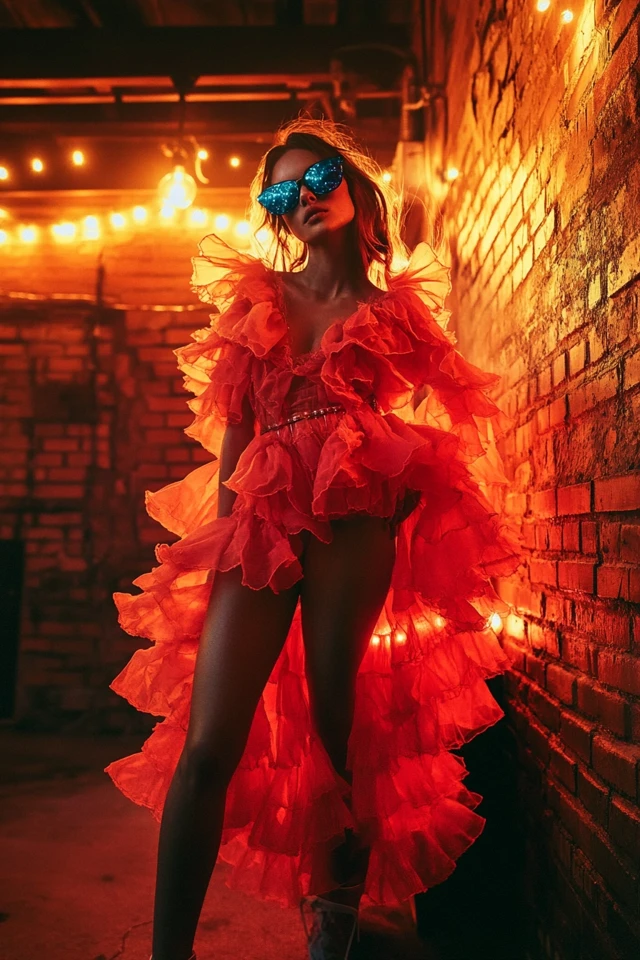
If you are unsure, start with fit-and-flare. It gives the most movement for the least fuss.
What color should you wear?
Latin dance nights suit saturated color: red, sunny yellow, coral, turquoise and fuchsia. Black works too, and ruffles keep it from feeling plain. Jewel tones like emerald and sapphire give a deeper, evening mood.
Print is a good option for themed parties. A floral or tropical print hides small creases and makes the ruffles look busier, so keep jewelry simple with it. If you want a color pairing for a night out, fuchsia and black is worth a look.
Where should the ruffles sit?
Placement changes what gets noticed.
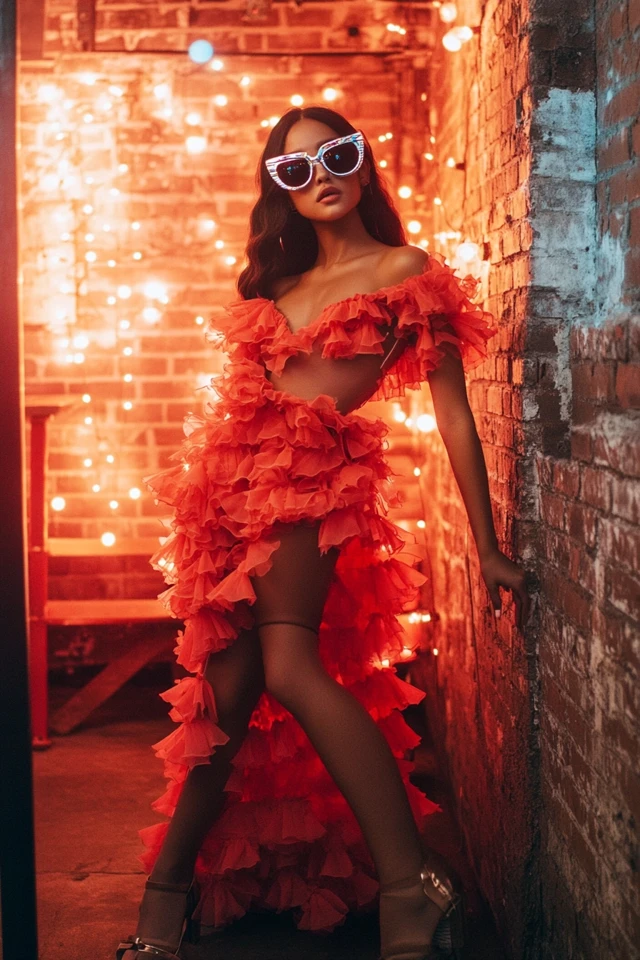
- Hem ruffles show off footwork and spins.
- Diagonal ruffles create a flowing, uneven line that follows your hips.
- Tiered ruffles add volume, so they suit a bold look but can feel heavy in a hot, crowded room.
- Sleeve or shoulder ruffles draw the eye up and move with your arms, which helps if you're dancing with a partner and lots of hand work.
If a dress feels bulky, a common fix is fewer ruffles, placed in one area. Ruffles at the hem or sleeves keep your torso clean, and I'd treat the neckline as the first thing the eye reads, so keep it simple if the skirt is busy.
Which fabric is best for dancing?
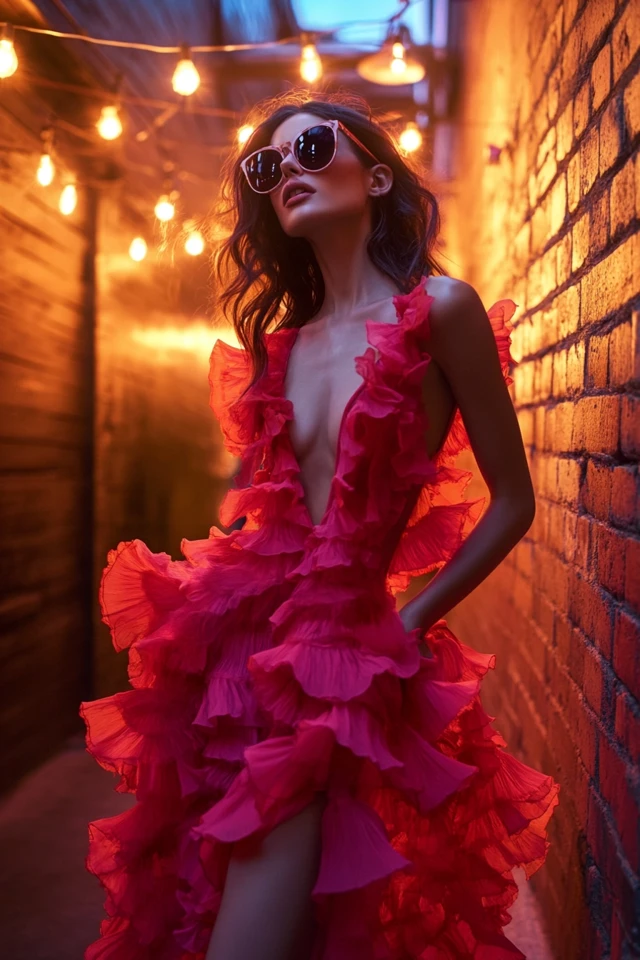
Fabric decides whether ruffles float or flop.
- Chiffon is light and breathable, with a soft flutter.
- Jersey knit stretches, which makes it the most comfortable for long nights.
- Satin gives a glossy, formal look but shows sweat and creases more.
- Cotton blends keep you cooler at casual events.
- Tulle and lace add texture and volume. Check that they don't scratch at the underarm or waist.
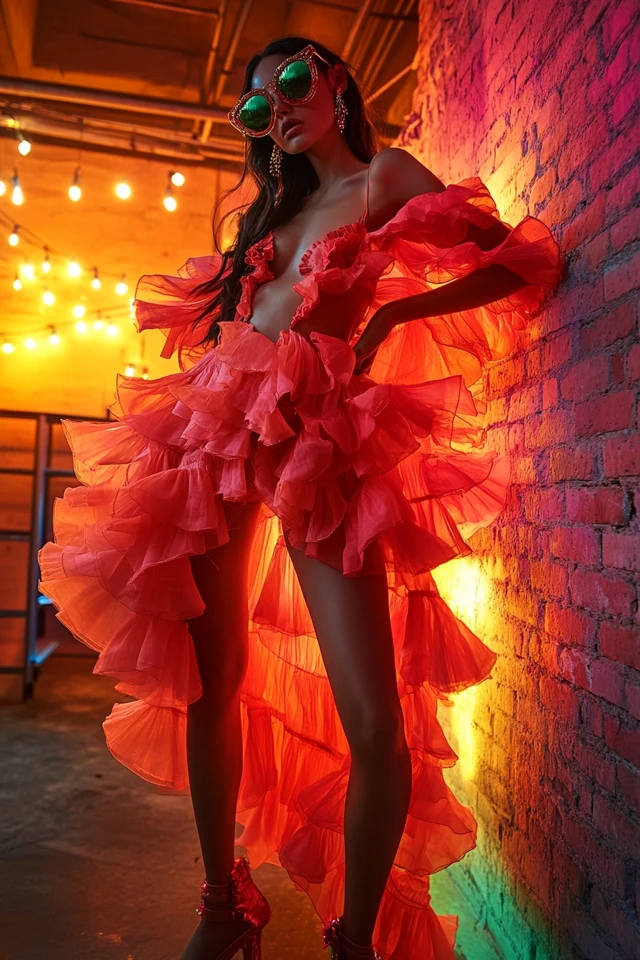
Dance floors get warm. Breathable fabrics and a lining that doesn't cling will matter more at midnight than any detail you chose in the fitting room.
What shoes, jewelry and bags go with it?
Shoes first, since you'll be on your feet. Specialized dance shoes with suede soles give grip and glide on a polished floor. Otherwise choose strappy sandals with a block or low heel, or embellished flats. A metallic or nude shoe keeps attention on the dress.
For jewelry, let the ruffles lead. Statement earrings work if your neckline is plain, and a simple necklace is enough otherwise. Gold suits red, yellow and jewel tones. A small crossbody or clutch keeps your hands free.
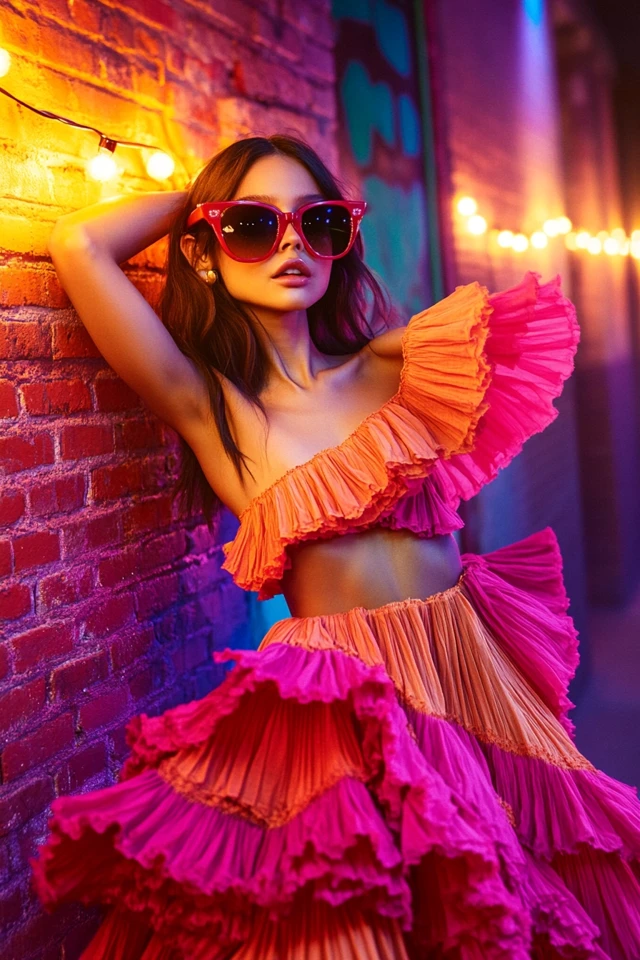
Hair should stay off your face and neck: a high ponytail, a braid or loose waves that you don't mind tossing. A flower clip adds a festive touch. For a bigger event, see ballroom gowns for dance nights, and for a more casual class, dance class outfits with playful prints.
Three outfit formulas to copy
Passionate and polished
A red asymmetrical ruffled dress, gold hoops, a metallic clutch and strappy nude heels. Hair in a sleek ponytail.
Sunny and relaxed
A yellow fit-and-flare dress with tiered ruffles, stackable bracelets and flat or low-heeled sandals. Loose waves and a floral headband.
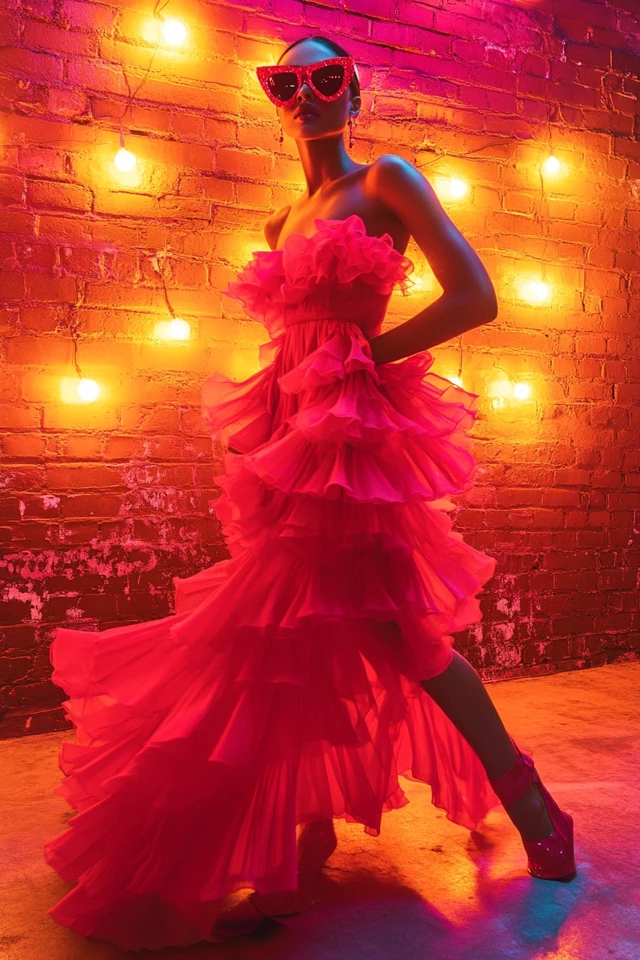
Dark and dramatic
A black bodycon dress with diagonal ruffles, crystal drop earrings, a black clutch and metallic heels. Soft waves and smoky eyes.
More dress ideas are in salsa night dresses with bold ruffles and swingy skirt styles for salsa night.
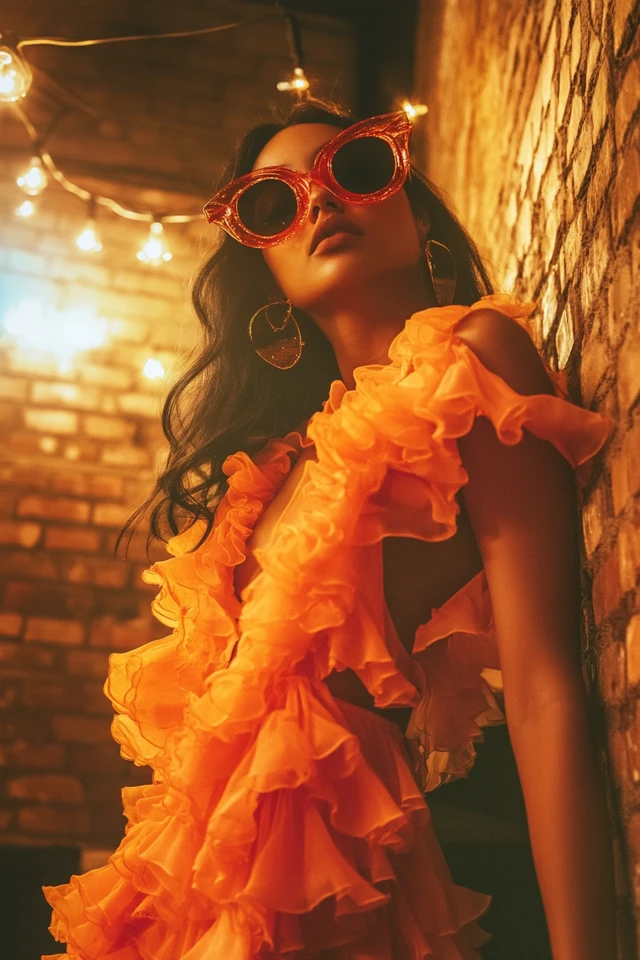
Quick fit check before you go
- Raise both arms. The bodice shouldn't ride up or pull at the shoulders.
- Take a big step and a full spin. The hem should clear your feet.
- Sit down. Ruffles at the waist can bunch and look odd.
- Walk in your dance shoes with the dress on, so you know the length is right.
Frequently asked questions
Are ruffled dresses comfortable for dancing?
They can be, if the fabric is lightweight and the fit lets you raise your arms and step freely. Jersey and chiffon are usually the easiest to move in.
How do I keep a ruffled dress from looking bulky?
Limit the ruffles to one area, such as the hem or sleeves, and choose a soft, lightweight fabric. A defined waist also helps the shape read clearly.
Are flats okay for a Latin dance night?
Yes. Flats with a secure strap or back are practical, especially at casual events. If you dance a lot, check that the sole isn't too sticky for turns.
Can I wear a ruffled dress from day to night?
Yes. Add a tailored jacket and flat shoes for the day, then swap to bolder jewelry and heels in the evening.
Filed under Occasionwear