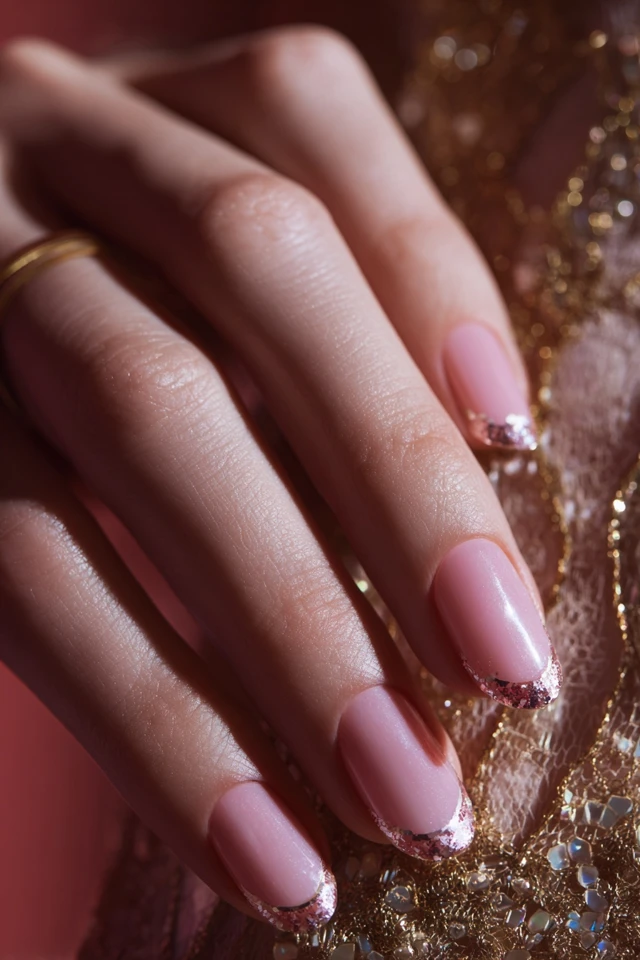
French Tip Nail Designs: Fluid, Colored and Minimal Ideas
- Words by
- Julio Arco
- Published
- Reading
- 4 min
Fluid French tips replace the crisp white line with a soft, blended or curved edge in a color you choose. If you want one place to start, pick a sheer nude or pink base, add a tip in a single color, and let the edge fade softly instead of cutting a hard line.
Below are the main French tip nail designs worth trying, how to match them to your nails and outfits, and what to know before you remove them.

What makes a French tip look fluid?
A classic French tip has a straight, sharply defined smile line. A fluid version softens it. The edge might blur into the base like an ombre, curve in a wave, or dip asymmetrically toward one side of the nail.
The effect works because the eye follows a curve more slowly than a straight line, so the nail reads as relaxed rather than formal. Through the lens of evidence-based design, I'd treat the tip edge as the first thing the eye reads on a nail, so it is the place to put your one decision: soft or sharp.
Which French tip styles can you choose from?
Classic and sheer
A milky pink or clear base with a white tip stays the most flexible option. It goes with almost any outfit and suits office dress codes. A thinner tip looks more modern than a thick one.
French tip nails with color
Swap the white for coral, berry, lavender, cobalt or olive. Warm skin tones often look good against coral, amber and warm red tips, while cool tones tend to suit blue, purple and berry. These are tendencies, not rules, so hold the swatch against your hand in daylight before committing.
Ombre and blended tips
This is the fluid look in its purest form: the tip color fades upward into a sheer base. Keep the two shades close in value (similar lightness) for a gentle blend, or pick high contrast, such as white into cobalt, for a bolder result. See more fluid French tip designs for variations on the blend.
Micro and minimalist French tips
Micro french tip nails use a line only a millimeter or two thick at the free edge. Minimalist french tip nails keep everything else bare: no stones, no stripes. They grow out gracefully, which suits you if touch-ups are not your thing.
French tip nails with glitter and chrome
A fine glitter or chrome tip adds shine without extra shapes. Because glossy surfaces catch light differently from matte ones, a chrome tip over a matte or sheer base makes the contrast stand out. Look at glitter concepts and chrome palettes if you want to see how far this can go.
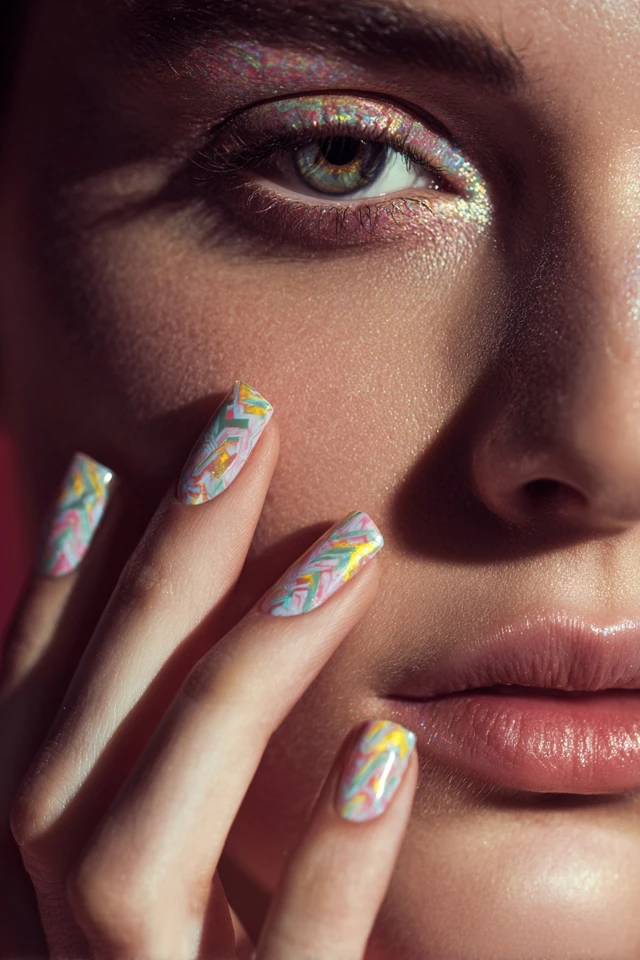
Reverse and negative-space tips
Reverse French puts the color at the cuticle line instead of the tip. Negative space leaves a gap of bare nail between color and edge. Both feel graphic and work well on short nails.
How do you wear short French tip nails with design?
Short nails handle French tips well if you keep the tip line thin and sit it close to the free edge. A deep curve on a short nail can make it look shorter, so go shallow.
Short french tip nails with design can carry one small accent: a tiny heart, a dot, or a single glitter line on the ring finger. Leave the other nails plain so the accent has room.
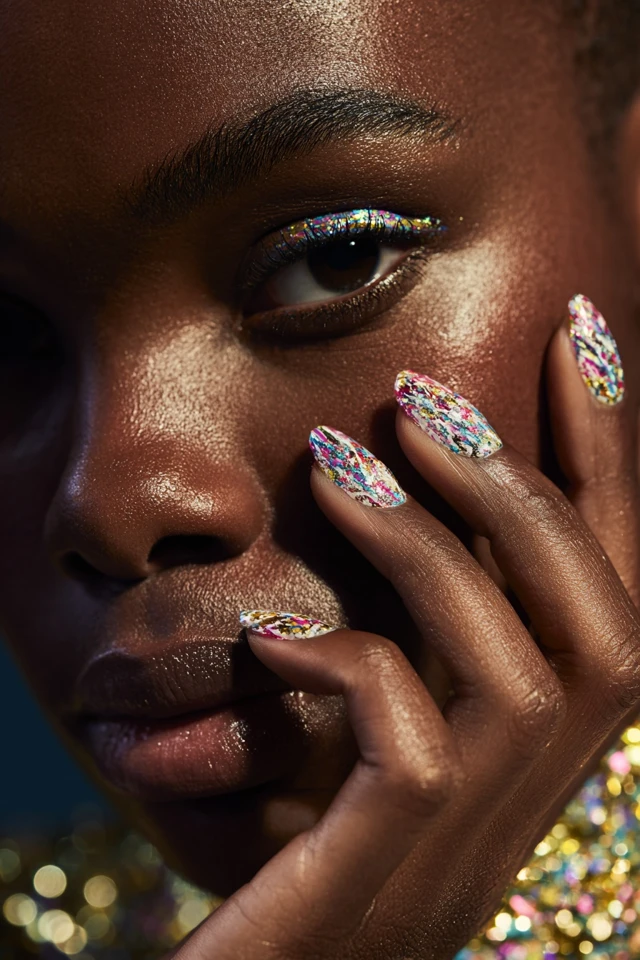
Are French tips classy, and are they still in style?
Yes to both, with a caveat on how you do them. The shape is old enough to have outlasted many trends, and the quieter versions (sheer base, thin tip, soft edge) read as polished. Loud versions read as playful, which is fine when that is the intent.
For more takes on this theme, browse polished French tip statement nails or the color-forward set.
How do you match French tips to your outfit?
- Neutral wardrobe (white shirt, denim, tailored blazer): a colored or ombre tip becomes the accent.
- Printed or bright clothes: stay with a sheer nude and a thin white or clear tip.
- Metal jewelry: match a gold or silver tip to your rings for a cohesive hand.
Texture matters too. A glossy topcoat beside a satin or knit sleeve looks deliberate, since the shine contrasts with the softer surface.

What nail type works best, and how do you remove them safely?
Almond and oval shapes suit fluid edges because they echo the curve. Square nails suit crisp lines. Short natural nails work with any of them. If you want a more dramatic look, longer lengths give the design more space.
Care is part of the choice. The American Academy of Dermatology notes that getting acrylics to stick means filing the natural nail until it feels rough, which thins it and makes it weaker. Gel is gentler on the surface but still needs careful removal: the Cleveland Clinic says removing gel polish carelessly can temporarily damage nails, with cracking and peeling the most common issues.
For gel at home, the AAD explains that acetone is the most effective remover, and wrapping the nails for 10 minutes should take off most or all of the polish. If your nails look weak or painful afterward, check with a dermatologist.
Frequently asked questions
Are French tips out of style?
No. The French tip keeps coming back in new forms such as micro tips, colored tips and soft blended edges. A thin, sheer version tends to look current.
Are French tip nails classy?
They can be, especially with a sheer base, a thin tip and a clean finish. Glitter or bright colors shift the mood toward playful.
What are some cute French tip nail ideas?
Try a pastel ombre tip, a thin micro line, a glitter tip on one accent nail, or a reverse French at the cuticle. A small heart or flower on one finger keeps it simple.
What type of nail is best for French tips?
Almond and oval shapes suit soft, fluid edges, while square nails suit crisp lines. Short nails work too if the tip line is thin.
Filed under Nail Design