Fall Outfits by Body Type: What to Wear for Each Shape
- Words by
- Julio Arco
- Published
- Reading
- 4 min
The quickest way to dress your shape in fall is to decide where you want the eye to land, then choose a coat, a knit and a boot that point there. Waist, shoulders, hips or length: pick one focus and let the rest stay simple.
Body-type labels are a starting point, not a rule. If a coat pulls across the shoulders or a sweater swallows you, that is a fit problem, not a you problem. Use the sections below as fall fashion for every body type, and borrow across categories freely.
How do you find your starting shape?
Look at the relationship between shoulders, waist and hips in a mirror, in fitted clothes. Shoulders and hips about equal with a defined waist is an hourglass. Hips wider than shoulders is a pear. Shoulders wider than hips is an inverted triangle. Little difference all around is a rectangle. Weight carried mostly through the middle is often called an apple.
Most people sit between two of these. Pick the one that sounds closest and treat the advice as a suggestion.
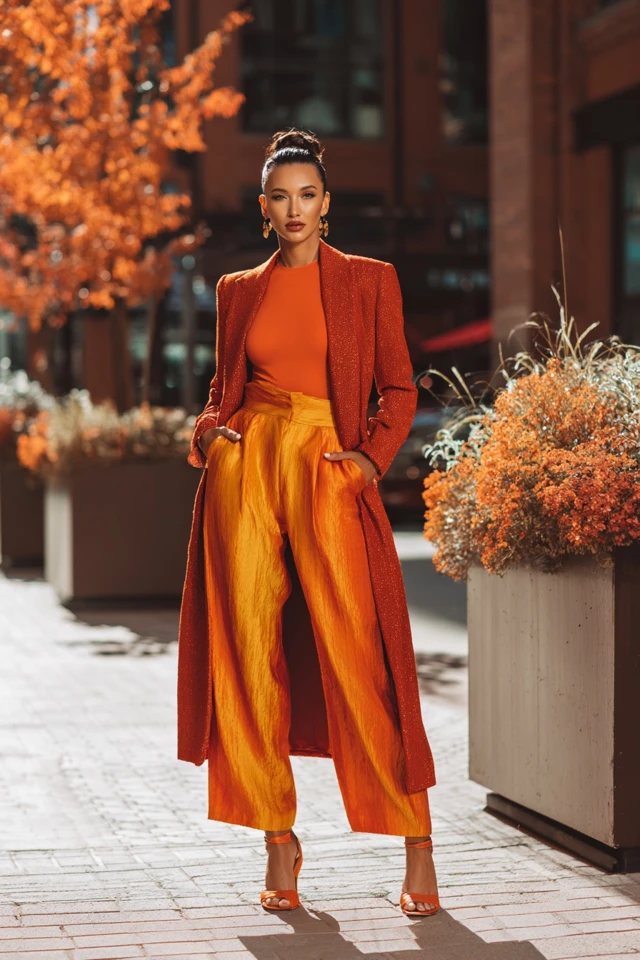
Autumn style for an hourglass figure
Follow the waist. A belted wool coat, a fitted knit tucked into high-waisted trousers or a wrap dress under a cardigan all keep that line visible. Wrap styles are covered in these wrap dress outfit ideas.
Choose structured fabrics such as a wool blend that holds its shape. Very bulky knits can hide the waist, so if you love a chunky sweater, add a belt over it.
Fall outfits for pear shape
Pear shapes usually look balanced when the top half carries a bit more interest. Try a collar, a boat neckline, a lighter or brighter sweater, or a blazer with defined shoulders. Dark, matte bottoms in a medium-weight fabric such as corduroy or ponte keep the lower half quiet.
A-line skirts and straight or wide-leg trousers skim the hip instead of clinging. For coats, look for one that ends at mid-thigh or lower, with a clean line rather than pockets that sit right on the hip.
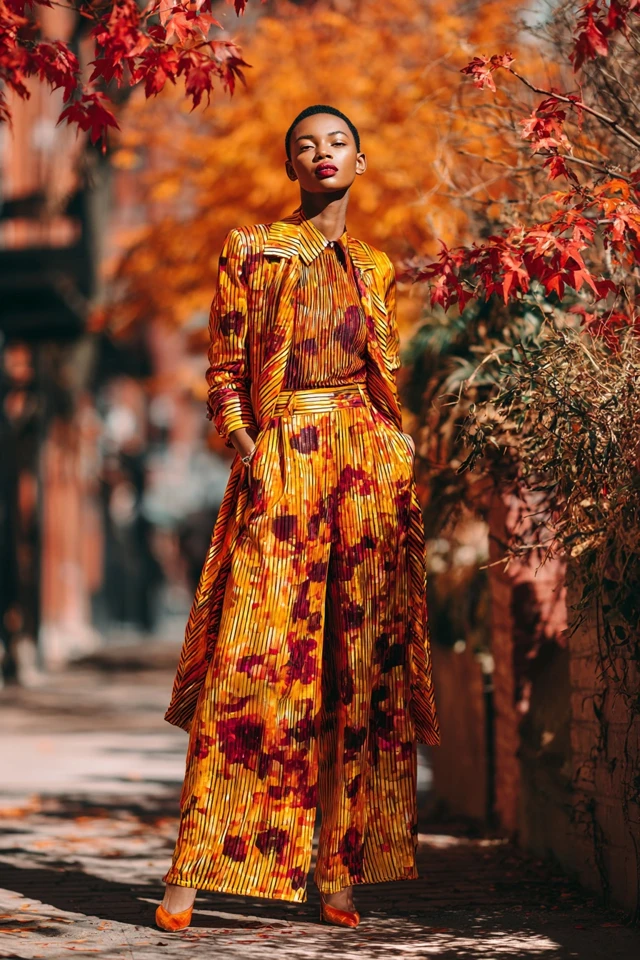
Fall outfits for rectangle body shape
Rectangles can build curve with layers and texture. Through the lens of evidence-based design, I'd lean on texture here because a nubby knit or a quilted panel catches light differently from smooth fabric, and that contrast reads as dimension.
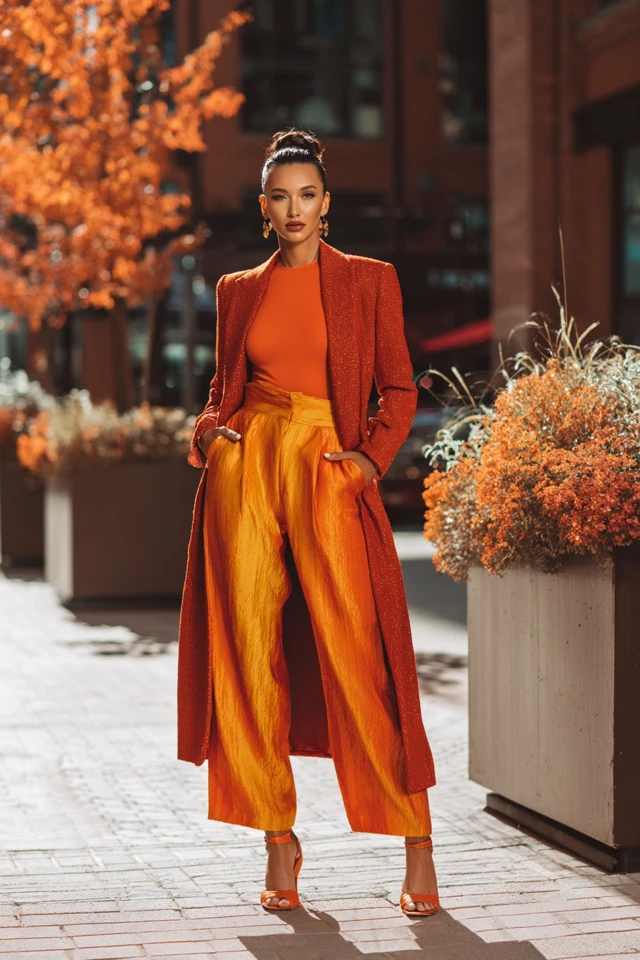
Try a belted trench or a cropped jacket over high-waisted pants to mark the waist. A peplum knit, a ribbed turtleneck under a pinafore or a scarf worn loose at the chest all add shape without fuss.
Apple shape fall styling
Draw attention to the neckline and legs. V-necks, open cardigans and a long, straight coat that falls from the shoulders keep the line vertical. Tunic-length sweaters over slim or straight trousers work well, and fabrics with some drape move better than stiff ones.
Boots that show a little leg, such as an ankle or knee-high style, help balance a fuller middle. Check that jackets close comfortably, since a coat that strains at the front looks tighter than the body underneath.
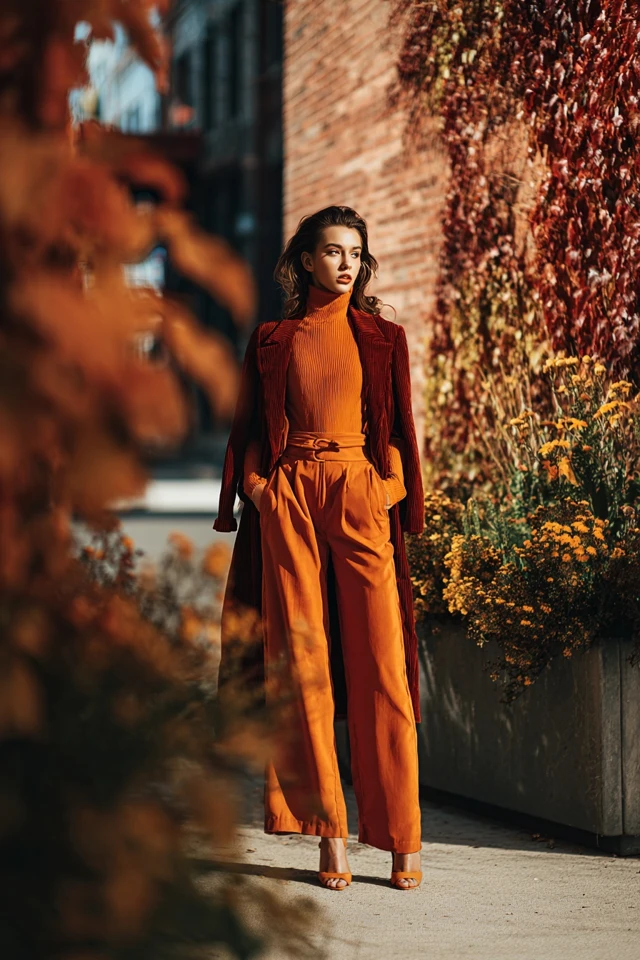
Inverted triangle fall outfits
With broader shoulders, soften the top and add volume below. Go for softer knits, simple necklines like scoops or V-necks, and skip heavy shoulder pads. Wide-leg trousers, pleated skirts and leather skirts bring the hips into balance.
A collarless or raglan-sleeve coat avoids adding width at the shoulder line.
Best coats and boots by body type
| Shape | Coat | Boot |
|---|---|---|
| Hourglass | Belted wool coat | Heeled ankle boot |
| Pear | Mid-thigh or longer, structured shoulder | Slim knee-high or block-heel ankle |
| Apple | Long, straight, open front | Knee-high or ankle with a little leg showing |
| Rectangle | Belted trench or cropped jacket | Chunky lug sole or combat boot |
| Inverted triangle | Raglan or collarless, softer shoulder | Block heel or sturdy boot with some visual weight |
For the basics that go under any of these, see fall essential wardrobe basics and chic wardrobe basics.
Layering tips that work on every shape
- Start with a thin base, like a fine turtleneck or a fitted tee, so bulk stays low.
- Keep the longest layer lightest. A long cardigan under a shorter jacket usually looks better than the reverse.
- Match the colors across layers when you want to look longer, and contrast them where you want a break, such as at the waist.
- Check sleeve lengths: each layer should end slightly past the one beneath it.
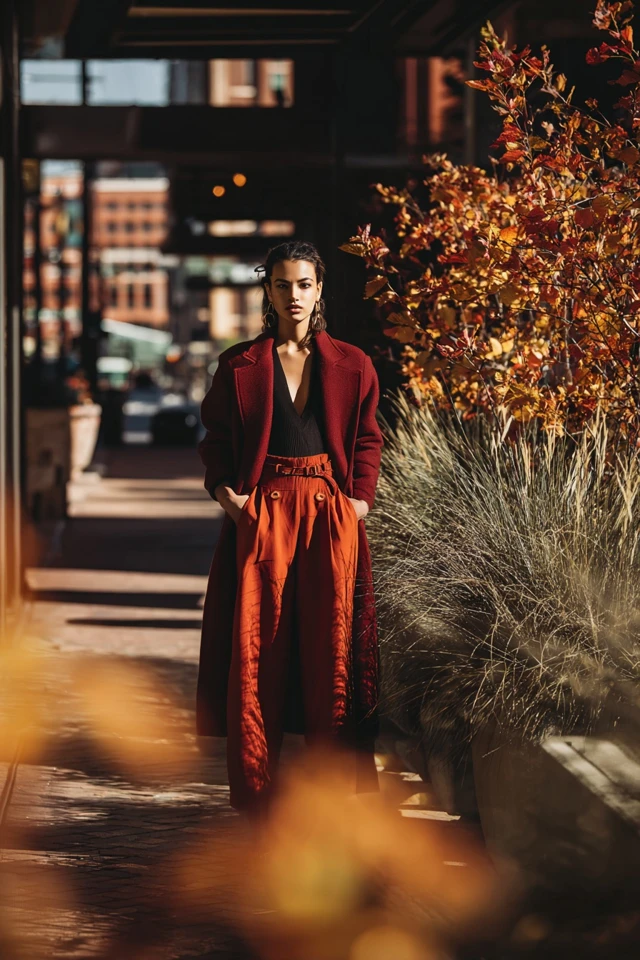
Color changes how a shape reads, too. Dark, matte tones recede and light or bright tones advance, so put your brightest piece where you want attention. For palettes that layer well, try this fall layering color palette, and for a pared-back approach see fall minimalist outfit ideas.
Fall outfits for men by body type
The same logic applies. Broad shoulders with a narrow waist suit a tailored overcoat or a slim-fit jacket. A rectangular build gains shape from layered textures like a shawl-collar cardigan under a chore coat. If you carry weight at the middle, choose a straight-cut coat in a dark tone, and make sure shoulder seams sit where your shoulders end.
Frequently asked questions
What is the 3-3-3 rule for outfits?
It is a wardrobe-planning idea, usually three tops, three bottoms and three pairs of shoes mixed into a small set of outfits. It is a popular shorthand rather than a fixed rule, so adjust the numbers to your routine.
What is the hardest body type to style?
None is harder in itself. Difficulty usually comes from clothes cut for a different proportion, so focus on fit at the shoulders, waist and hem rather than on the label.
Which fall coat works for most body shapes?
A single-breasted wool coat that ends around mid-thigh to knee is a safe pick. Belt it to add a waist or leave it open for a straighter line.
Should I dress for my body type or for what I like?
Use body-type advice as a way to try options, not a limit. If you love a piece and it fits comfortably, wear it.
Filed under Outfit Ideas