Denim Style Guide: Fits, Washes and How to Wear Them
- Words by
- Julio Arco
- Published
- Reading
- 5 min
Start with fit, then wash, then the outfit. Pick a rise and leg shape that suit your proportions, choose a wash that matches where you will wear the jeans, and pair them with a layer that balances the volume of the leg. That order solves most denim problems.
Below is a practical guide to the main types of women's jeans, how to match them to your shape, and how to build fall outfits around them.
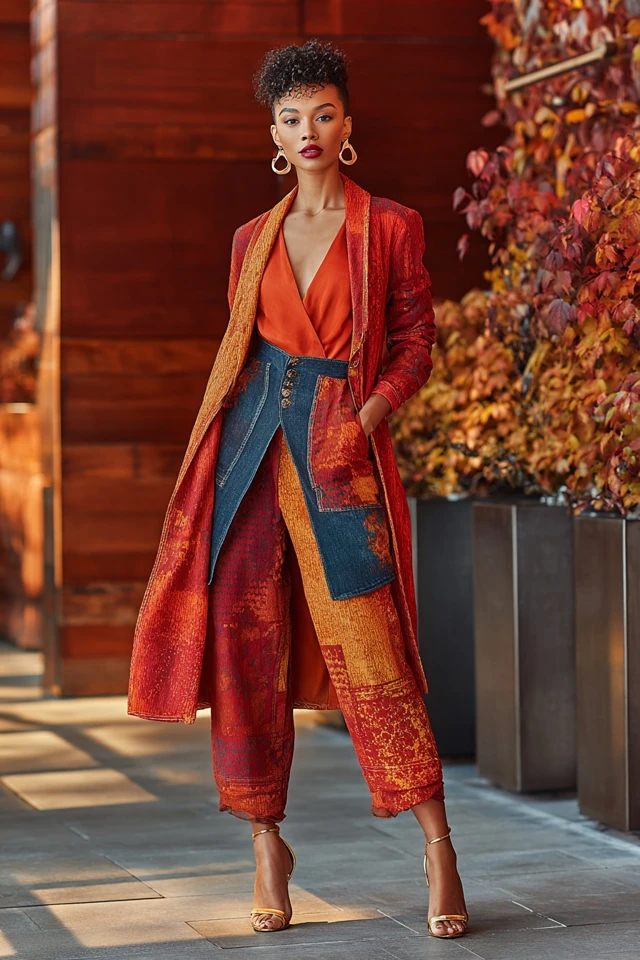
What are the main types of women's jeans?
Most pairs fall into a handful of leg shapes. Fashion history shows how quickly the favorites change: the FIT Fashion History Timeline notes that low-rise, flared jeans were prevalent in the early 2000s, and bootcut had grown more popular by the middle of the decade. Skinny jeans arrived in 2005 and were commonplace by 2006, according to the same timeline. Shapes return, so buy what fits you rather than what is loudest this season.
- Skinny: close to the leg all the way down. Works with long, loose tops and chunky boots.
- Straight: roughly the same width from knee to hem. The easiest all-rounder.
- Baggy or relaxed straight: more room through the hip and thigh, falling in a column.
- Bootcut: fitted to the knee, then a slight opening that sits over boots.
- Flare: wider from the knee, best with a heel or a platform sole.
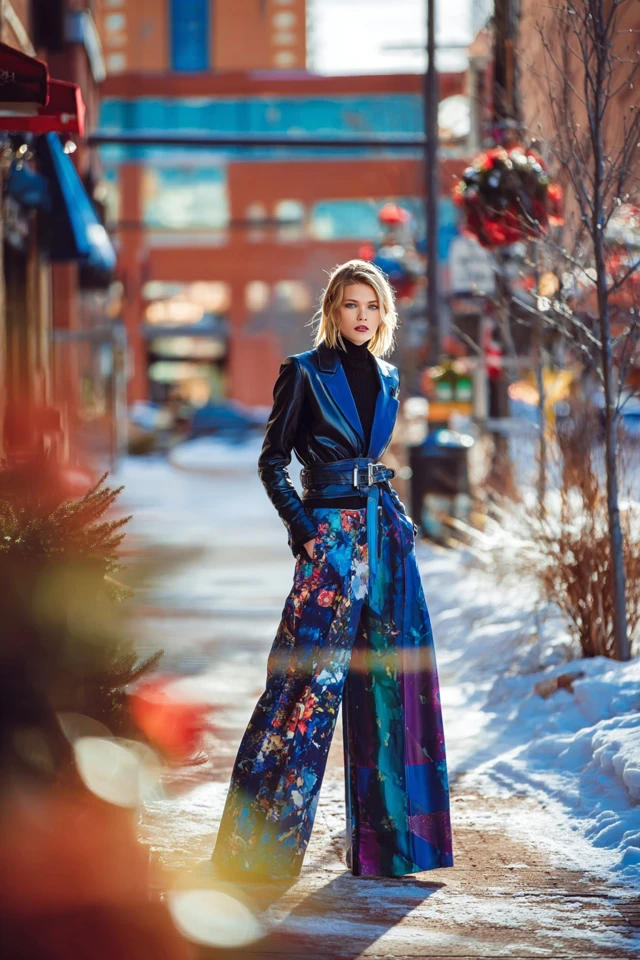
- Wide-leg: generous from hip to hem, often high-rise.
How should jeans fit before you buy?
A jeans fit problem is a pattern problem, not a you problem. Run this denim fit guide before you buy in the fitting room:
- Sit down. The waistband should not dig in or gap at the back.
- Slide two fingers behind the waistband. If they go in easily but not loosely, the waist is about right.
- Check the thigh. Fabric should not pull into whiskers across the hip unless the cut is meant to be tight.
- Look at the hem with the shoes you will actually wear. It should skim the shoe or sit just above the ankle, depending on the cut.
- Choose the size that fits your hips and thighs, then have the waist taken in if needed. Tailoring a waist is usually simpler than adding room elsewhere.
Stretch changes the fit over a day of wear. A denim with a little elastane tends to relax, while rigid cotton holds its shape and softens more slowly. If you are between sizes, rigid denim is usually the one to size up in.
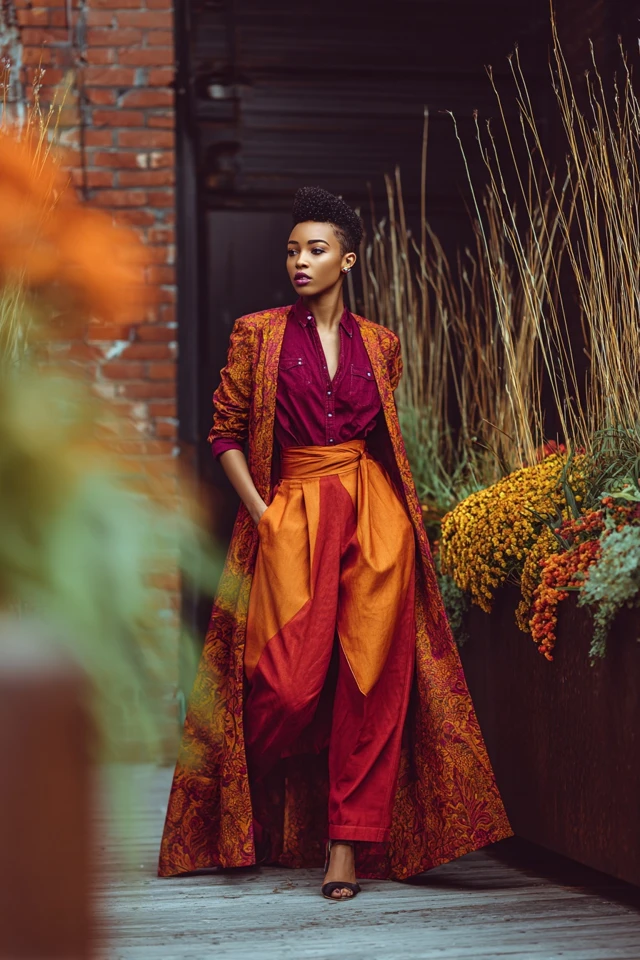
Which are the best jeans for your body shape?
Treat these as starting points, not rules. Bodies vary within every category, and comfort counts more than a label.
- Hourglass: a high rise with some stretch follows the waist without squeezing it.
- Rectangle: flares, wide legs or back-pocket detail add shape. Washes with some fading across the thigh add dimension.
- Apple: a mid-rise, relaxed straight leg in a dark wash with a soft waistband is comfortable around the midsection.
- Pear: bootcut or wide-leg jeans balance the hip line. Plain pockets keep the focus even.
Through the lens of evidence-based design, I'd think about where the eye lands first. A lighter wash or bold pocket detail pulls attention toward it, and a darker, uniform wash lets the overall line read first.
How do you style baggy straight leg jeans?
Volume on the bottom wants structure or snugness on top. Try a fitted knit, a cropped jacket or a tucked tee, so the waist still shows. Then pick shoes with some weight, such as loafers, boots or clean sneakers, so the hem does not swallow your foot.
If the hem pools, fold it once or have it shortened. A break right at the shoe looks deliberate, while a hem dragging on the ground wears out quickly and looks accidental.
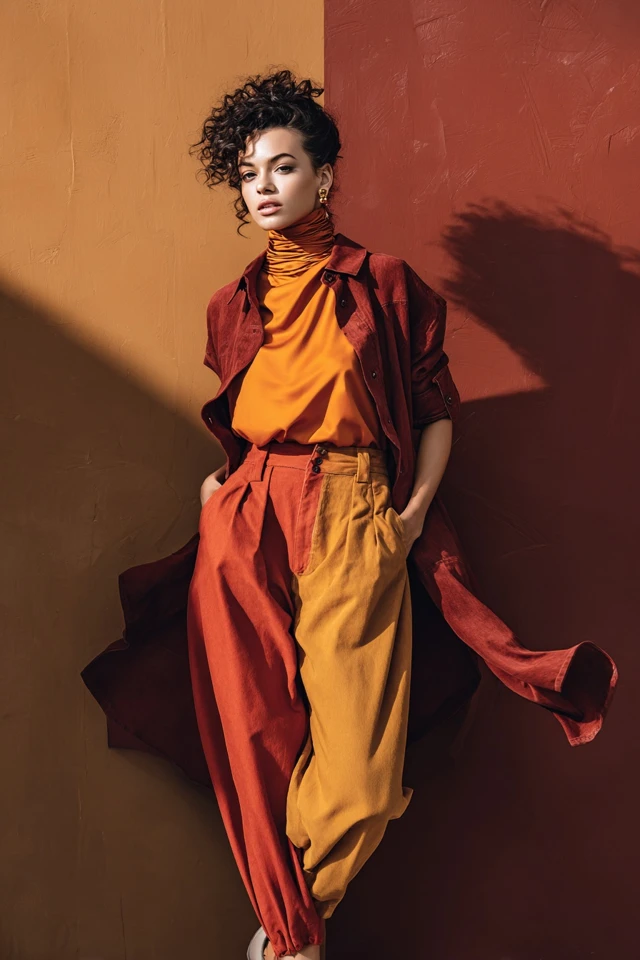
Which wash should you pick?
Wash changes how the same cut reads. Through the lens of evidence-based design, I'd say darker, even indigo looks more formal because there is less visual noise to break up the line, while pale or heavily faded denim reads more casual. Texture matters too: a flat, smooth rinse looks sleeker than a distressed finish that scatters light.
- Dark indigo: the easiest to dress up with a blazer and boots.
- Mid blue: the everyday default for sweaters and jackets.
- Light wash: relaxed, good with white and cream.
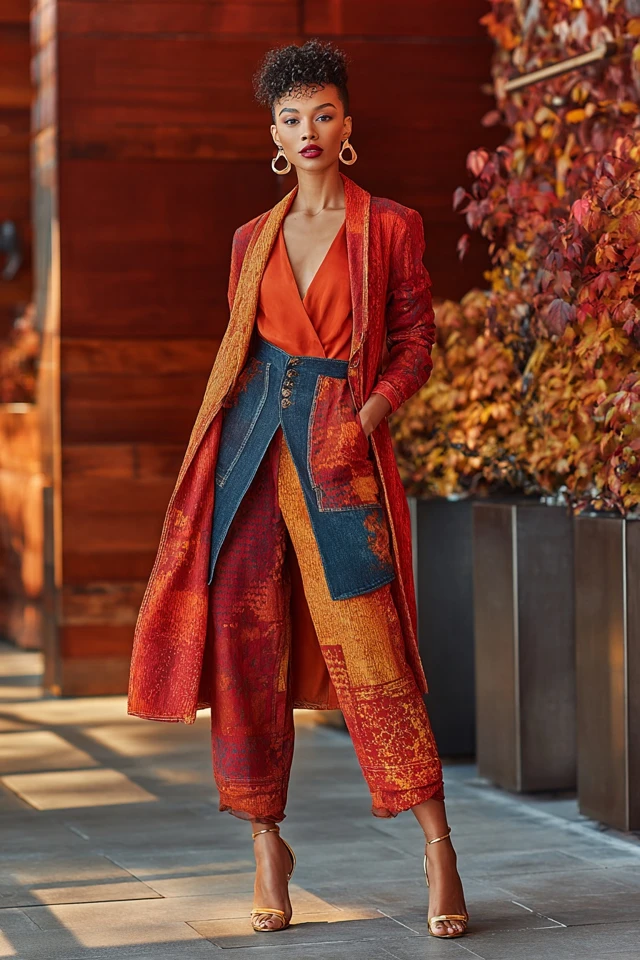
- Rust, olive or chocolate: fall colors that pair well with cream, denim blue or black.
On skin tone, try the wash next to your face in daylight. Denim near your face matters mostly through the top you wear above it, so choose the shirt color first and let the jeans support it.
Denim outfit ideas for fall
These are simple formulas you can adapt to your own closet.
- Dark straight jeans, a cream knit and ankle boots. The reliable weekday uniform.
- Mid-blue baggy jeans, a fitted turtleneck and loafers.
- Rust or olive jeans, a white tee and a leather jacket.
- Wide-leg jeans, a tucked-in bodysuit or tee and a long coat.
- Light-wash jeans, a striped shirt and a denim jacket in a darker wash, so the two pieces read as a deliberate pair.
For more fabric-led fall ideas, see chic minimalist denim, preppy denim and vintage fall layering. If you prefer a neutral palette, neutral fall essentials pairs well with a dark wash.
How to care for denim
Wash jeans less often than other clothes to hold color and shape. Turn them inside out, use cold water and a mild detergent, and air dry. Heat from the dryer is what shrinks cotton and wears out stretch fibers.
Frequently asked questions
What are the new styling rules for wearing denim?
There are fewer strict rules and more balance: relaxed jeans work with a fitted layer, and a dark wash with a tailored top looks polished. Mixing two different washes works best when they sit clearly apart in shade.
What is the "two finger rule" for jeans?
It is a quick waistband check: you should be able to slide about two fingers between the waistband and your body. If you cannot, the jeans are too tight, and if your whole hand fits, they are likely too loose.
What is the 3 3 3 rule in fashion?
It usually refers to building a mini-wardrobe from three tops, three bottoms and three pairs of shoes that all mix together. A pair of dark jeans is an easy anchor for the bottoms.
Can I wear fall denim on a budget?
Yes. Buy one well-fitting dark pair first, look at resale for more unusual washes, and skip fast-changing details you may not wear again.
Filed under Outfit Ideas