Holographic Nail Effects: How They Work and Ideas to Try
- Words by
- Julio Arco
- Published
- Reading
- 4 min
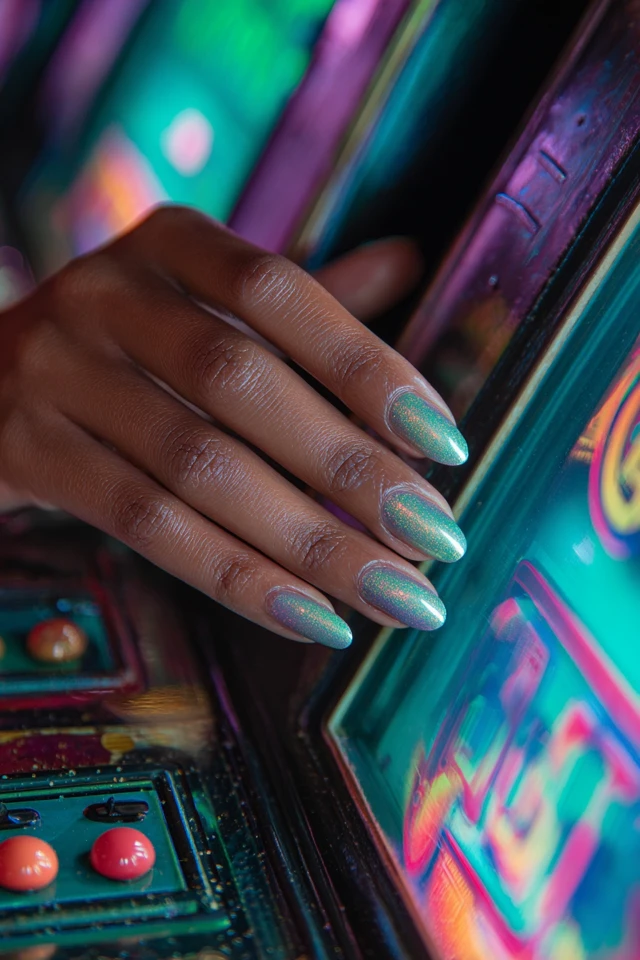
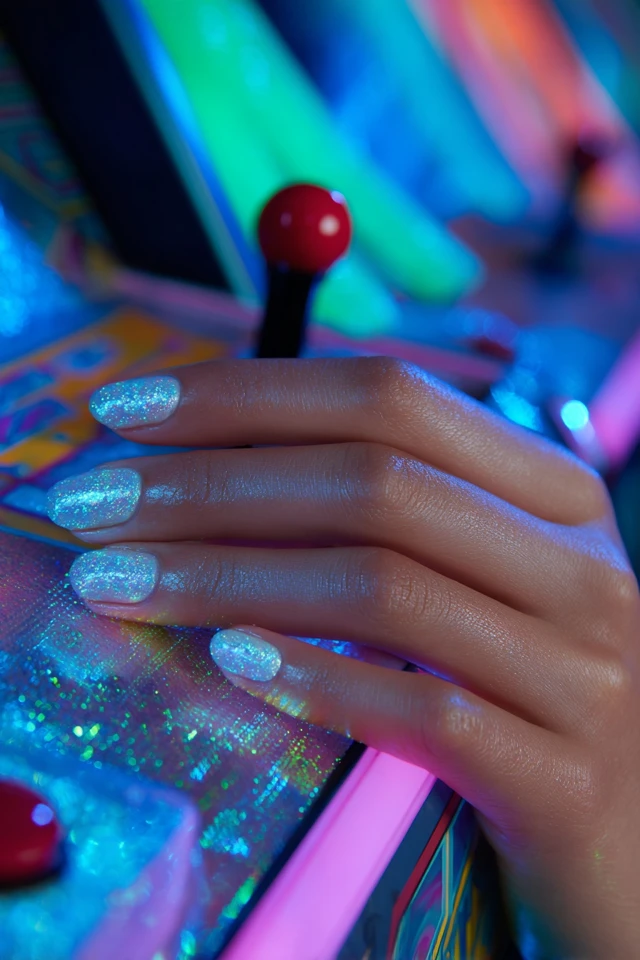
Holographic nails split light into a shifting rainbow that changes as your hand moves. You get the effect from a holographic powder rubbed over a tacky gel base, or from a holographic polish with the pigment already inside. Powder looks sharper and more intense; polish is quicker and easier to wear.
Below: how the effect works, how it differs from chrome, how to get it at home, and the designs worth saving for your next appointment.
How does holographic nail polish work?
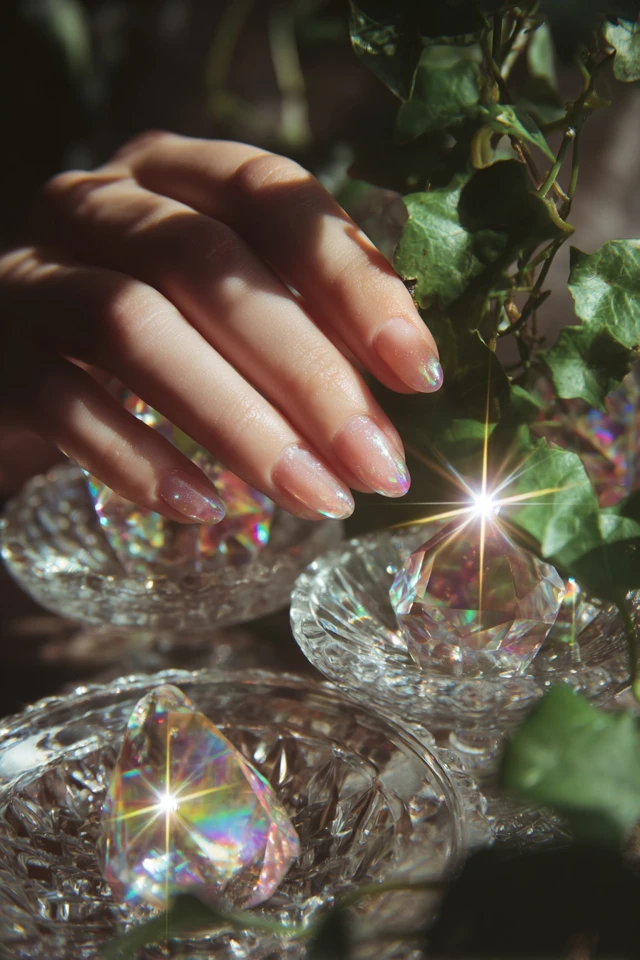
The effect comes from very fine particles that bend and scatter light into separate colors, much like a prism. Your eye catches a different color depending on the angle of the nail and the light source, which is why the same manicure looks silver blue in the office and pink gold outside.
Through the lens of evidence-based design, I'd say the surface matters as much as the pigment. A smooth, glossy top coat gives a clean rainbow flash, while a textured or matte finish softens it into a quiet shimmer.
Holographic nails vs chrome nails
Chrome is a mirror finish: one metallic tone, usually silver, gold or a single tint, with a reflective look. Holographic splits the light, so you see several colors at once, often a rainbow sweep.
- Chrome reads sleek and polished, closer to jewelry.
- Holographic reads playful and light-catching, closer to a prism.
- Both are applied as powders over a gel base, so a nail tech can layer them in the same set.
If you like chrome but want more color, a holographic layer over a dark base is the easy middle ground. For a closer look at the powder method, see this magnetic holographic powder mani.

How to achieve holographic nails at home
- Prep the nail: push back cuticles, buff the shine off lightly and apply a base coat.
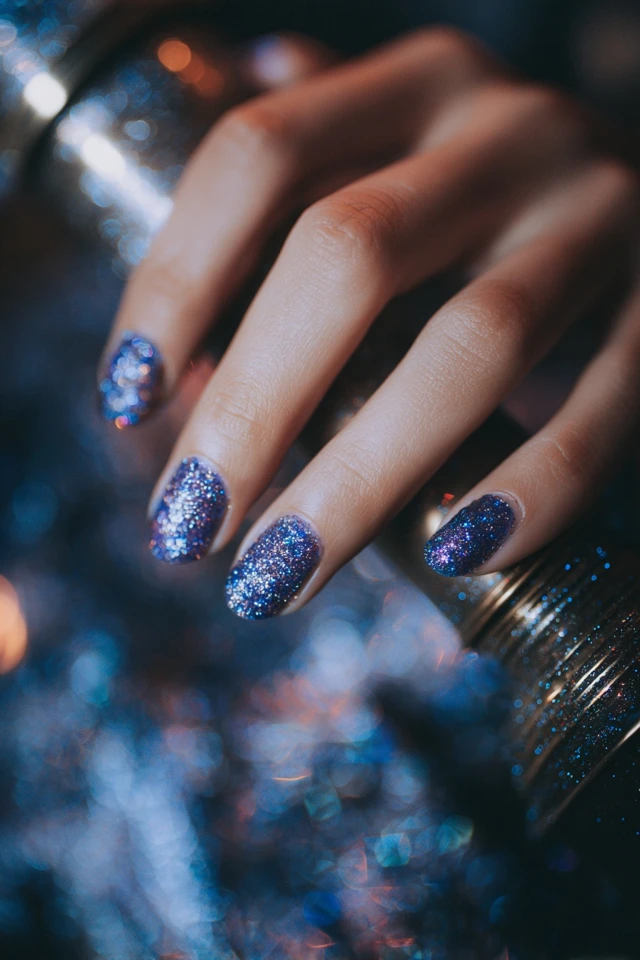
- Apply a dark or neutral gel color and cure it. Black, deep navy and nude all work, and the base changes how bright the effect looks.
- Add a no-wipe gel top coat, cure it, and you have a slightly tacky surface for the powder. Some kits skip this, so follow the product directions.
- Press the powder on with a sponge applicator or rub it in with your fingertip protected, using thin layers and building up.
- Brush off the excess, then seal with a top coat and cure again.
Dark bases give the strongest rainbow. A sheer pink or nude base gives a softer, pearly version that suits work settings.
Holographic nail designs worth trying
Classic full-coverage holographic
Every nail in the same powder is the easiest way in. Pick one tone family so the set looks intentional, cool silvers and blues or warm golds and pinks.
Holographic French tips
Holographic french tips keep the familiar shape but swap the white for a shimmer line. Put the powder only on the tip over a sheer nude or milky base, and the result feels subtle in daylight and flashy under a lamp. For more shimmer-led ideas, try sugar aura nails.

Accent nail
One or two holographic nails with the rest in a solid neutral is the lowest-effort option. The ring finger is the classic choice.
Gradient and swirl
Sponge the powder into a fade from the cuticle or tip, or draw a loose swirl in the tacky layer. Both hide small application flaws, which makes them forgiving for beginners.
Holographic nails short
Holographic nails short work very well, because the effect needs surface, not length. A short square or rounded nail shows the full rainbow and stays practical for typing and chores. Longer almond shapes give more room for gradients.
Holographic nails on acrylics, gel and dip
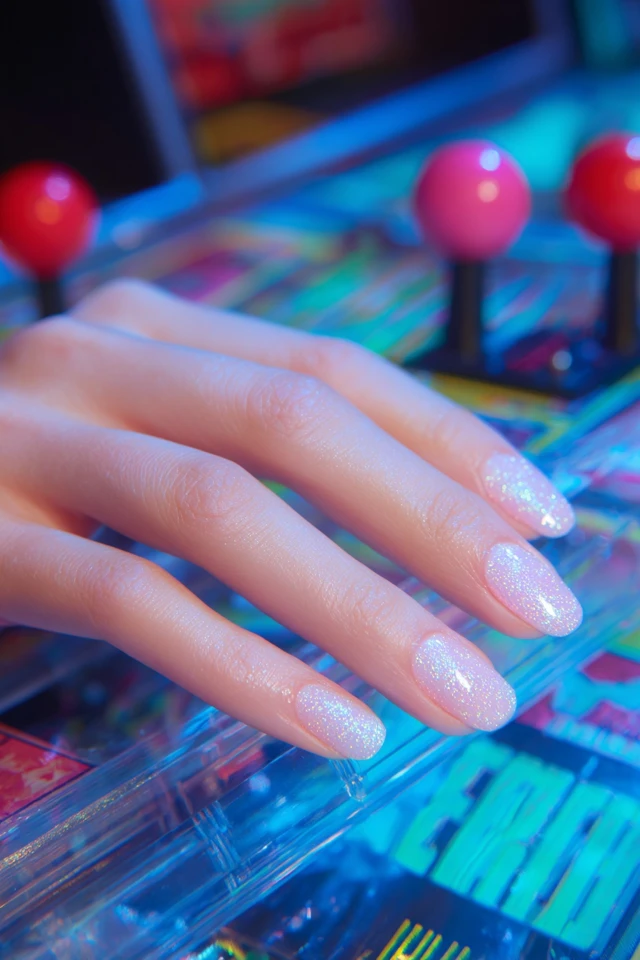
Holographic nails acrylic sets are common, because the smooth, hard surface holds powder well. Know the trade-off before you commit. The American Academy of Dermatology notes that getting acrylics to stick means filing natural nails until they feel rough, which thins them, and that they need touch-ups every 2 to 3 weeks as your nails grow.
Dip powder is another route. Board-certified dermatologist Shari Lipner, MD, PhD, says "After removing the color, wait one month before getting another one of these manicures." For a related finish, see refined dip powder designs.
Choosing a color mood
Color reads differently against skin, so test a shade against your hand before booking. As a general guide, silver, blue and violet tones look crisp next to cooler skin, while gold, peach and bronze flashes look warmer next to golden or olive skin. Treat that as a starting point, not a rule.
Outfit pairing is simple. Holographic nails stand out against matte fabrics like wool, suede or cotton, and they echo metallic accessories. With a busy print, keep the nails minimal.
Removing holographic nails safely
Holographic powder sits under gel, so removal is the same as any gel manicure. The AAD says acetone is the most effective way to remove gel polish at home. Careless removal can cause cracking and peeling, which the Cleveland Clinic lists as the most common issues. Dermatologist Chris Adigun, MD, FAAD, adds that "Looking closely at your nails after removing the color helps you spot a problem early."
If anything looks off, check with a dermatologist or nail professional. For another light-play finish to compare, see holographic prism nails.
Frequently asked questions
How to achieve holographic nails?
Apply a dark gel color, cure it, add a no-wipe top coat, then rub holographic powder over the tacky layer and seal with another top coat. Thin layers give the cleanest rainbow.
What is the difference between holographic nails and chrome nails?
Chrome gives a single mirror-like metallic tone. Holographic splits light into several colors that shift with the angle.
How does holographic nail polish work?
Fine particles in the polish scatter light into separate colors, so the shade you see changes with the angle and the light source.
Do holographic nails suit a professional setting?
Yes, usually. A sheer nude base with a soft holographic accent or tip reads polished and quiet in most offices.
Filed under Nail Design