Color Blocking Outfits: How to Wear Bold Colors Elegantly
- Words by
- Julio Arco
- Published
- Reading
- 4 min
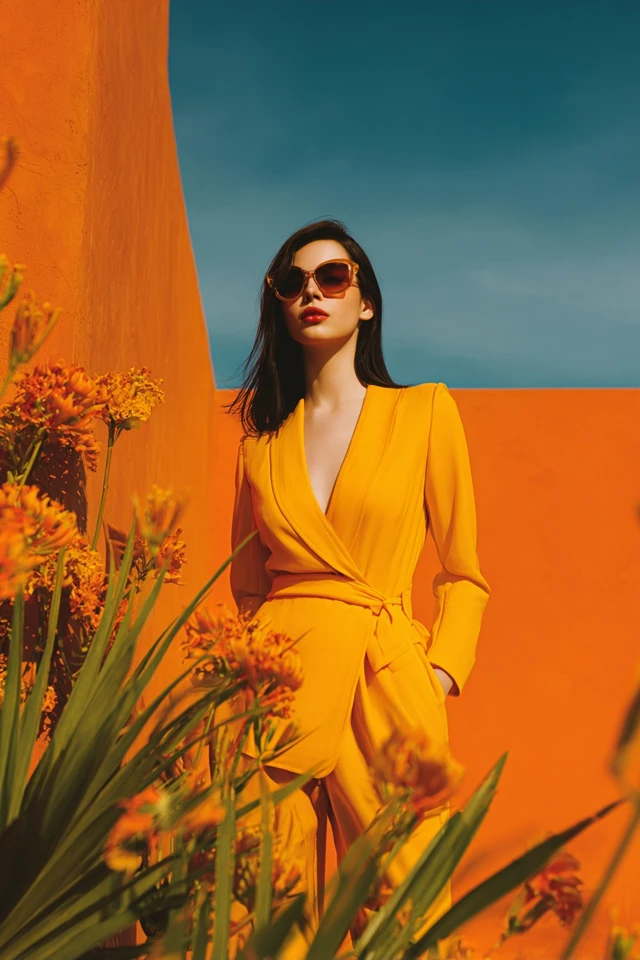
Color blocking means wearing solid, clearly separate areas of color together, usually two or three, with clean edges between them. The simplest way to start is one bold piece plus a neutral, then add a second color once that feels comfortable.
Below: what the term means, how to pick pairings, three easy formulas, and a short list of do's and don'ts.
What is color blocking in an outfit?
It is an outfit built from large, flat blocks of color instead of prints or gradual shading. A cobalt blazer over a tangerine top is color blocking. A floral dress with a matching belt is not, because the print blurs the edges between colors.
The idea is old. The Fashion History Timeline at FIT describes parti-color as the combination of different colors within the same garment along the vertical axis, a style that was common in Medieval Europe. Today the blocks usually sit across separate pieces rather than inside one garment.
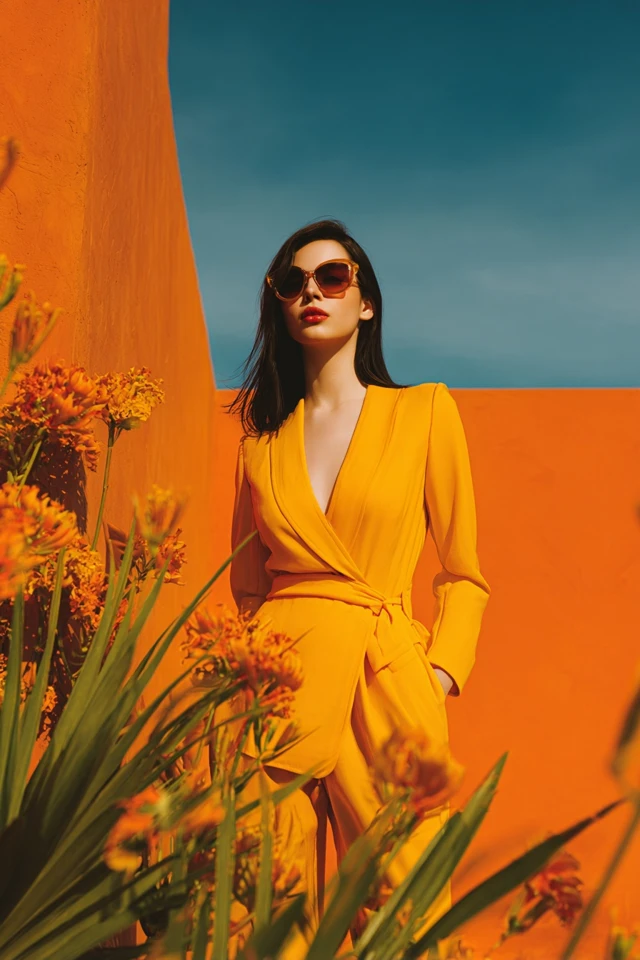
How to color block outfits: three easy formulas
- One color plus a neutral: a bright top with camel trousers, or a red bag with an ivory blouse and jeans.
- Two colors plus a neutral: navy trousers, a mustard knit and a white shirt underneath.
- Tonal blocking: two shades of the same color, like blush and deep rose, for a softer result.
If you want the gentlest entry, try the one-color formula first. Our guide to neutral outfits with a pop of color walks through that approach in more detail.
How do you choose colors that go together?
Use the color wheel as a starting point. Colors opposite each other (blue and orange, red and green) give the strongest contrast. Neighbors on the wheel (blue and green, pink and orange) feel calmer and are easier to wear.
Keep saturation consistent. A vivid cobalt next to a dusty pastel makes the pastel look washed out, while two jewel tones or two pastels read as a deliberate pair.
Through the lens of evidence-based design, I'd also check texture before you commit. A matte knit and a glossy satin in the same color do not read as the same color, because the surface changes how light reaches your eye.
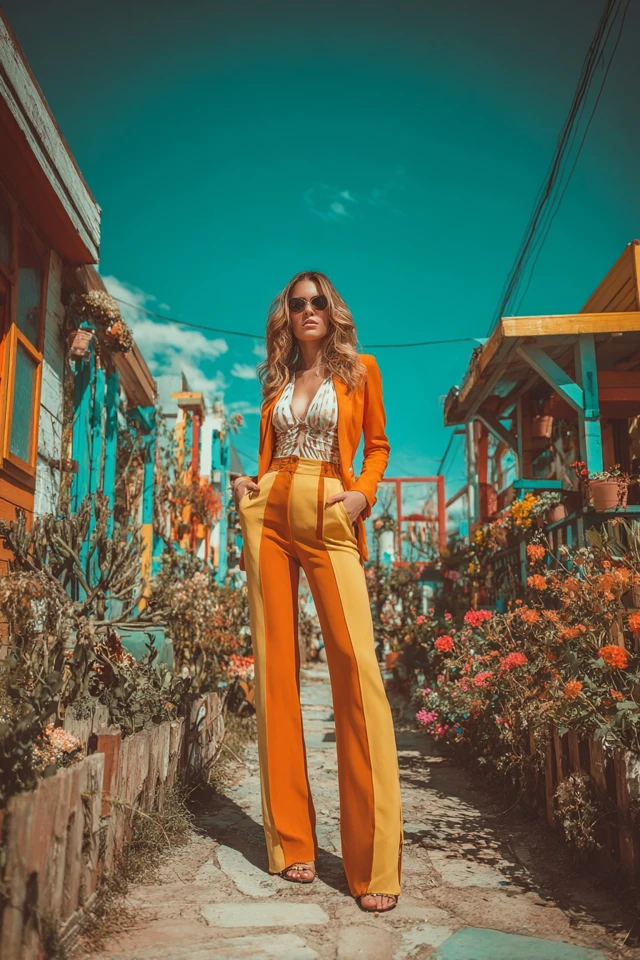
Warm vs cool tone color blocking
Warm colors (red, orange, yellow, coral) tend to look closer and louder. Cool colors (blue, green, purple) tend to recede and feel calmer. Pairing one of each creates contrast with built-in balance, such as a coral top with deep teal trousers.
Matching to your skin matters too. If gold jewelry flatters you, warm blocks near the face usually look natural. If silver does, cool blues and purples near the face often feel easier. Treat that as a starting guess and trust the mirror.
Color blocking outfits for summer
Summer suits lighter fabrics and brighter, cleaner color. Linen trousers in sage with a coral tank, or a pastel matching set with a contrasting bag, keep things airy. Stay with two colors in hot weather so the outfit does not feel heavy.
For a quieter take, see our minimalist color pop looks, and for sets that work year-round, the color pop capsule wardrobe.
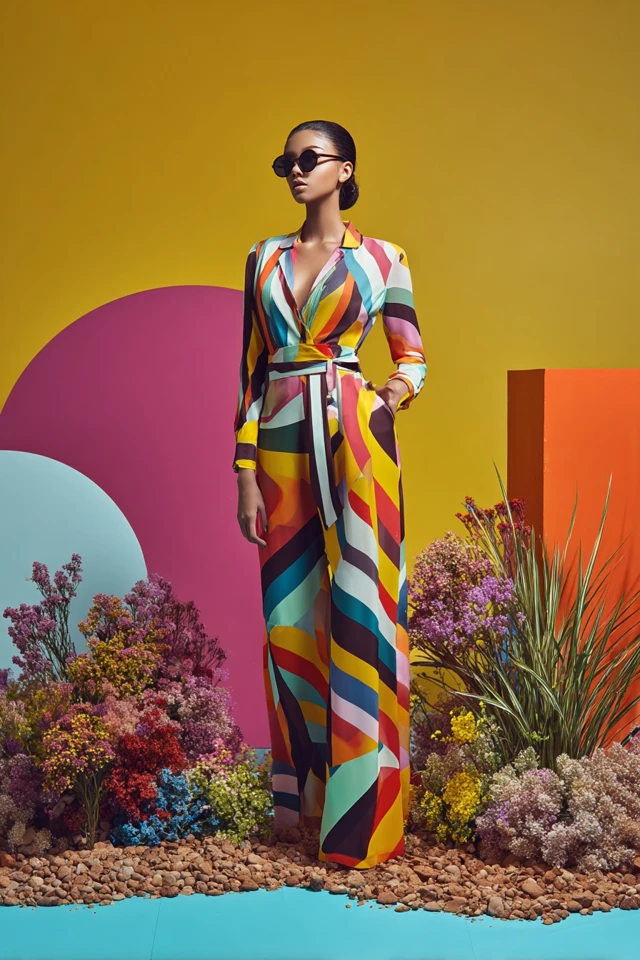
Which pieces work best?
Separates and tailored pieces give the crispest blocks, because straight seams and clean hems keep the edges sharp. Good starting points are a structured blazer, wide-leg trousers, a column skirt or a fine-gauge knit.
Belts, bags and shoes can act as small blocks too. Fit still decides everything: if a jacket pulls at the shoulders, that is a fit problem, not a you problem, and bright color will only draw attention to it. As an architect trained in evidence-based design, I'd treat the waist or hem line as the place where the eye stops, so put the color break where you want it to land.
For formal settings, one jewel-toned accent such as a clutch or earrings is usually enough. The blazer color palette is a good place to pick a tailored base.
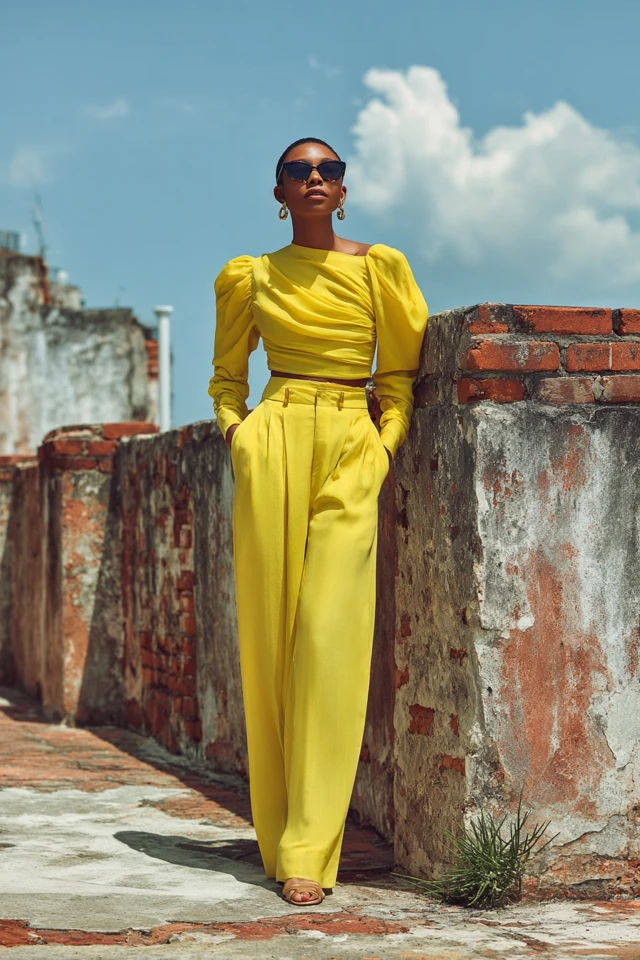
Color blocking do's and don'ts
Do
- Limit yourself to two or three colors.
- Anchor with a neutral such as navy, gray, beige or white.
- Keep the blocks fairly large and the lines clean.
- Repeat one color in an accessory so the outfit looks planned.
Don't
- Mix several prints into the blocks.
- Pair a very saturated color with a very pale one unless you want that contrast.
- Add a fourth color through shoes, bag and jewelry all at once.
- Wear a shade that makes you feel uneasy just because it is popular. Comfort shows.
Neutral pairings that work well with a single bright: navy with mustard, soft gray with blush, white with cherry red, black with emerald.
Frequently asked questions
What is color-blocking in an outfit?
It is wearing solid, contrasting areas of color side by side, usually two or three, with clear edges between them. The blocks often come from separate pieces like a top and trousers.
Is color-blocking outdated?
Not really. It is a flexible way to combine colors rather than a single trend, and a muted or tonal version stays easy to wear in most settings.
What is the 3-3-3 rule for outfits?
It is a popular wardrobe shortcut for building outfits from a small set of items. It has no fixed definition, so check which version a source means before relying on it.
Can color blocking work for men?
Yes. A navy suit with a rust knit and a white shirt, or an olive jacket over a blue shirt, uses the same rules: two or three colors and a neutral anchor.
Filed under Outfit Ideas