
Linen Dresses for Back-to-School: Styles and Fit
- Words by
- Julio Arco
- Published
- Reading
- 4 min
The best linen dresses for back-to-school are a midi length in a tightly woven fabric, a muted color like navy, sage or ivory, and a light layer on top for cool mornings. That combination stays comfortable in warm classrooms and still looks put together.
Below you will find which silhouettes and lengths suit different bodies and days, how to read the fabric before you buy, and how to wear linen as September weather shifts.
Which linen dress silhouette suits you?
Start with how you want the dress to move. Linen is a crisp, slightly textured fabric, so it holds shape more than jersey does. That is a plus when you want structure and a minus when you want a clingy line.
- Wrap or belted styles define the waist and suit hourglass figures or anyone who likes a marked waistline.
- A-line and empire-waist cuts skim the midsection and keep the volume in the skirt.
- Shirt dresses and shifts give a clean, straight line that works for a classroom or an office.
- Gathered waists and ruffle details add shape to straighter frames.
If you want more cut-specific advice, see the hourglass styling tips, the curvy style guide and the tall outfit ideas.

Midi or maxi: which length works for school days?
Midi linen dresses, ending somewhere between mid-calf and just below the knee, are the easiest all-rounder. They move well on stairs and in a bike rack, and they pair with flats, loafers or ankle boots.
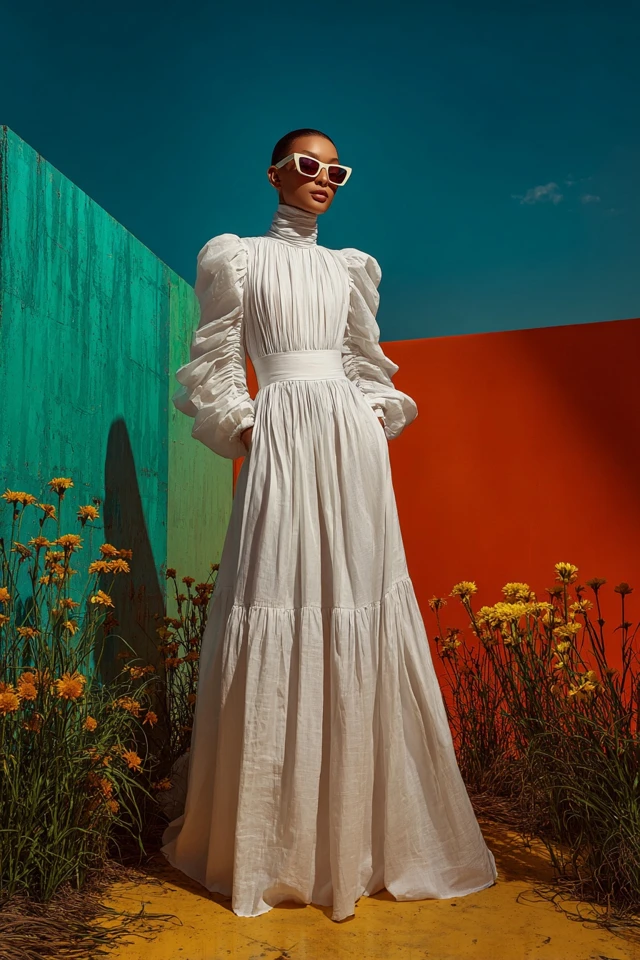
A linen maxi dress is more dramatic and cooler on hot days, but check the hem before you commit. It should clear the floor by about an inch in the shoes you will actually wear, or it will drag and fray. Knee-length shifts are the most practical for a lot of walking or a lecture-hall schedule.
How to choose the fabric: pure linen or a blend?
Pure linen dresses breathe well and soften with washing, but they wrinkle quickly. Cotton linen dresses for summer and early fall wrinkle less, feel a little softer from the first wear and usually cost less. Pick pure linen if you like the lived-in look and blends if you want to arrive at school without creases.
Two checks apply to either one. Hold the fabric up to a window: if you can see clearly through it, it will be see-through outside, so look for a denser weave or a lining. Then scrunch a corner in your fist for a few seconds. Some wrinkling is normal, but if it stays deeply creased, expect to steam it often.
What colors work best?
Through the lens of evidence-based design, I'd think about texture before color. Linen's slightly uneven surface scatters light, so a color reads softer and less saturated than the same shade in a smooth fabric. A navy linen dress looks more relaxed than navy satin.
That makes the muted shades particularly easy to wear:
- Navy and charcoal look polished and pair with almost anything.
- Sage and olive feel calm and work well with warm skin tones.
- Blush, cream and ivory are light and soft, and they are flattering next to cool undertones.
- Terracotta and rust add warmth and look good with olive or brown accessories.
Hold a color near your face in daylight before buying. If your skin looks tired next to it, try a shade lighter or a cooler or warmer version of the same color.

How to style a linen dress as the weather cools
Linen works past summer if you add layers. A cropped denim jacket, a lightweight cardigan or an unstructured blazer over the top covers cool mornings and overly air-conditioned rooms. For colder days, a sweater layered over the dress or tights and boots extend the season.
For accessories, leather belts and woven bags echo the fabric's natural texture. Keep jewelry simple in gold or silver. Shoes can swing the look: loafers feel academic, white sneakers feel casual, and leather sandals suit the first warm weeks.
If you want a spare, repeatable approach, the minimalist outfit ideas and more elegant looks show how a few dresses can cover a whole week.
How to wear linen over 50 or for dressier occasions
The same rules apply at any age: fit at the shoulders, a hem length you feel comfortable in and a fabric dense enough to drape. For a more polished feel, choose a lined midi with sleeves, a defined waist and a muted color. Linen dresses for a wedding guest or a school event should be dressed up with structured shoes, a better bag and minimal jewelry rather than a different dress.
How to care for linen so it stays crisp
Follow the care label first. Linen generally tolerates gentle washing, but dry cleaning may be recommended for lined or structured styles. Iron while the fabric is slightly damp, or use a steamer for a softer finish.
Treat stains quickly. For blood, the University of Georgia Extension says to treat immediately, because stains set by heat will be difficult to remove. Use cool water, not hot.

Frequently asked questions
Is linen still in style?
Linen is a staple fabric that returns every warm season, mostly in relaxed shapes and muted colors. Choose a cut you like rather than chasing a specific trend.
How to wear linen over 50?
Choose a lined midi with a defined waist, sleeves you like and a fabric dense enough to drape. Add structured shoes and simple jewelry to make it look polished.
Can linen dresses work for a capsule wardrobe?
Yes. Two or three linen dresses in neutral colors and classic cuts can be mixed with jackets, belts and different shoes for many outfits.
Are linen dresses suitable for fall?
They can be, with layers. A cardigan, jacket, tights or boots extend a linen dress into cooler weather.
Filed under Outfit Ideas