Blazer Color Combinations That Work Every Time
- Words by
- Julio Arco
- Published
- Reading
- 4 min
The safest blazer color combinations pair one colored piece with neutrals: navy with khaki or white, camel with cream, charcoal with a bright shirt. Keep the blazer and trousers at least a shade or two apart, or match them closely on purpose, and let one piece carry the color.
If you want a bolder blazer in green, cobalt or burgundy, the same logic applies. Quiet trousers, a plain shirt, and one accent are usually enough.
Basic rules for pairing blazer colors
Start with a simple frame: one main color, one supporting neutral, one small accent. That might be a mustard blazer, navy trousers and brown shoes. It keeps the outfit readable, and you can break it once you are comfortable.
Contrast matters more than the specific colors. A blazer that is much lighter or darker than your trousers looks deliberate. Two shades that are almost the same, but not quite, tend to look like a mismatch.
Through the lens of evidence-based design, I'd also check undertones. Warm colors (rust, camel, olive) sit well together, and cool ones (navy, charcoal, sapphire) do too. Mixing the two works best when a neutral like white or grey sits between them.
Which blazer color goes with everything?
Navy is the most flexible blazer color. It works with grey, khaki, white, cream, olive and denim, and it suits both office and weekend looks. Charcoal is a close second if you prefer something sharper and less blue.
Camel and mid-grey are good third picks. They are softer than navy, which helps if you wear a lot of black or a lot of earth tones. No single color suits every wardrobe, so choose the one that matches the trousers and shirts you already own.
Navy blazer with khaki trousers
This is the classic for a reason. Navy is dark and cool, khaki is light and warm, and the contrast is clear without being loud. Add a white or pale blue shirt and brown leather shoes or loafers.
For a dressier version, swap khaki for stone or light grey trousers and a crisp shirt. For a relaxed one, use a tee or fine knit and white sneakers.
Casual blazer color combinations
Casual looks tolerate more color and more texture. Try these as starting points:
- Olive blazer, cream trousers, white tee
- Camel blazer, dark denim, striped knit
- Cobalt blazer, white jeans, grey sweatshirt or tee
- Mustard blazer, navy trousers, plain white shirt
- Coral blazer, cream trousers, light neutral top
Texture helps here. A linen or cotton blazer reads softer than a smooth wool one, even in the same color, because the surface scatters light differently.
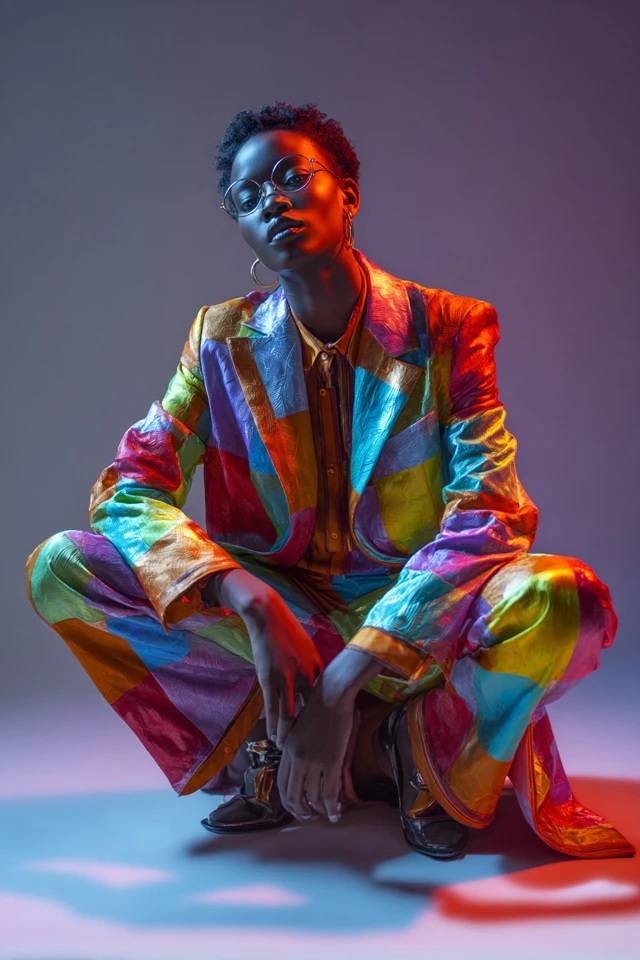
Formal blazer color combinations
For formal settings, stay with deeper shades: navy, charcoal, black, deep green or burgundy. Pair a dark blazer with matching or slightly lighter trousers, a white or light blue shirt, and dark leather shoes.
A color can still work in a formal setting if it is dark and muted. A forest green blazer with charcoal trousers is a good example. Save brights like coral or electric blue for creative or social events.
Tonal looks: blazer and pants color combinations in one family
Dressing in one color family, such as cream with oatmeal or navy with slate blue, lengthens the line of the body and looks polished with little effort. The trick is to vary the shade and texture, so the outfit does not look like a flat block.
A wool blazer over smoother trousers, or a pale knit under a darker jacket, gives the eye something to read. Finish with one contrasting accessory, like a leather belt or bag.
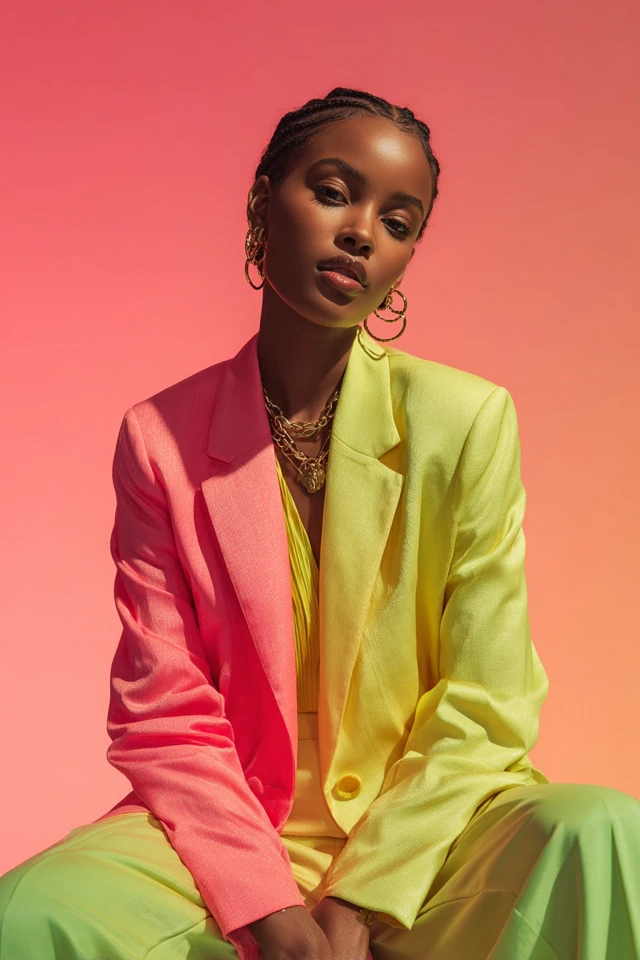
Bold pairings with green, burgundy and red
A colorful blazer is easiest to wear when everything else steps back.
- Emerald green with soft blush, cream or charcoal
- Burgundy with grey, navy or camel
- Cobalt blue with white or light grey
- Red with charcoal, black or denim
As an architect trained in evidence-based design, I'd treat a saturated blazer as the first thing the eye reads in the outfit. That is why the shirt underneath should be plain: a pattern there competes with the color instead of supporting it.
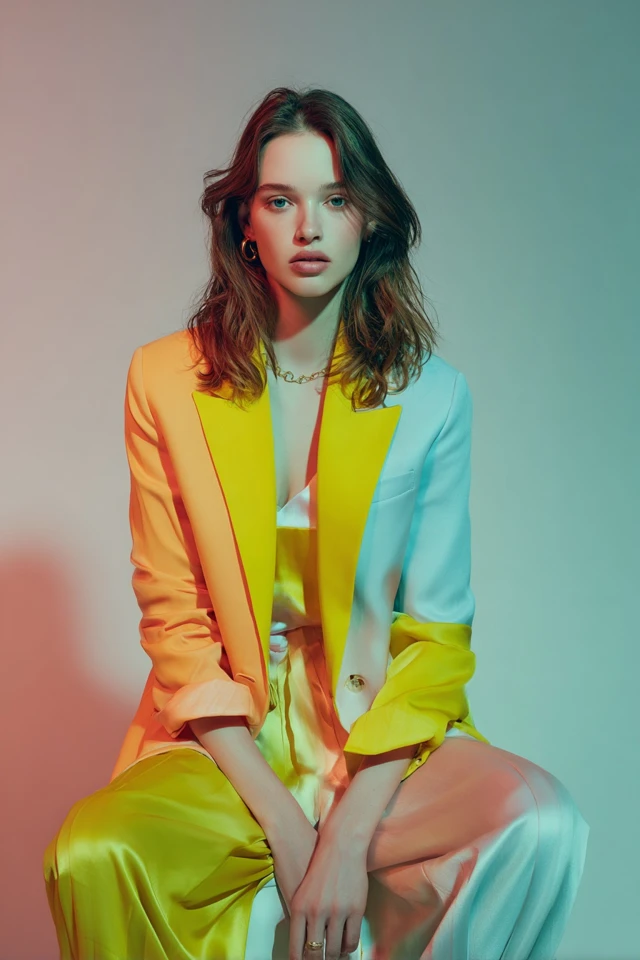
What to wear with a blazer
Underneath, a white shirt, a fine knit, a plain tee or a turtleneck all work. For trousers, think denim, chinos, tailored wool or a neutral skirt. Keep bags, belts and shoes in one or two tones and let the blazer stay the focus.
If you are exploring more structured options, see double-breasted blazers or the looser oversized blazers for relaxed tailoring. For a retro take, there is also this 90s blazer guide.
Getting the fit right
A blazer that pulls at the shoulders is a fit problem, not a you problem. The shoulder seam should sit where your shoulder ends, and the jacket should close without strain across the chest.
Sleeves usually end near the wrist bone, showing a little shirt cuff. Length varies by style, but a classic blazer typically covers the seat. A cropped cut suits high-waisted trousers, and a longer line suits straight or wide legs.
Choose fabric by season: cotton and linen blends for warm weather, wool for cold. To add more color through accessories, the colorful cardigan edit shows how a layer can work beside a blazer.
Frequently asked questions
What is the 3 color rule for men's fashion?
It means keeping an outfit to about three colors, usually a main color, a neutral and one accent. Shoes and belt count as one color if they match.
What color blazer goes best with everything?
Navy is the most flexible, followed by charcoal and camel. Each pairs with most neutrals and denim.
What is the rule of wearing a blazer?
Fit comes first: the shoulders should sit flat and the jacket should close comfortably. Traditionally the bottom button on a two-button jacket stays undone.
Can I wear a blazer in a different color than my trousers?
Yes, and it often looks better than a mismatched near-match. Choose a clear difference in shade, such as navy over khaki or grey.
Filed under Outfit Ideas