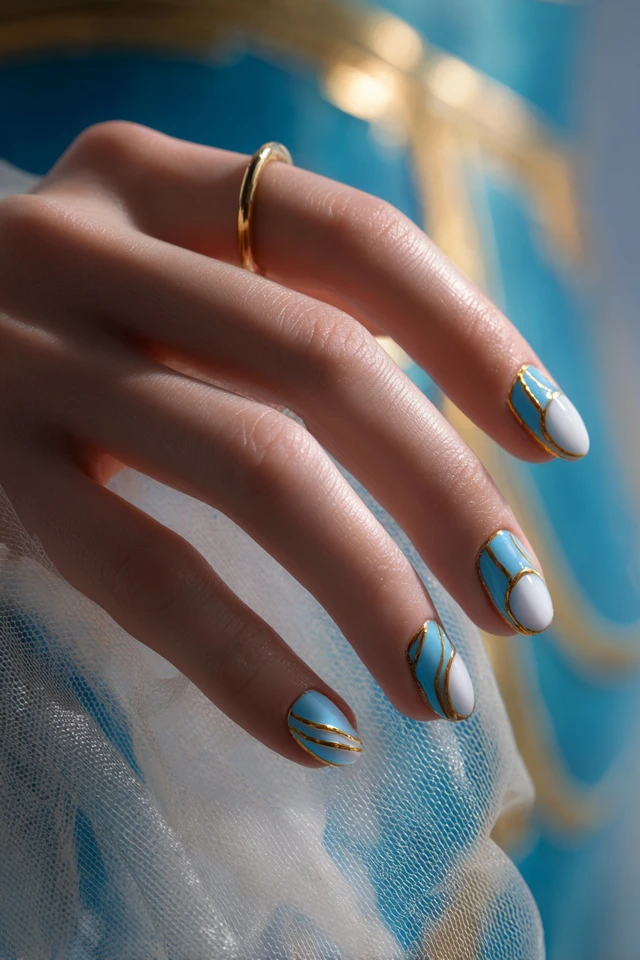
Geometric Nail Art Ideas: Simple, Short and Bold Looks
- Words by
- Julio Arco
- Published
- Reading
- 4 min
The easiest way into geometric nails is a single repeated shape: a few thin lines, a triangle at the cuticle, or a half-moon of bare nail. Keep the palette to two or three colors and let the lines do the work. Below are ideas sorted by how much time and nail length you have.
Geometry suits nails because a nail is a small rectangle, and straight lines and angles echo its edges. That is why even a very simple design looks deliberate.
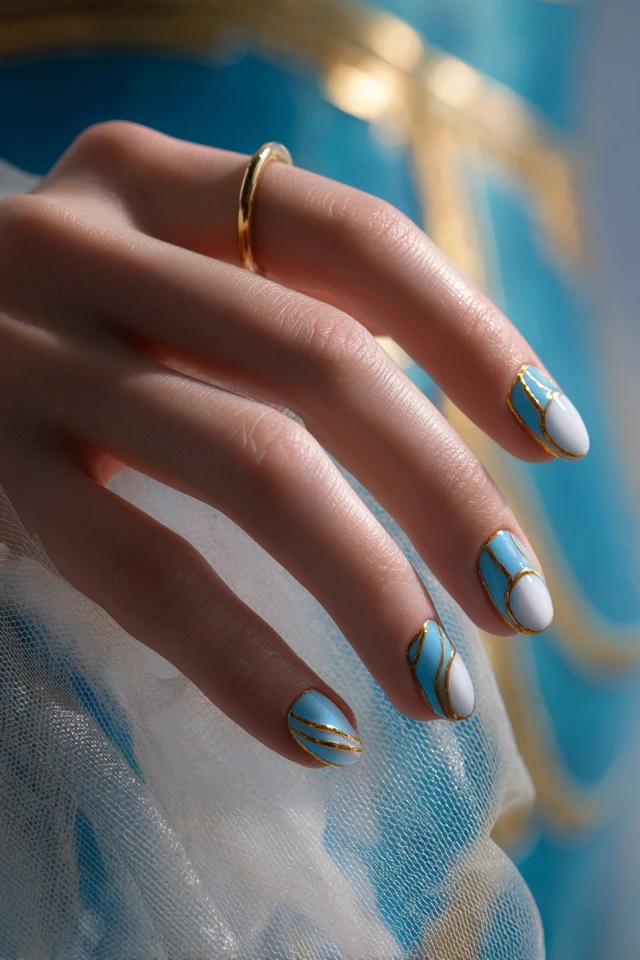
Simple geometric nail art ideas
If you are doing this at home, start with striping tape or a fine liner brush. Paint a base, let it dry fully, then add the shapes.
- One diagonal line across each nail, in a contrasting shade.
- A grid of thin crossing lines on the accent finger only.
- Small triangles stacked at the tip, like a row of teeth.
- A single thin stripe running up the center of the nail.
Peel the tape while the top layer is still slightly tacky, otherwise the edge can lift the color with it.
Minimalist geometric nails
Minimalist geometric nails work with one shape and a lot of empty space. A nude or sheer base, one hairline in black or a soft metallic, and you are done. The eye reads the thin line first, so keep its placement exact: parallel to the nail edge or perfectly diagonal, never almost-straight.
Negative space geometric nail art
Negative space geometric nail art leaves part of the natural nail bare and paints around it. Try a bare triangle at the base, a bare stripe down one side, or a diagonal split between color and clear. Because the bare area is part of the design, clean edges matter more than the color you choose. A clear top coat over everything makes the shapes look intentional and protects the line work.

Geometric nail art ideas for short nails
Short nails give you less room, so fewer, larger shapes read better than many tiny ones. Vertical lines make a nail look longer, so a thin stripe running toward the tip is a good choice. A diagonal color block or a small triangle at the cuticle also works without crowding the nail.
Skip dense patterns like tight checks or lots of tiny triangles. At short length they blur into noise from arm's length.
Black and white geometric nail art
Black and white geometric nail art is the safest high-contrast option. The contrast is strong, so the pattern reads clearly even with simple shapes. Try these:
- Alternate black and white nails, with a thin line of the opposite color on each.
- A white base with black triangles pointing in different directions.
- A checker pattern on one or two nails, plain on the rest.
Through the lens of evidence-based design, I'd keep the glossy finish on one color and use matte on the other. Texture changes how a shade reads, and the difference adds depth without a third color.

Geometric French nails
Geometric french nails replace the curved smile line with something sharper. Options include a straight diagonal tip, a V-shaped tip, a thin double line, or a triangle of color at the free edge. They sit well between a classic French and a full art set, and they grow out cleanly if you keep the shape near the tip. For more variations on the theme, see textured geometric nails and artful geometric nails.
Choosing colors and finish
Pick colors by how they look against your skin and your usual clothes, not by a rulebook. Test a swatch on one nail before committing. Cooler shades tend to look crisp next to cool-toned skin, while warmer ones often look softer on warm tones, but your own eye is a good judge.
Metallic accents, such as a gold line on a neutral base, catch light and read as detail. If you want a bolder metallic, chrome nails pair well with sharp angles. For more angular color play, crystalline geometric nails are another route.

Wear and removal: keep your nails healthy
Gel and acrylic last longer but cost your nails something. The American Academy of Dermatology notes that acrylic nails need the natural nail filed until it feels rough, which thins it and makes it weaker. The same page says that if you wear artificial nails for more than a few weeks, you will need touch-ups every 2 to 3 weeks as your nails grow.
Removal is where most damage happens. The AAD says acetone is the most effective way to remove gel polish at home, and Cleveland Clinic warns that careless removal can temporarily damage nails, with cracking and peeling the most common problems. Regular polish with tape-made geometry is the gentlest route if your nails are already fragile.
After taking any manicure off, look closely at your nails. Board-certified dermatologist Chris Adigun, MD, FAAD, says on the AAD's dip powder page: "Looking closely at your nails after removing the color helps you spot a problem early." If something looks off, check with a dermatologist.
Frequently asked questions
What are some simple geometric art ideas?
Single diagonal lines, a thin center stripe, a few stacked triangles, or a grid on one accent nail. Each needs only striping tape or a fine brush.
What nail art is trending right now?
Minimalist designs with negative space, thin metallic lines and soft neutral bases are common right now. Trends shift quickly, so pick what you will enjoy wearing for a couple of weeks.
Can I do geometric nails on short nails?
Yes. Use fewer, larger shapes such as one stripe or a diagonal color block, and avoid dense tiny patterns that blur at short length.
How do I get clean lines at home?
Let the base coat dry completely, apply striping tape, paint over the edge, and peel the tape while the top layer is still slightly tacky.
Filed under Nail Design