Easy Slip Dresses for Layered Looks
- Words by
- Julio Arco
- Published
- Reading
- 5 min
A slip dress works in every season because it is a thin, smooth base layer. Wear it alone when it's warm, and add a sweater, blazer, turtleneck or coat as the temperature drops. The dress stays the same; the layers change.
Below: how to style slip dresses by season, which lengths and fabrics suit which job, and how to choose a fit for your frame.
Why do slip dresses work year-round?
The slip began as underwear, and the design still shows it: thin straps, a close-to-the-body cut and a fluid fabric. That lack of bulk is exactly what makes layering easy. Nothing bunches under a jacket, and nothing competes with a knit on top.
Fabric changes the mood more than the shape does. Satin catches light and reads dressy. Matte jersey or crepe reads quieter and more casual, even in the same color. Through the lens of evidence-based design, I'd choose the fabric first, because surface texture changes how a color looks next to your skin.
How to style summer slip dresses
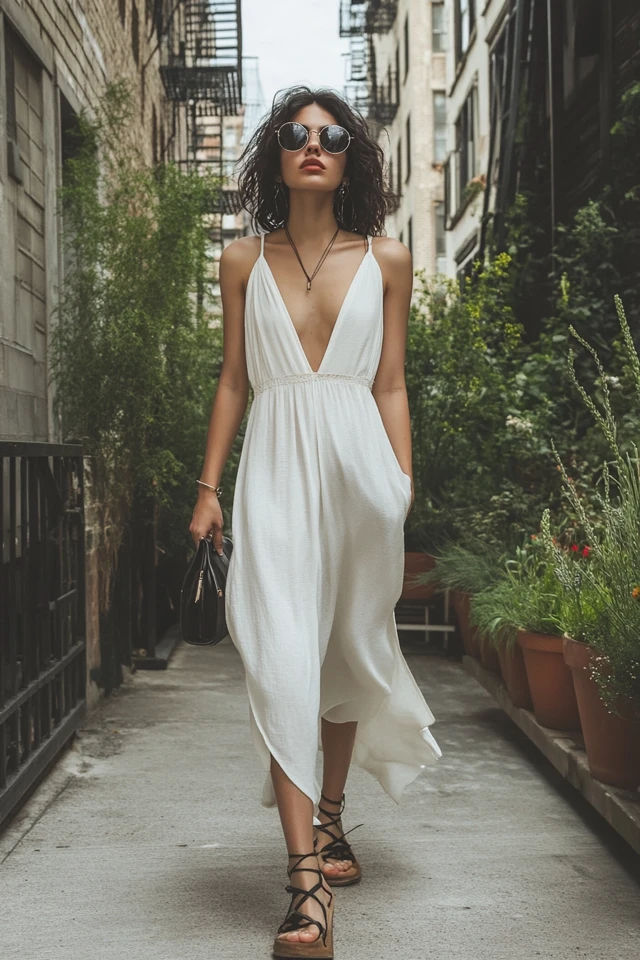
In warm weather, keep it simple. Wear the dress on its own with flat sandals or clean sneakers for daytime, then swap in strappy heels and small jewelry for evening.
- Pick lighter fabrics and lighter colors if you run warm; a matte finish looks relaxed in daylight.
- Add a lightweight shirt, tied at the waist or worn open, for sun or air-conditioned rooms.
- Keep accessories few. A slip dress already has a clean line, and one bag or one pair of earrings is enough.

For a breezier, warm-weather feel, see boho linen slip dresses or resort slip dresses.
How to style fall slip dresses
Fall is where layering starts. Put a fitted tee or thin turtleneck under the dress, then add a leather jacket, trench or cropped cardigan. Ankle boots or loafers keep the outfit grounded.
Mixing textures helps: a glossy slip against a chunky knit or a structured jacket gives the outfit contrast without adding more colors. Layered slip dress chic has more combinations to borrow, and corduroy slip dresses are a sturdier option for cooler days.

Can you wear a slip dress in winter?
Yes, with the right base. Think of the slip as the middle layer: a thermal or turtleneck underneath, opaque tights, knee-high boots, then a wool coat on top.
If you'll be outside for long stretches, the layer closest to your skin matters. Texas A&M's Howdy Health advises that this layer be moisture-wicking and says to avoid cotton, because it absorbs moisture and can keep it next to your skin. That guidance is written for cold-weather exercise, but the same logic applies to a long walk in a thin dress. For more cold-season ideas, try satin slip dresses for winter layering.
Spring layers and transitional weather
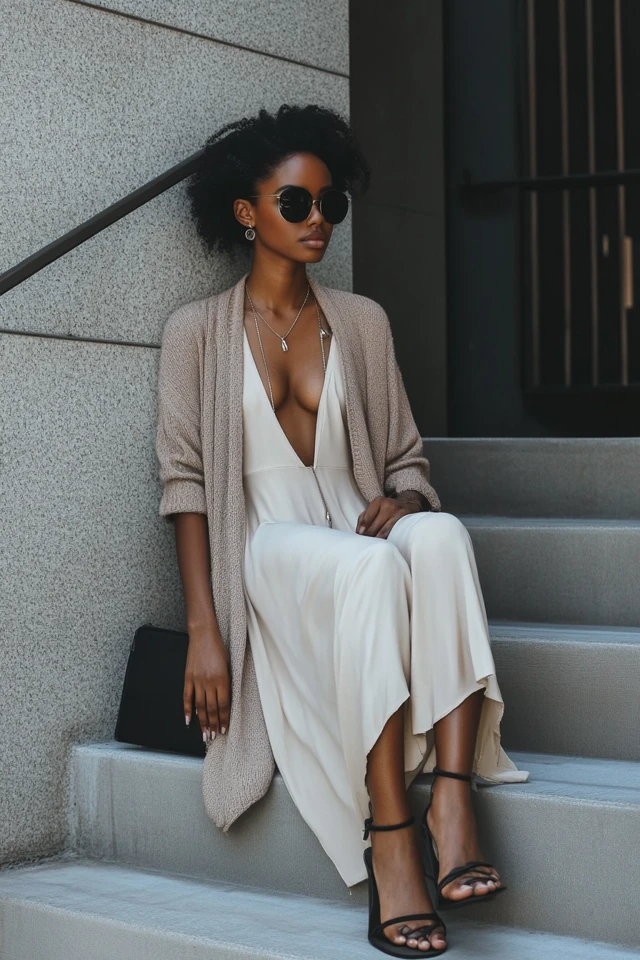
When mornings are cool and afternoons are warm, choose layers that come off easily: a denim jacket, a light cardigan, or a fitted turtleneck under the dress. You can peel down as the day warms up. Layered slip dresses with turtlenecks shows that approach in detail.

Midi or maxi: which length for which season?
Midi slip dresses for every season are the easiest pick. The hem lands mid-calf, which works with sandals in summer and boots in fall, and it leaves room for a coat that is shorter than the dress.
Maxi slip dresses move more and look dressier. They suit evenings, events and winter coats that reach the knee. Check the hem with the shoes you plan to wear; a maxi that skims the floor in flats may drag in sneakers. A mini works best in summer or over tights with a longer jacket.
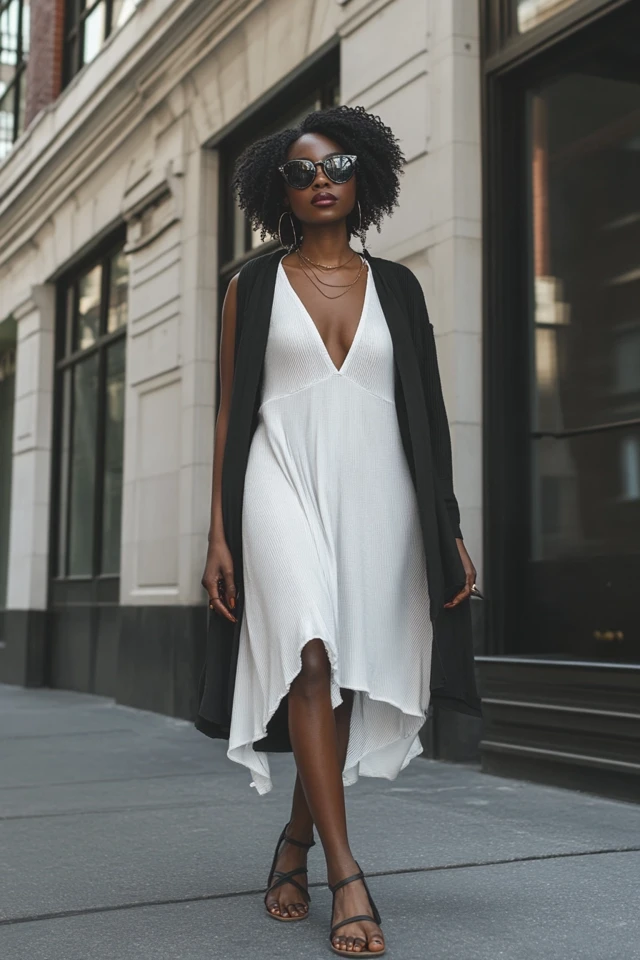
What body type looks good in slip dresses?
Most body types can wear one. Fit matters more than shape: a dress that pulls or slides off the shoulder is a cut problem, not a you problem. Try a few of these adjustments:
- Petite frames: look for adjustable straps and a hem that stops at or just below the knee.
- Curvy figures: choose a bias cut that skims rather than clings, or a V-neck or wrap detail to define the waist. For plus size slip dresses, look for wider straps and stretch or lined fabric for coverage and support.
- Athletic builds: ruching, draping or an A-line cut adds softness at the waist.
- Tall frames: midi and maxi lengths give the fabric room to move.
As an architect trained in evidence-based design, I'd treat the neckline as the first thing the eye reads, so choose the neckline you like best and let the layers do the rest.
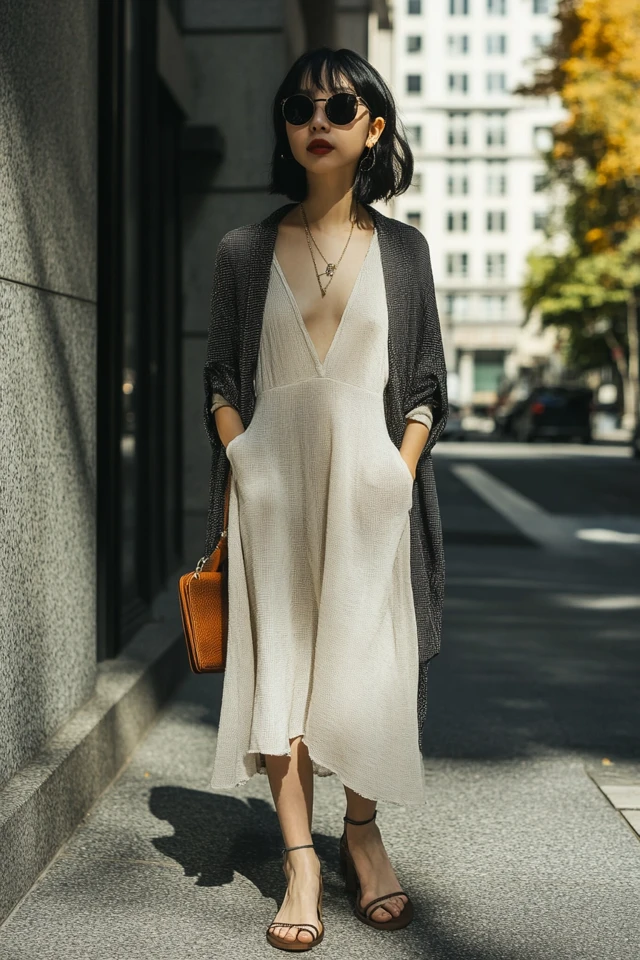
Color and mood: what to pick
Black, white and nude are the easiest to repeat across seasons. Deeper shades like emerald, burgundy and navy look good with leather and wool in fall and winter. Pastels suit spring and summer and pair well with cardigans. A bright red or yellow works best when the layers over it stay neutral. For a party option, see sequin slip dresses, and for a casual option, denim slip dresses.
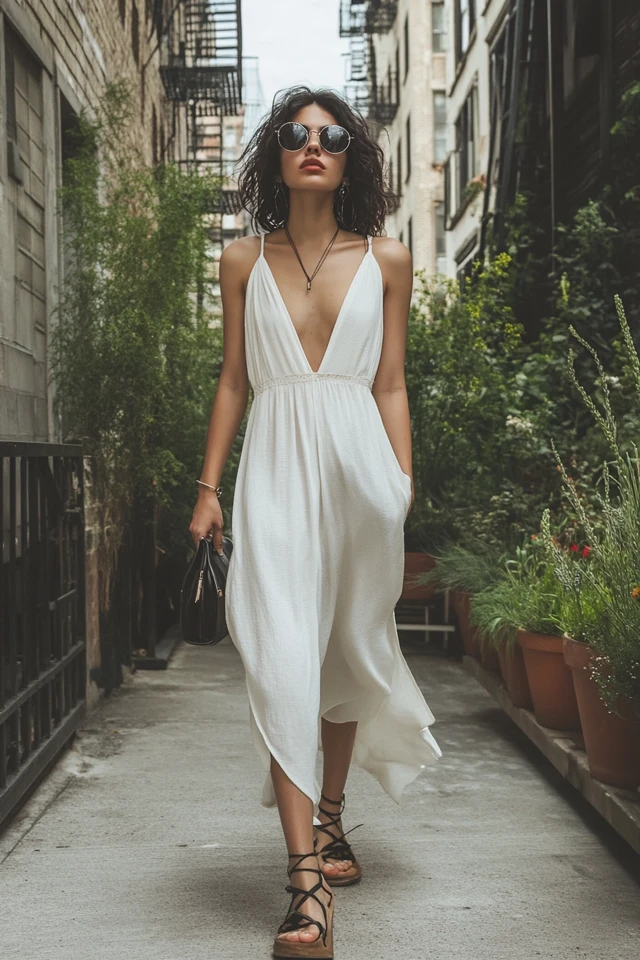
Keeping a slip dress from looking like lingerie
Add structure. A blazer, a tee or turtleneck underneath, or boots and a sturdy bag shift the outfit from bedroom to street. Fabric also matters: thicker satin or crepe looks less sheer than a thin, clingy one.
Care basics
- Check the label first. Many slip dresses do best hand washed or on a delicate cycle in cold water.
- Hang on padded hangers so the straps keep their shape.
- For static in winter, a fabric spray or a lined slip underneath usually helps.
Frequently asked questions
What body type do slip dresses look good on?
Slip dresses can work on most body types when the cut suits you. A bias cut that skims, adjustable straps and a neckline you like matter more than any single shape.
Are slip dresses still in style?
They keep returning because they are simple and easy to layer. A solid black or nude one stays useful whichever way trends move.
Does anybody wear slips anymore?
Slips as undergarments are less common, but slip dresses are worn as outerwear with tees, knits and jackets over them.
What shoes go with a slip dress?
Sneakers or flat sandals keep it casual. Strappy heels dress it up, and ankle boots work for cooler months.
Filed under Outfit Ideas