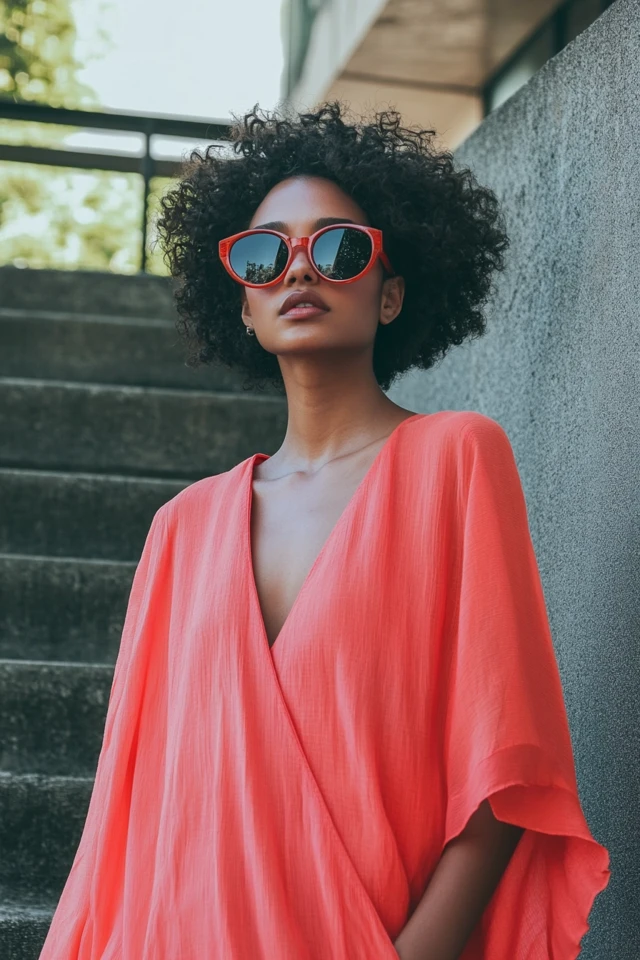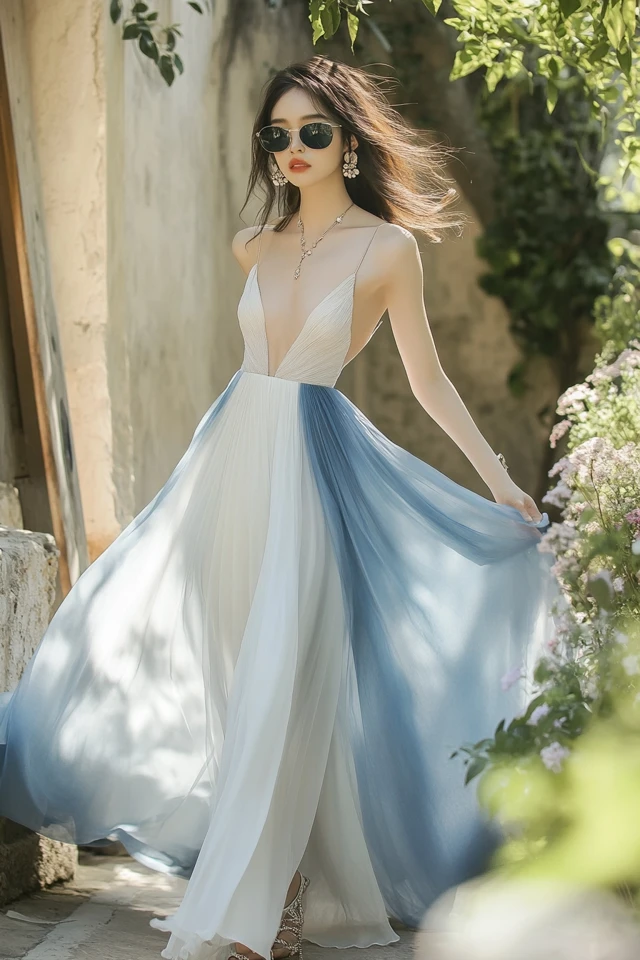
Dusty Blue and Cream Bridesmaid and Bridal Dresses
- Words by
- Julio Arco
- Published
- Reading
- 4 min
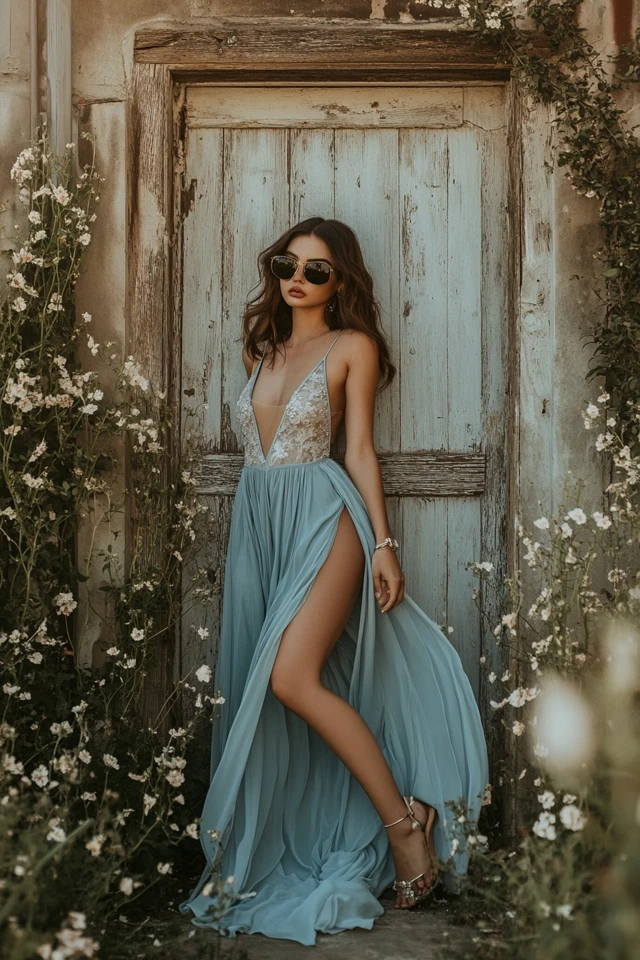
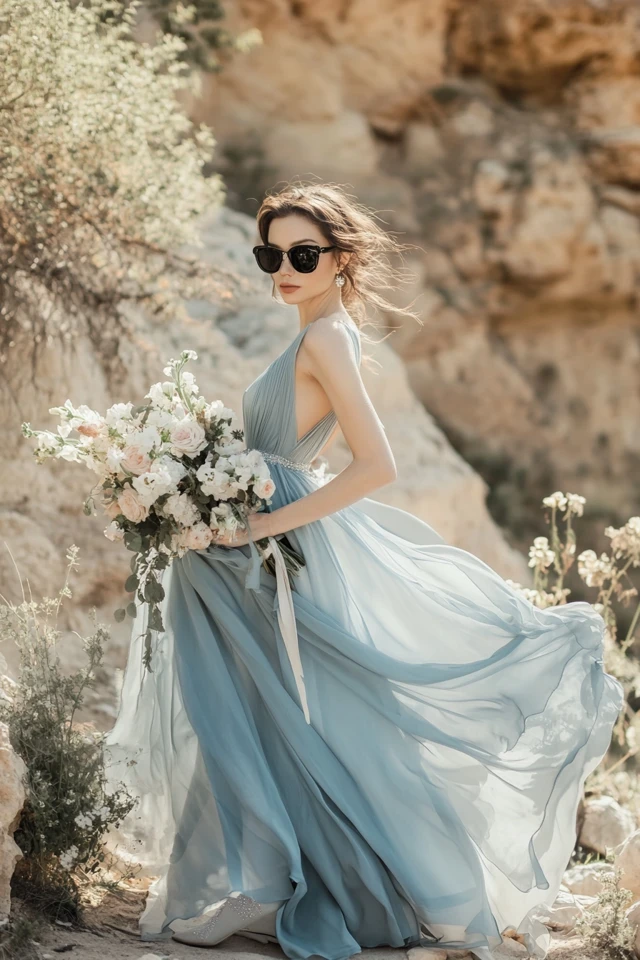
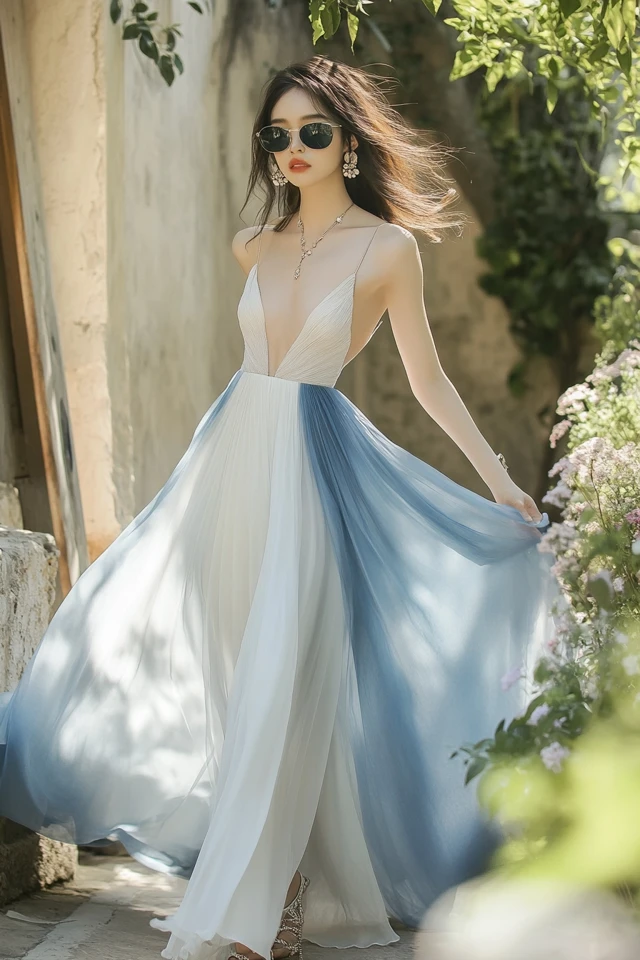
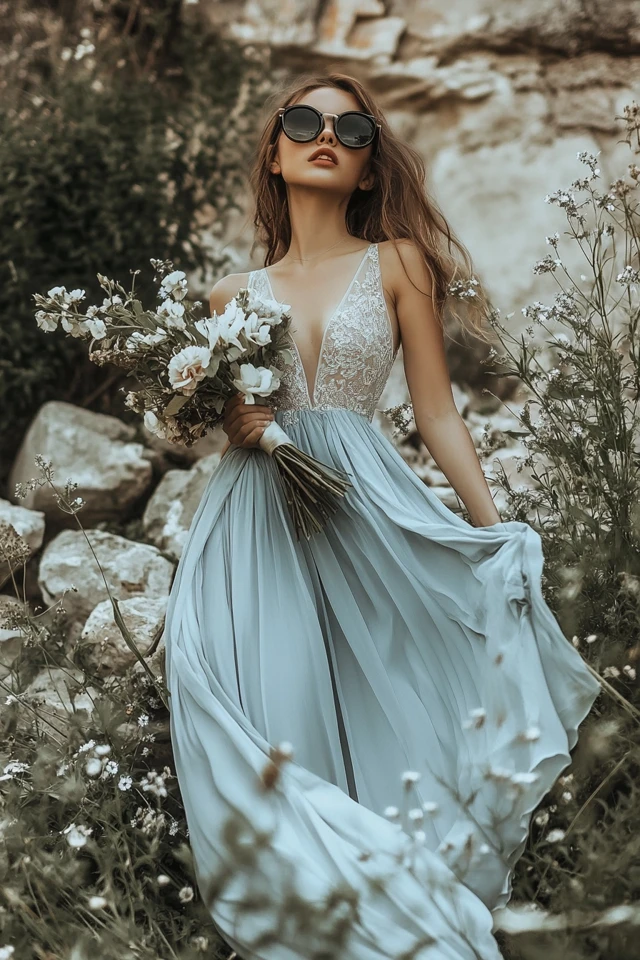
Dusty blue and cream work well together because both are muted and soft. The simplest setup: bridesmaids in dusty blue, the bride in ivory or white, and cream carried through bouquets, shoes and details. You can also flip it, with cream dresses and dusty blue as the accent.
Below: which color should lead, which fabrics suit each season, how to handle accessories and flowers, and how to check that your shades actually match.
Should dusty blue or cream be the main color?
Choose by how much contrast you want in photos. Dusty blue dresses against a cream or ivory bridal gown give a clear difference between the bride and her party. Cream dresses for the party read softer and more uniform, so the blue has to come from accents.
Dusty blue dresses with cream accents
This is the more common route when you shop bridesmaid dresses by color and want the party to stand out gently. Bring in cream through:
- sashes, belts or ribbons at the waist
- hairpins or small floral crowns
- shoes and clutches
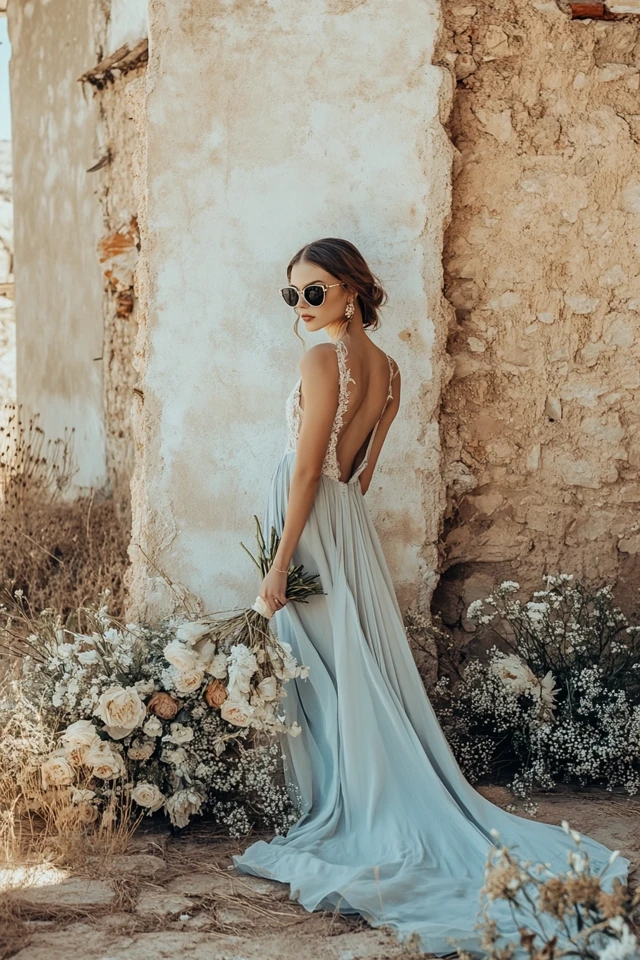
- bouquets of cream roses, peonies or ranunculus with greenery
Cream dresses with dusty blue accents
Here the blue appears in small doses: embroidery or beading, a shawl or cardigan for cooler weather, ribbon on the bouquets, or sandals. Keep the amount of blue consistent across the group so the party looks planned rather than mismatched.
Which fabric works best?
Fabric changes how a color reads. Through the lens of evidence-based design, I'd treat texture as part of the color decision, because a matte chiffon and a glossy satin in the same dusty blue reach your eye as two different shades.
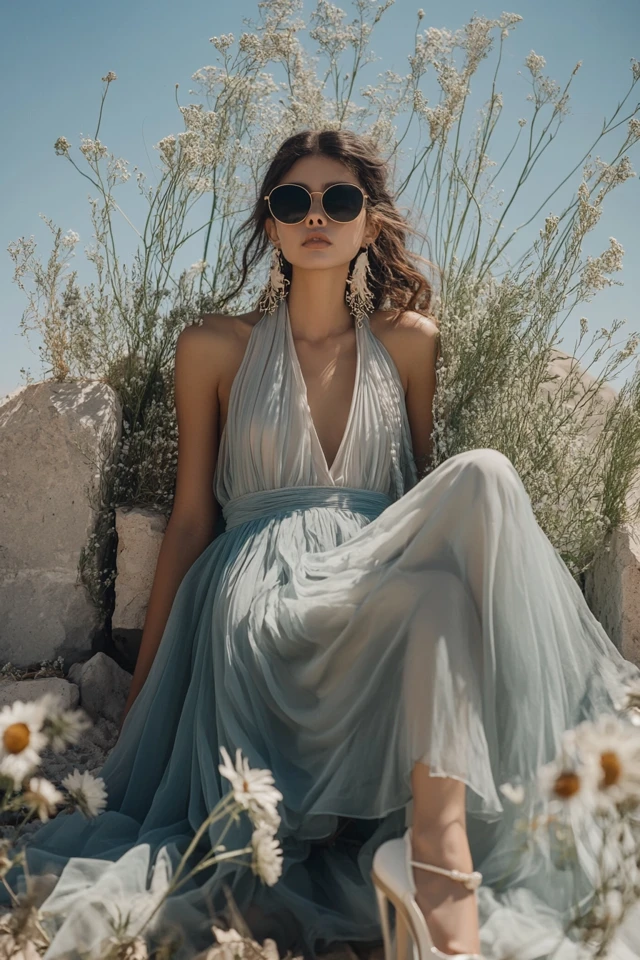
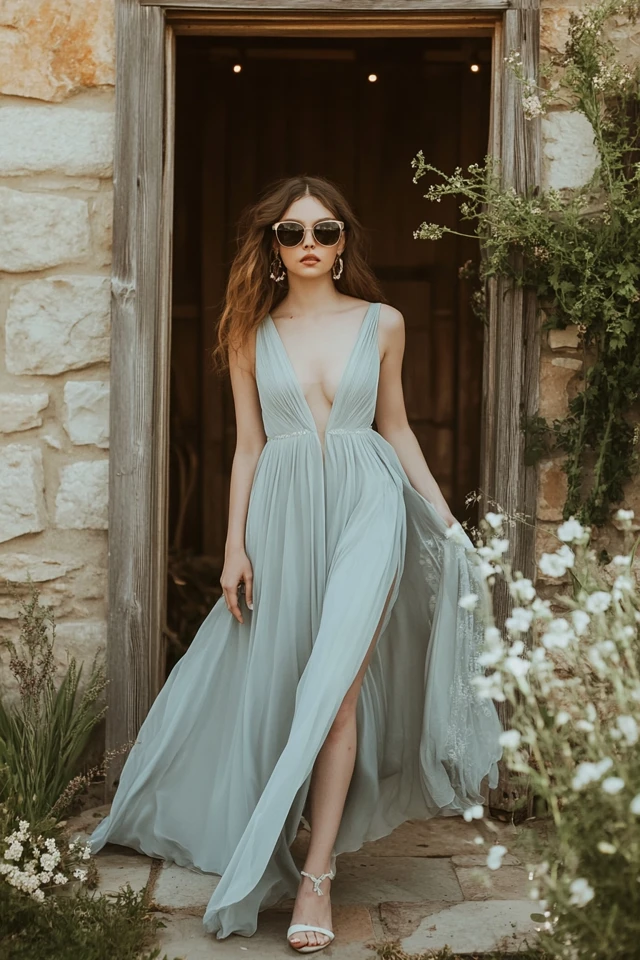
- Chiffon or georgette: light, moving, romantic. Good for spring and summer and for outdoor ceremonies.
- Satin: sleek and a little formal. Satin bridesmaid and bridal dresses catch light, so the blue looks slightly deeper and cooler.
- Velvet: dense and warm, best for fall and winter weddings.
- Lace: works well in cream, and as an overlay it softens dusty blue.
Satin and chiffon are an old pairing for formal dresses. Fashion editor Kathryn Hennessy describes the early 1900s look as "Sumptuous fabrics such as silk satin, damask, and chiffon, usually in light, soft colours", which is close to this palette.
Why is the bride usually in cream or white?
The tradition goes back a long way. The Fashion History Timeline notes that when Queen Victoria wore a white dress of Spitalfields silk and Honiton lace in 1840, she broke from royal custom and encouraged a lasting tradition for Western bridal fashion. A cream or ivory gown sits comfortably next to dusty blue because the two share the same low saturation.
How to style a maid of honor
Elegant maid of honor dresses can stand apart without breaking the palette. Keep her in the same dusty blue and change one thing: the neckline, a longer hem, or a cream belt. Another option is a slightly deeper or lighter shade of the same blue, as long as it stays in the family.
Accessories and flowers that suit the palette
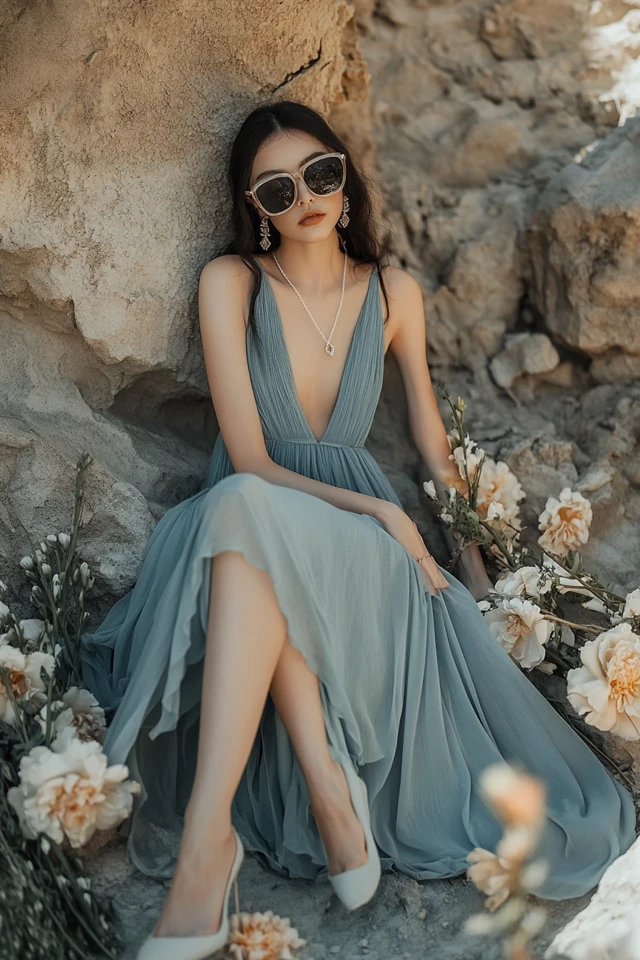
Metals change the mood. Gold or rose gold warms both colors. Silver or platinum emphasizes the cool side of dusty blue. Pearls fit either palette, and light blue stones such as aquamarine echo the dress.
For flowers, cream blooms with eucalyptus give texture on blue dresses. Dusty blue hydrangeas or anemones add a soft accent to cream dresses. The same pairing can reach the tables with blue runners and cream napkins, or cream candles in blue vases.
How to pick the right shades
Not every dusty blue matches every cream. A blue with a gray lean looks cooler beside a yellow-leaning cream, and the cream can look dingy. Keep undertones similar, or order swatches and compare them together in daylight and indoor light.
Season matters too. Lighter blues and creams feel summery, while deeper versions suit fall and winter. For similar color logic in other settings, see light blue and cream for work dresses or dusty blue with burnt orange for fall.
Fit and comfort
If you want a cohesive group in different bodies, keep the fabric and color the same and let necklines and silhouettes vary. Wrap and A-line styles adjust well. A dress that pulls at the shoulders is a fit problem, not a you problem, so ask for the size range and returns policy before ordering.
Who pays and where to shop
Who pays for bridesmaid dresses is usually decided by the couple's expectations, and in most cases each bridesmaid buys her own. Agree on a price range early and say so before anyone orders. When you shop bridesmaid dresses online, compare fabric, size range, swatch availability and return terms, not just the photo.
Frequently asked questions
Who typically pays for bridesmaids dresses?
Most often each bridesmaid pays for her own dress. If the couple wants a specific, pricier look, they can offer to cover part of the cost, so discuss the budget before anyone orders.
Can dusty blue and cream work in every season?
Yes. Chiffon and lighter shades suit spring and summer, while velvet or satin in deeper tones suits fall and winter.
What other colors pair well with dusty blue and cream?
Soft greens, silver, gold and blush pink all sit well with this palette.
Should the bride wear cream and the bridesmaids dusty blue?
That is a classic setup. A cream or ivory gown contrasts gently with dusty blue dresses, and cream bouquets tie the two together.
Filed under Color Palettes