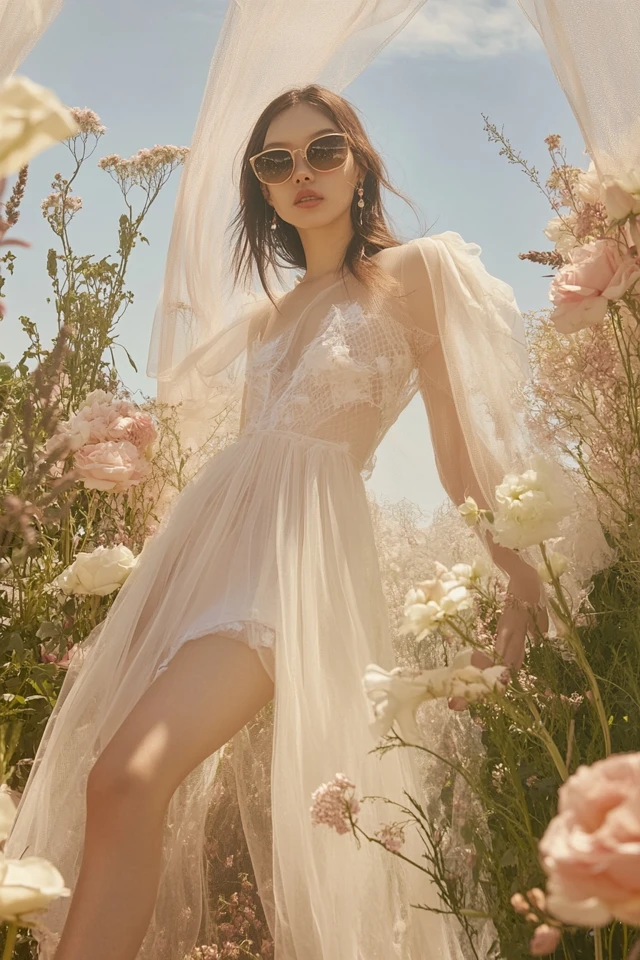
Sheer Mesh and Tulle Dresses: How to Combine Them
- Words by
- Julio Arco
- Published
- Reading
- 4 min
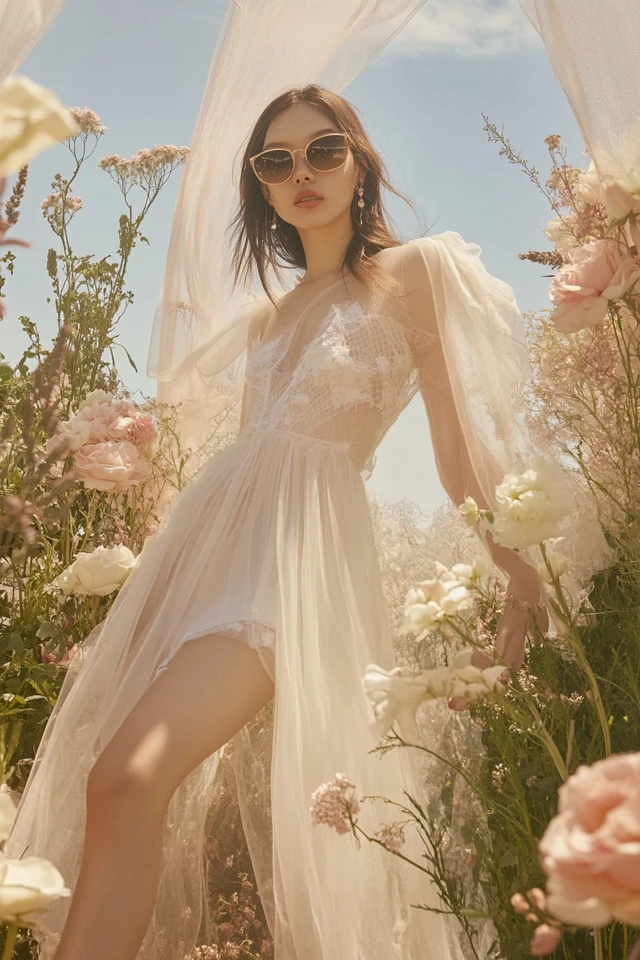
Put sheer mesh where you want a close, almost skin-toned layer (bodice, sleeves, back) and tulle where you want volume (skirt, overlay, cape). That split is the simplest way to get the floating, ethereal look these dresses are known for.
Mesh is smooth and fine, so it follows the body. Tulle is a stiffer net that holds air between its layers. Together they give you shape and softness in one outfit.
Why do sheer mesh and tulle work together?
They are both open-weave fabrics, so light passes through them, but they behave differently once they are cut and sewn. Mesh lies flat and reads as a soft veil over skin. Tulle stands away from the body and catches light along its edges.
Through the lens of evidence-based design, I'd think about this as contrast of surface. A fitted, smooth layer next to a lofty, airy one makes each look more defined, which is why the pairing feels so deliberate even when the dress is simple.
Both fabrics also take embroidery, beading and appliqué well, so a plain silhouette can carry a lot of detail without feeling heavy.
Which silhouettes suit a mesh and tulle dress?
For weddings
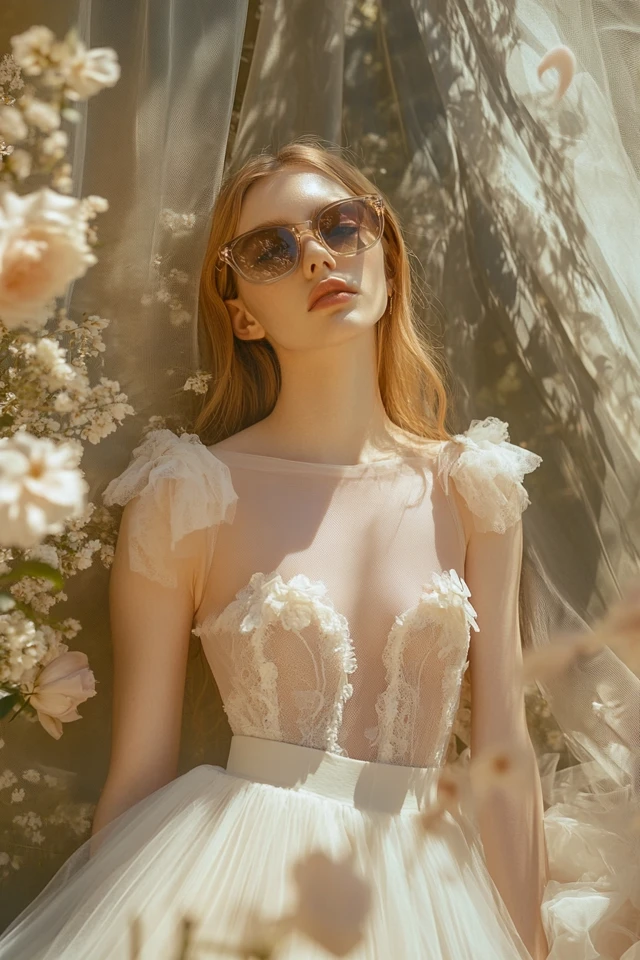
An A-line gown with a mesh bodice and a layered tulle skirt is the easiest to wear: the skirt skims the hips and the bodice stays quiet. Illusion necklines and backs in mesh give a bridal look without adding bulk. Off-the-shoulder mesh sleeves with a tulle skirt lean romantic.
For galas and formal events
A full tulle skirt over a mesh-topped bodice gives the ball-gown effect. If that feels like a lot, a sheath with a tulle overskirt or sheer panels keeps the line slim and still moves when you walk. A high-low hem sits in between.
For parties
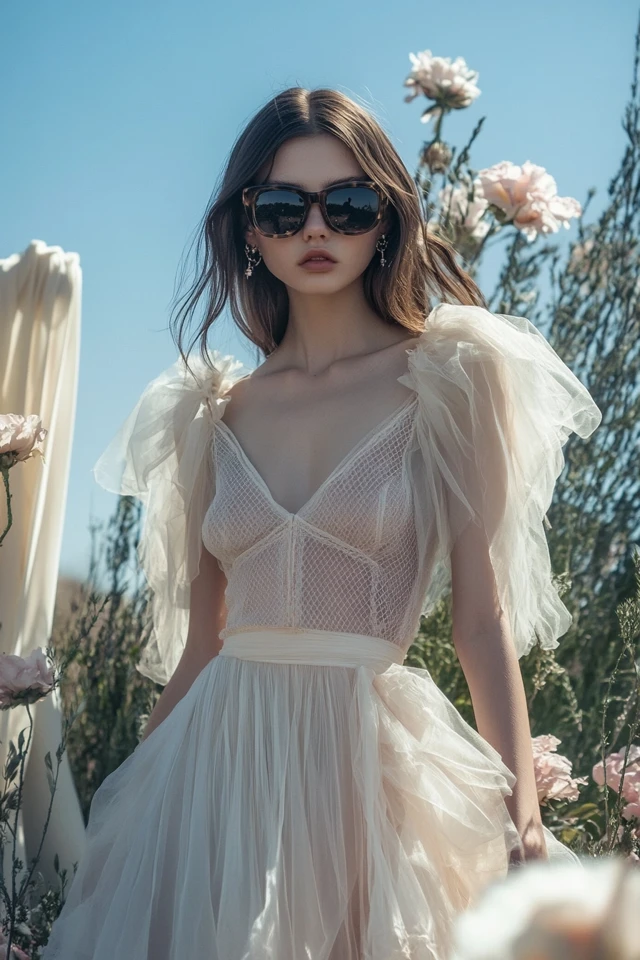
A knee-length dress with mesh sleeves and a flared tulle skirt is playful and easy to dance in. A mesh crop top with a tulle midi skirt works as a two-piece and can be split up and worn again separately.

What colors work best?
Open-weave fabrics read lighter than the same color in a solid cloth, because skin and light show through. Soft shades such as blush, ivory, champagne, dusty blue and lavender stay gentle and suit spring and summer events. Ivory and cream are the usual choices for weddings.
Deeper colors behave differently. Emerald, burgundy and black look richer in tulle because the layers stack and darken, while a single layer of mesh in the same shade stays see-through. Mixing shades in the layers, such as a slightly lighter mesh over a deeper tulle, adds depth without a print.
Ombré tulle, with the color shifting from one layer to the next, is a modern way to get that effect.

How do lace and sleeves fit in?
Lace sits naturally on both fabrics. A lace overlay dress with sleeves, for example, often uses mesh as the base so the pattern seems to float on the skin, then switches to tulle below the waist. A floral lace dress with sleeves can use the same idea: the motifs are densest at the shoulders and thin out toward the sleeve edge.
If you want a lace dress with sleeves for a more covered look, check how the sleeve is lined. Unlined mesh sleeves stay sheer, and a nude lining gives more coverage without hiding the pattern. For more on pairing the two, see combining tulle and lace for princess-inspired dresses.
Which textures and details are worth looking for?
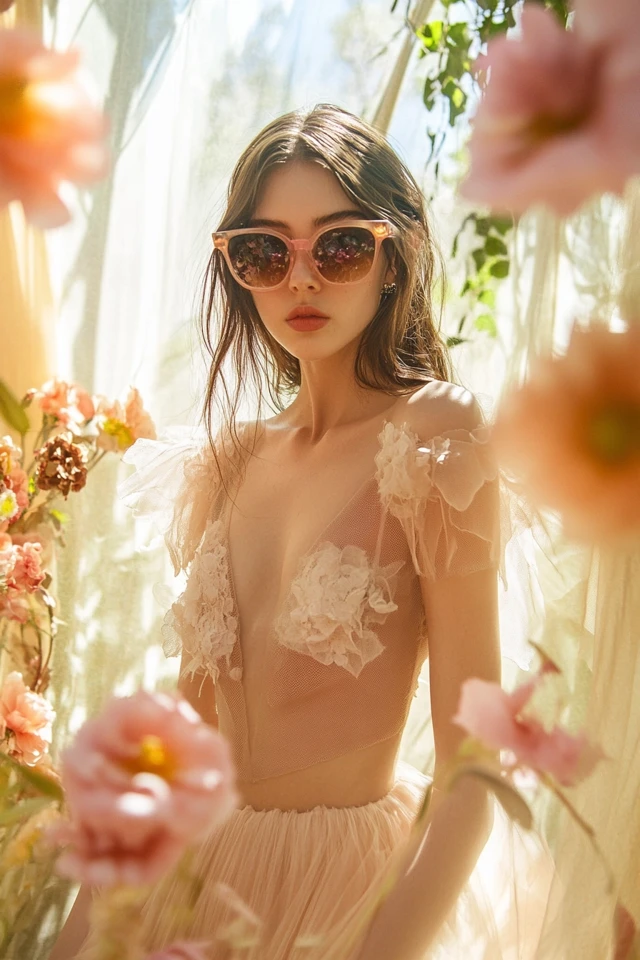
- Embroidered mesh, with floral or geometric thread, adds detail without weight.
- Glitter or metallic-fleck tulle brings sparkle for evening.
- Crinkled tulle moves more softly and looks less polished, which suits relaxed settings.
- Layered mesh panels in two shades give dimension on a plain cut.
- 3D floral appliqués and feather trims add whimsy, but use one or the other.
If you like the sparkle direction, mesh and sequins for bold evening gowns goes further. For a softer, more fluid evening option, there is also silk and tulle.
How do you wear and care for it?
- Choose seamless, skin-toned undergarments for sheer panels, or a matching slip or bralette under a sheer bodice.
- Keep jewelry small. Drop earrings or a simple bracelet are enough, since the fabric already carries the look.
- Check the hem length in your shoes. A tulle hem that drags will snag and tear.
- Store the dress in a garment bag so the net does not catch on zippers or hooks, and steam gently from a distance for wrinkles.
As an architect trained in evidence-based design, I'd also test the dress under both daylight and indoor light before an event. Sheer layers change color noticeably between the two.
For a lighter, summer take on these fabrics, try crochet and sheer mesh in light summer dresses.
Frequently asked questions
Can sheer mesh and tulle dresses be worn casually?
Yes. A tulle skirt with a plain tee or knit, or a sheer maxi layered over a slip, keeps the fabrics relaxed.
How do you make a sheer mesh dress more modest?
Choose a design with embroidery or appliqué placed over the areas you want covered, and wear a slip or nude lining underneath.
Can you wear a mesh and tulle dress in winter?
You can. Add a long coat or stole and opaque tights, and the dress keeps its look while you stay warm.
How do you add color to a neutral tulle dress?
Use shoes, a clutch or jewelry in one accent color, so the dress stays the soft focus.
Filed under Fabrics & Textures