Winter Layering Knits: Fleece and Metallics, Styled
- Words by
- Julio Arco
- Published
- Reading
- 5 min
The simplest way to build winter layering knits is a three-part formula: a smooth base against the skin, a soft insulating middle (a knit or fleece), and a shell on top. Fleece sits comfortably in the middle, and a metallic jacket or vest is an easy shell that adds shine to an otherwise matte outfit.
Below is how to layer knitwear for winter with fleece and metallic pieces, which finishes to pick, and how to keep the result from looking bulky.
What is the 3 layer rule for winter?
Base, middle, outer. Each layer has one job. The base manages moisture, the middle holds warm air, and the outer layer blocks wind and weather.
For the base, Texas A&M's Howdy Health advises that the layer closest to your skin should be made of moisture-wicking materials that draw sweat away from your skin. The same page says to avoid cotton, because it absorbs moisture and can keep it next to your skin, which makes you cold. That advice is written for exercise, but it is a sensible starting point for long days outdoors too.
The middle is where fleece, a wool sweater or a cardigan goes. The outer layer is where metallics come in, since puffers, quilted vests and shells are the pieces most often made in a shiny finish.
Why fleece and metallics work together
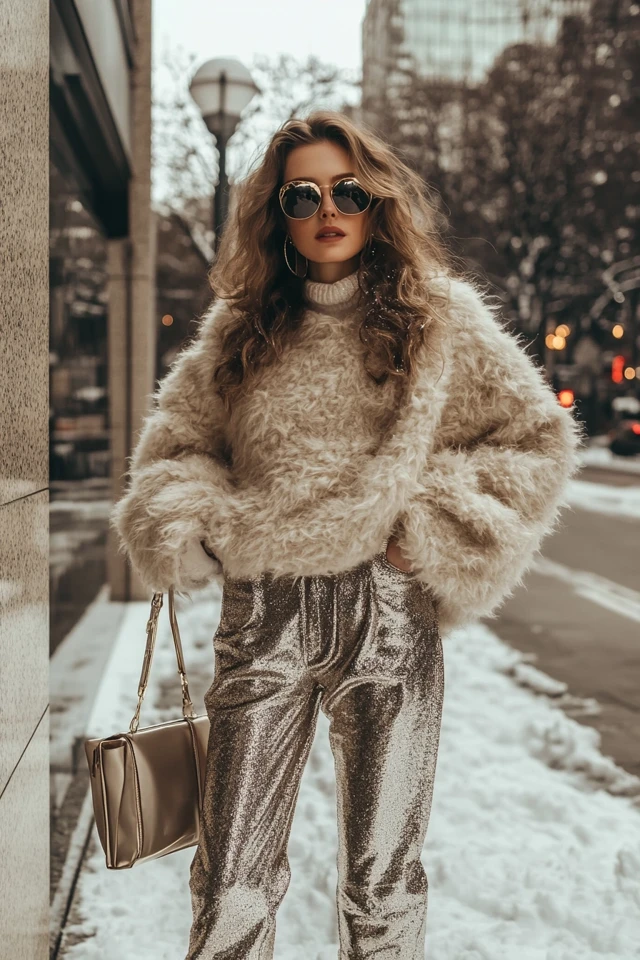
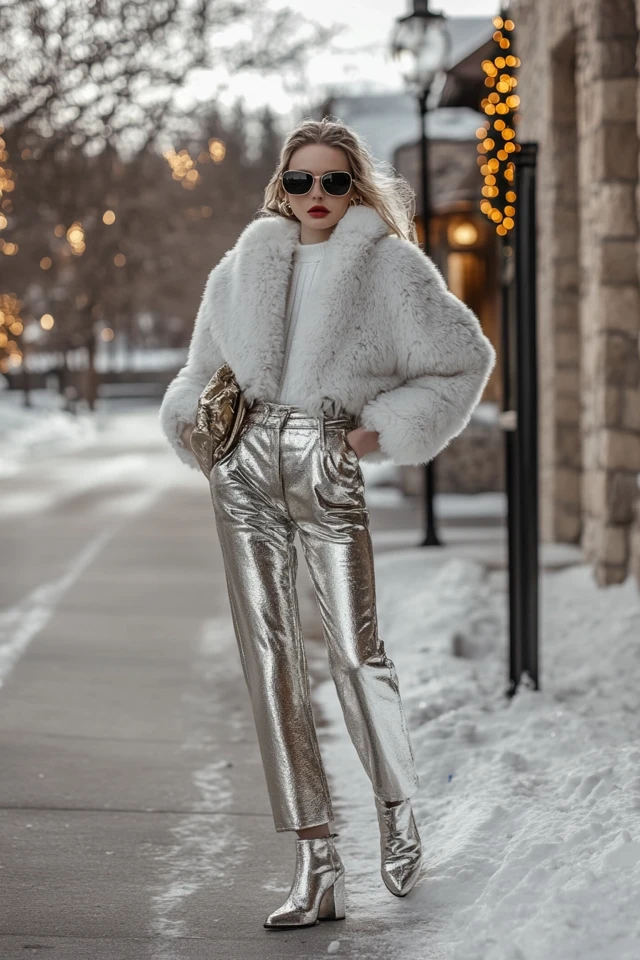
The pairing is about surface. Fleece is matte and soft, so it absorbs light. A metallic finish reflects it. Placed side by side, each makes the other more noticeable, and the outfit reads as deliberate instead of plain.
Through the lens of evidence-based design, I'd treat texture as the first thing the eye reads, before color. A cream fleece under a silver puffer looks quiet because the colors are close; the contrast comes entirely from the surfaces.
How to layer without looking bulky
Bulk comes from stacking thick pieces of similar volume. A few adjustments help:
- Keep one layer slim. If the fleece is oversized, choose a fitted or cropped metallic shell, and the reverse.
- Put the thinnest warm piece closest to the body and the thickest on the outside.
- Let sleeves taper. A sleeve that is wider than the layer beneath it bunches at the elbow.
- Vary the hem lengths so the layers show as steps rather than a block.
- Pick one statement piece and keep the rest simple.
Fleece and metallic outfit formulas
Everyday
A neutral fleece hoodie under a quilted metallic vest, with straight jeans and sneakers. A fleece shacket with metallic sneakers or a metallic crossbody bag gives a smaller dose of shine.
Streetwear
An oversized metallic puffer over tapered fleece pants and boots. Or a half-zip fleece pullover tucked into a metallic midi skirt, which keeps the waist visible and the top half from swallowing you.
Festive
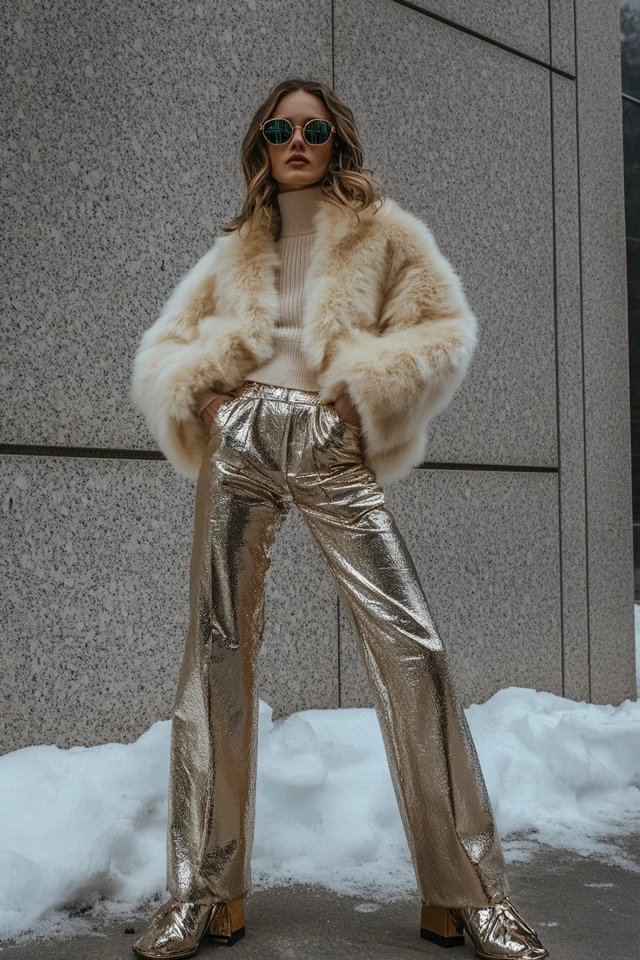
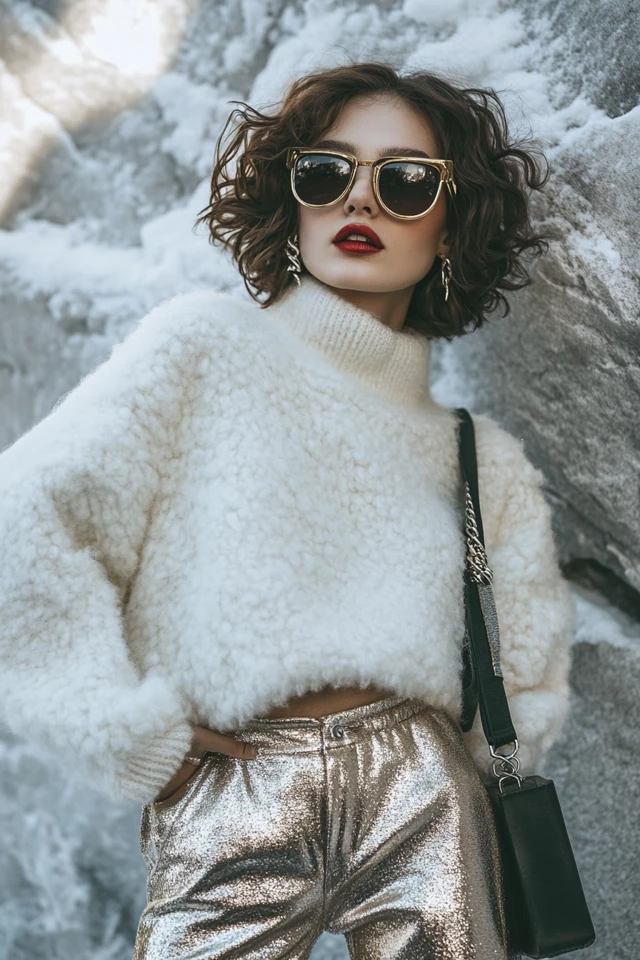
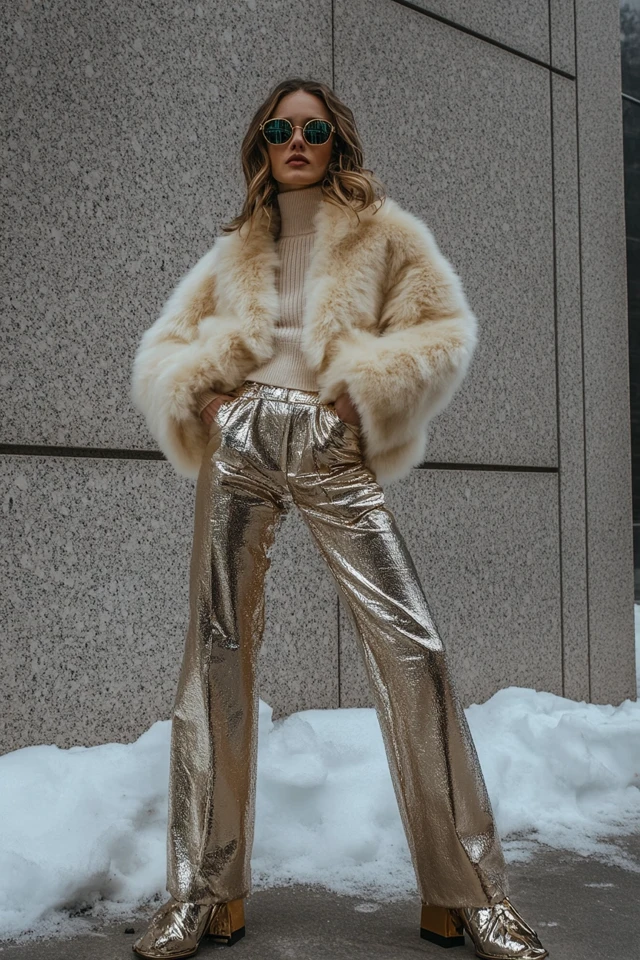
A fleece sweater dress with a metallic belt and knee-high boots. For a dressier version, wear a fitted fleece turtleneck with wide-leg metallic trousers and heeled boots. For more on festive textures, see combining wool and sequins.
Outdoors
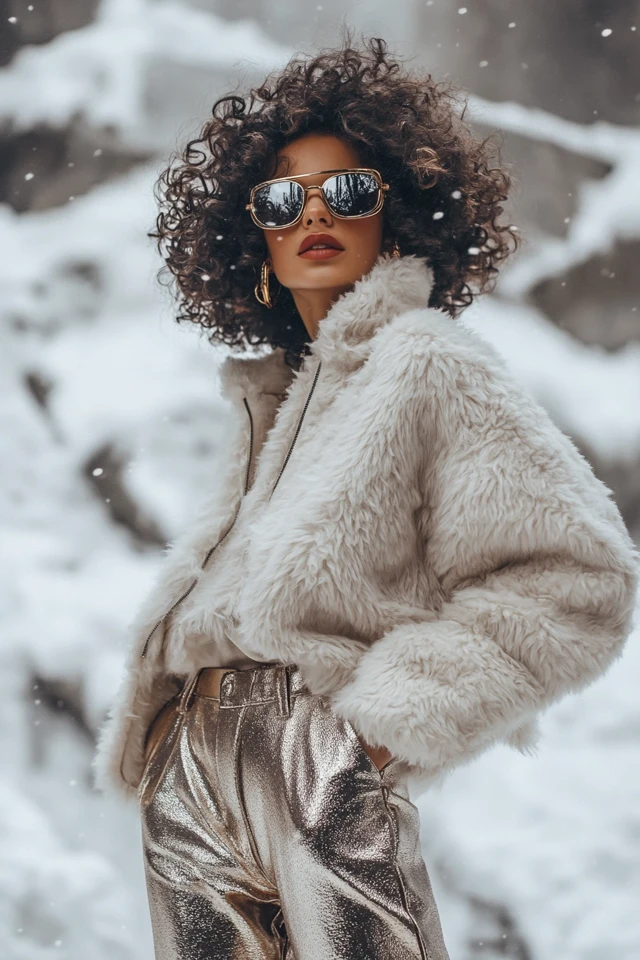
Fleece as the warm middle under a metallic shell works for hiking or skiing, with a wicking base underneath. If you want more sport-focused options, fleece jackets for frosty winter sports covers them.
Which color pairings work best?
Metallics behave like colors. Silver is cool, gold and bronze are warm, and the fleece should lean the same way.
- Cream or beige fleece with silver: clean and minimal.
- Cobalt or mustard fleece with gold: bolder, best when the rest of the outfit is neutral.
- Black fleece with gunmetal: low-contrast and edgy.
- Blush fleece with rose gold: soft and warm.
- Olive or rust fleece with bronze: earthy, with a slightly muted shine.
Choose the finish: matte, foil or quilted
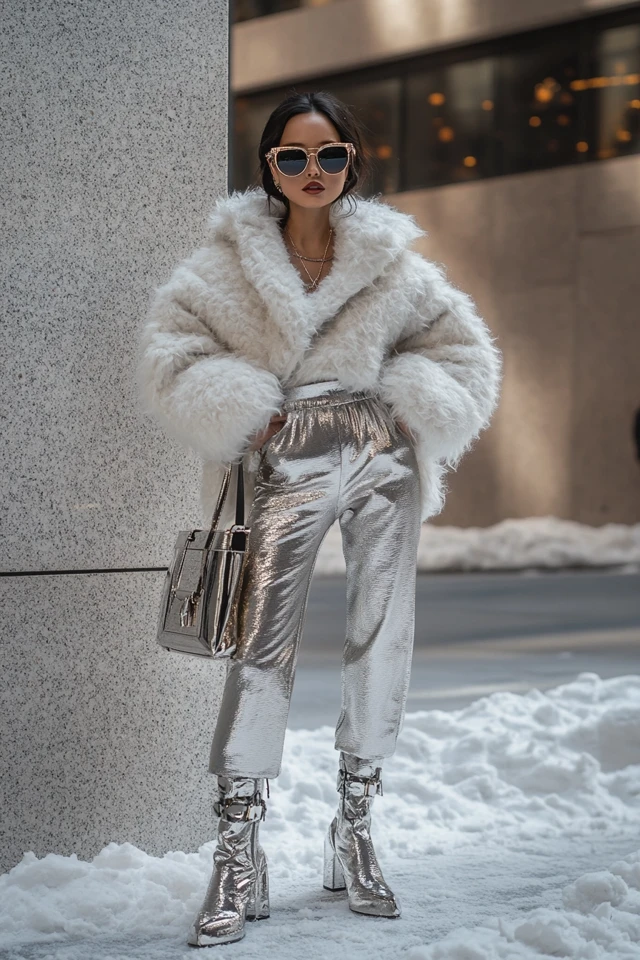
Matte metallics look the most understated and sit well with plain fleece. High-shine foil is a statement, so give it a quiet partner. Quilted metallics add dimension and break up the light into smaller highlights, which is more forgiving than a flat, glossy panel.
Sherpa fleece has more texture than smooth fleece, so it pairs best with structured, sleek outerwear. Smooth fleece can handle a quilted shell. As an architect trained in evidence-based design, I'd pick the matte or quilted finish if you're unsure, because it softens reflections and reads as calmer next to skin and wool.
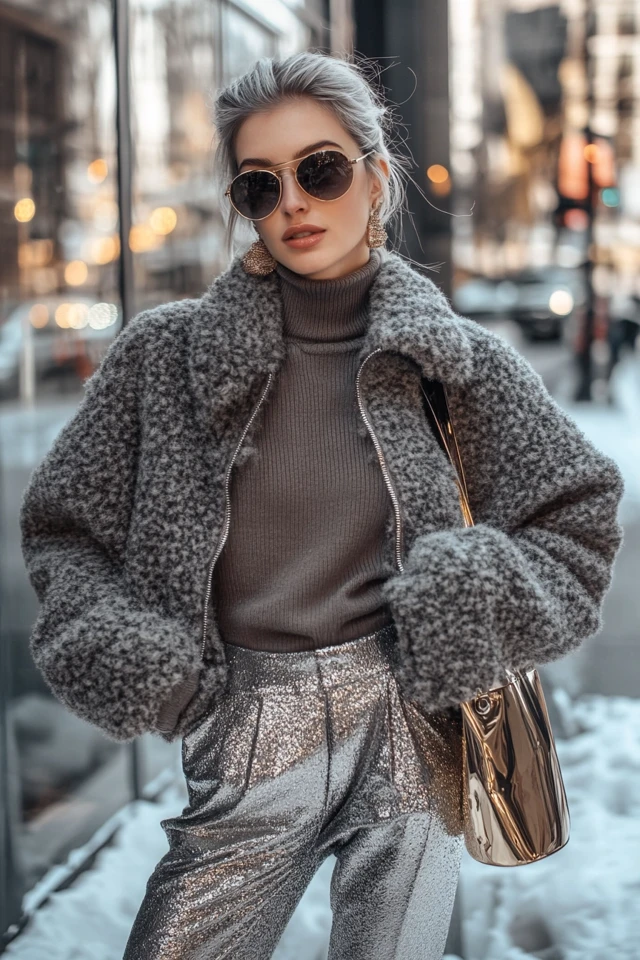
Common winter layering mistakes
- Wearing cotton next to the skin on cold, active days, since it holds moisture.
- Putting the bulkiest piece in the middle, so the shell cannot close or sits tight.
- Using two statement pieces at once, such as a foil puffer and a bright fleece.
- Ignoring the shell's fit. A jacket that pulls at the shoulders is a fit problem, not a you problem; size up or choose a boxier cut.
- Forgetting accessories. A fleece-lined metallic glove or a scarf adds warmth without adding bulk to the torso.
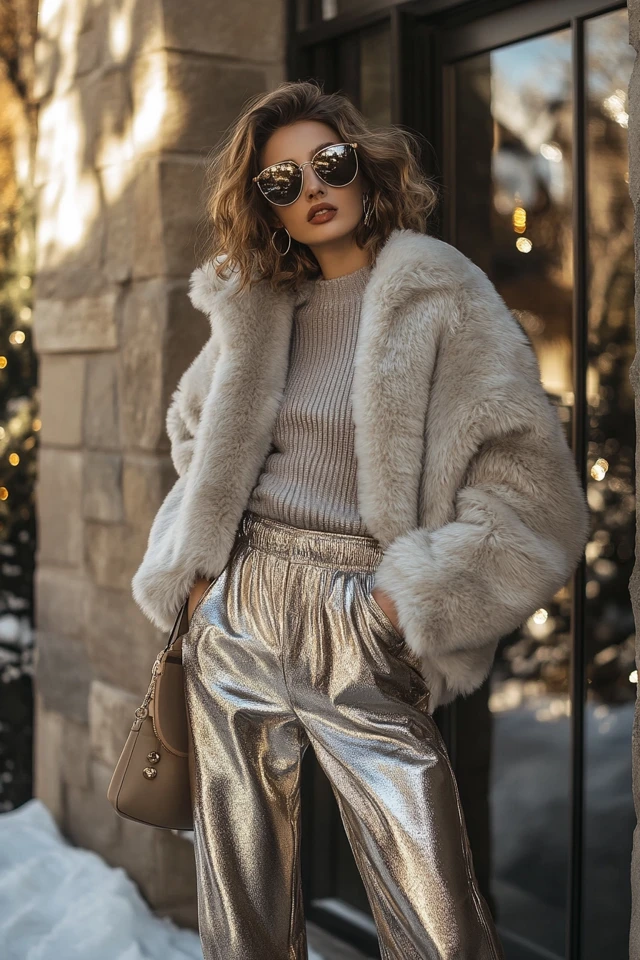
Accessories and care
Metallic beanies, gloves and bags add shine in small amounts. A plush fleece scarf softens a metallic coat. For footwear, chunky sneakers, combat boots or metallic snow boots all suit the look, depending on the occasion.
For care, check each garment's label. Fleece is commonly washed cool to keep it soft, and metallic coatings are often best spot-cleaned, but follow the tag. If you want more ideas for building the middle layer, pairing fleece and wool and mixing metallics and knits go deeper on each.
Frequently asked questions
What is the best layering system for winter?
A base layer that wicks moisture, an insulating middle such as fleece or a wool knit, and a wind-blocking outer shell. Adjust the thickness of each to the temperature and how active you'll be.
What are some common mistakes people make when layering for winter?
Cotton next to the skin, a middle layer too bulky for the shell, and too many statement pieces at once are the usual ones. Fit across the shoulders matters too.
Can I wear fleece and metallics to formal events?
Yes, if you keep the shapes sleek. A metallic coat over a fleece dress, with polished boots or heels, works well.
How do I style metallics without looking overdone?
Use one metallic piece and let the fleece and the rest of the outfit stay in neutral, matte tones.
Filed under Fabrics & Textures