Capsule Wardrobe for Moms: A Practical Starter Plan
- Words by
- Julio Arco
- Published
- Reading
- 6 min
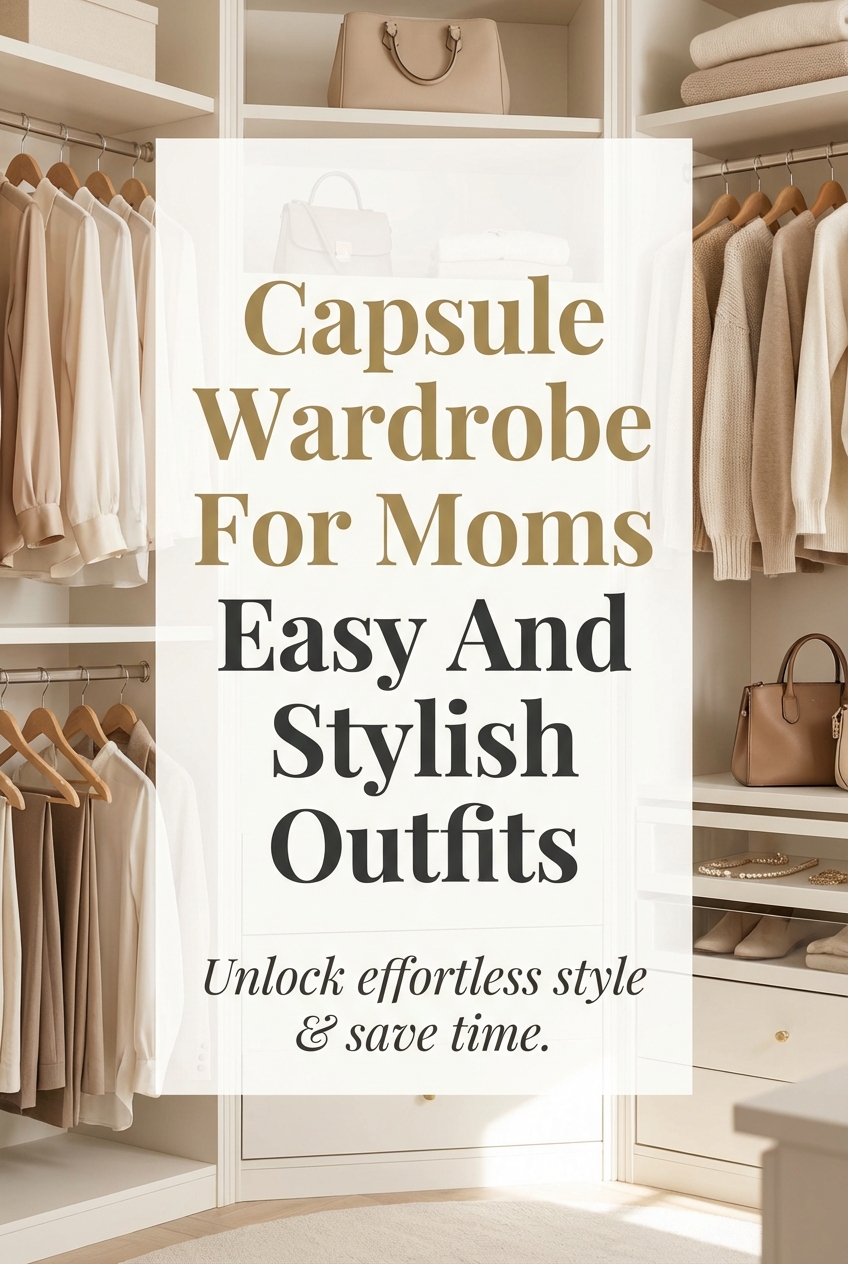
A capsule wardrobe for moms is a small set of clothes where every top works with every bottom, so getting dressed takes a couple of minutes. Aim for roughly 15 to 25 pieces in a tight color palette, made from fabrics that survive sticky hands and frequent washing.
Below: what to buy first, how to choose fabrics and colors, how to fit each piece, and a checklist of styling tricks that make simple outfits look finished.
What should a woman have in a capsule wardrobe?
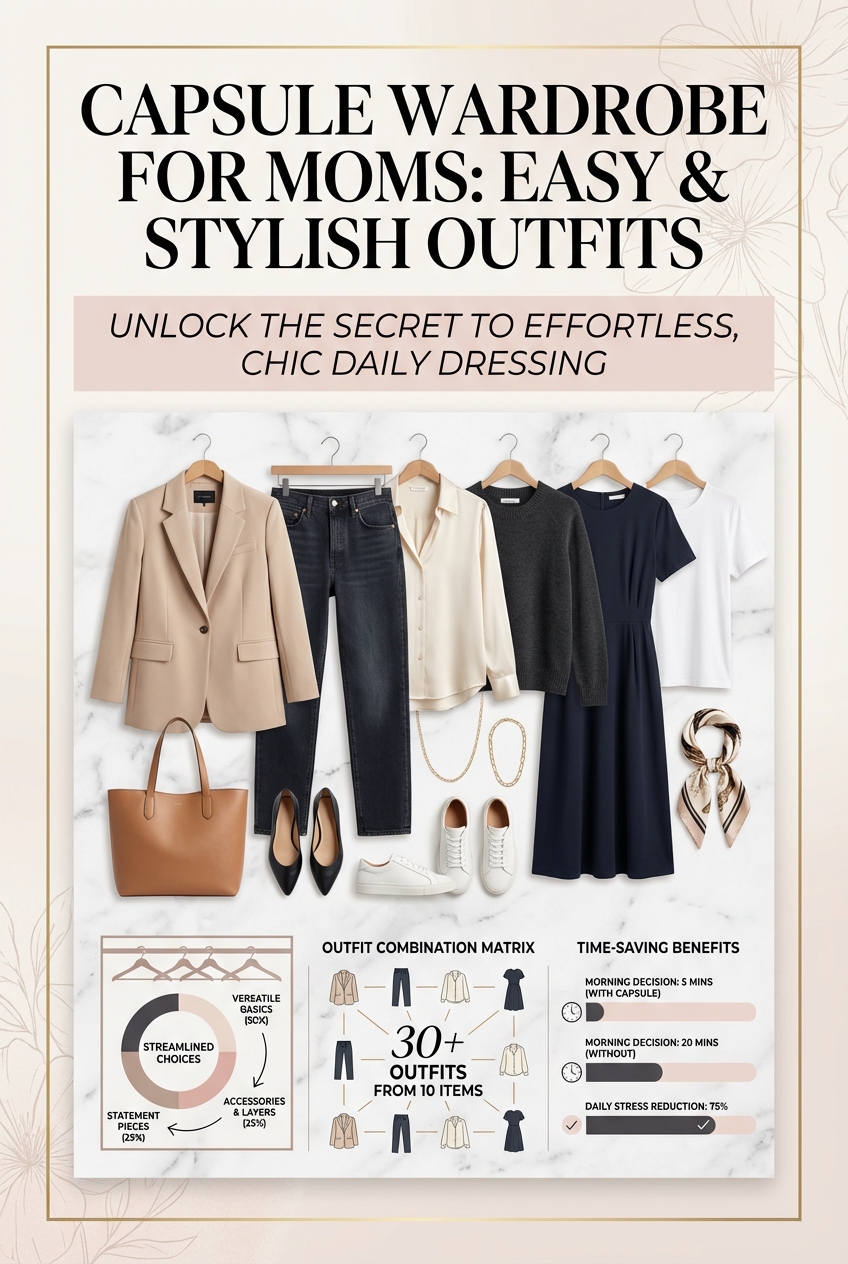
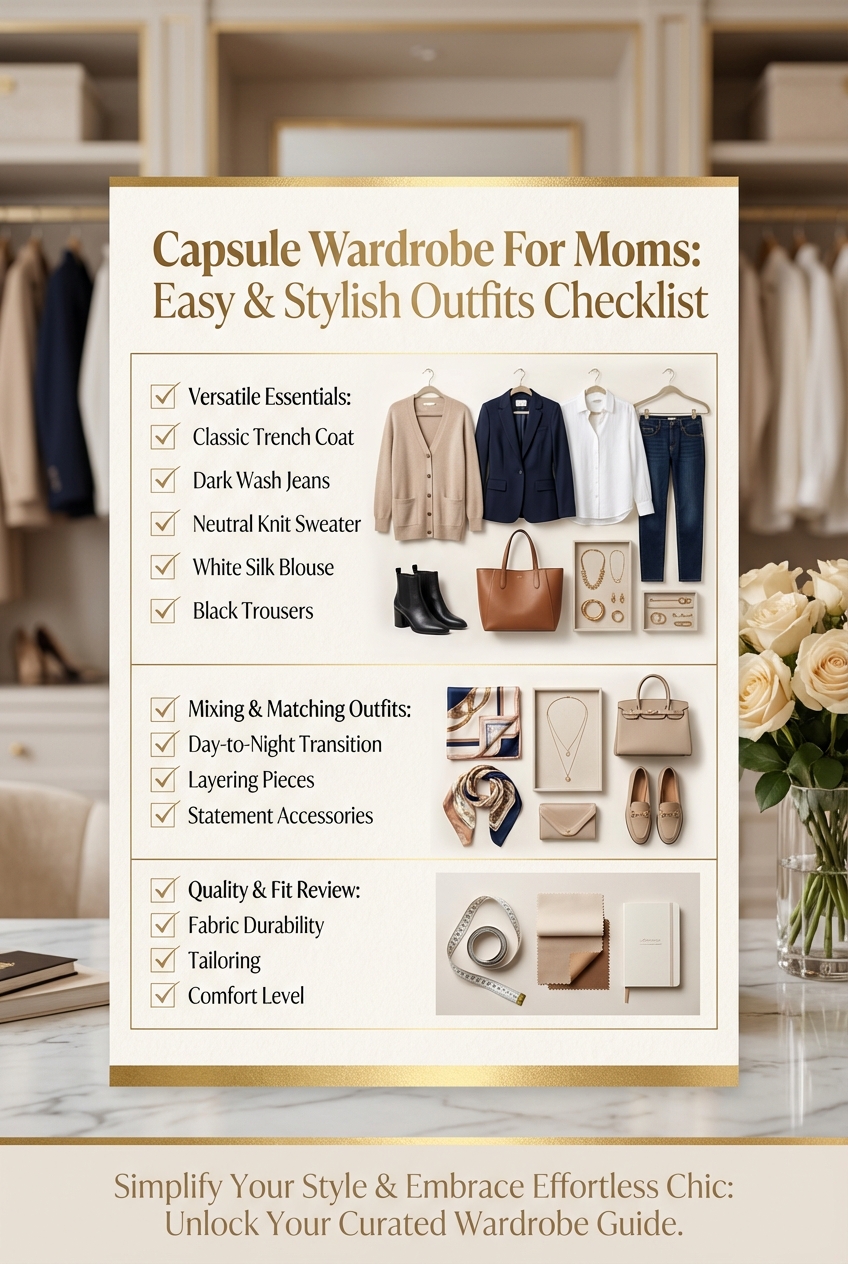
Start with the pieces you will wear weekly, then add extras. A workable core for a mom:
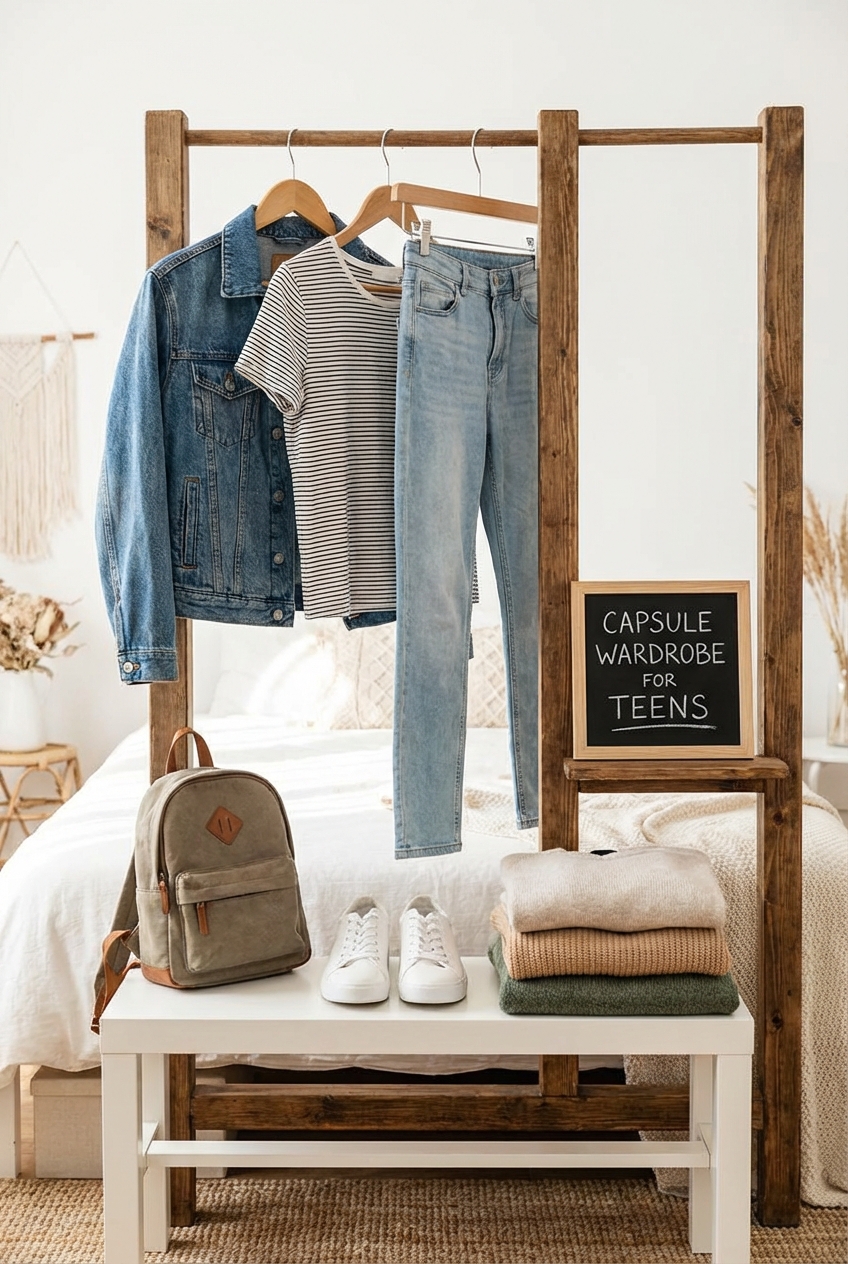
- 2 pairs of pants: one straight or wide-leg trouser, one pair of dark or mid-wash jeans
- A skirt or dress that works with sneakers
- 4 to 6 tops: a white or off-white tee, a striped tee, a button-down, a fine knit
- A cardigan or blazer as a third layer
- A pair of leather sneakers and one boot or loafer
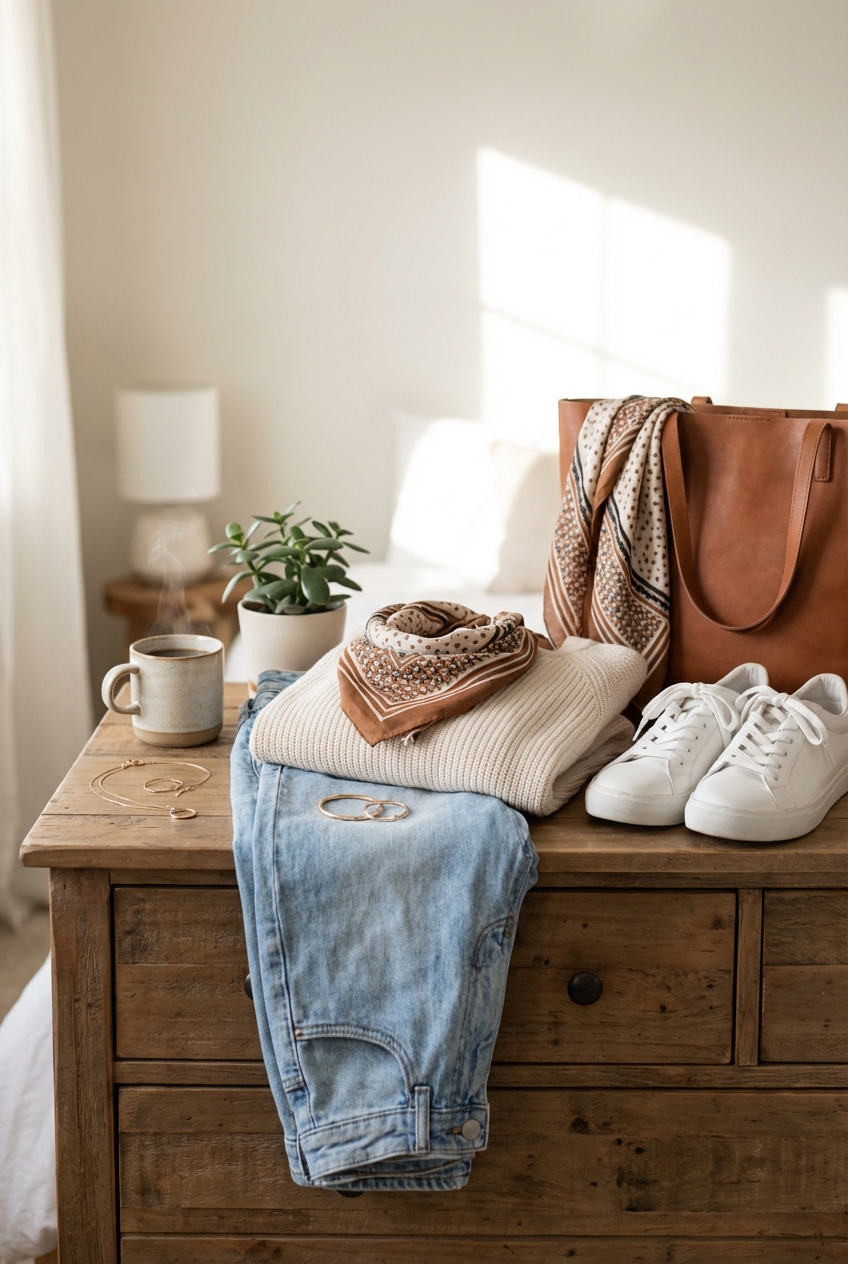
- A crossbody bag, a belt and small earrings
Treat this as a capsule wardrobe checklist, not a rule. A stay at home mom capsule wardrobe may want more loungewear-adjacent knits, while a mom commuting to an office needs another trouser and a blazer. For a longer piece list, see these practical mom essentials.
What is the 3-3-3 rule for a capsule wardrobe?
The 3-3-3 rule usually means three tops, three bottoms and three pairs of shoes, mixed into outfits. It suits a short trip better than a full everyday closet, but it is a good way to test whether your pieces really combine.
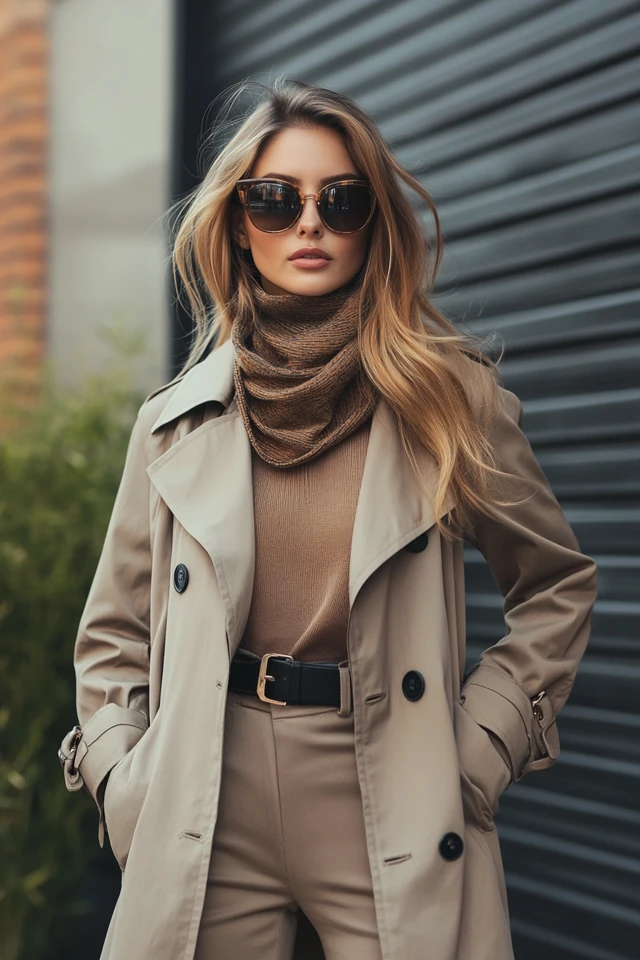
For daily life I'd use a related color rule: three neutrals and three accents. Black, camel and ivory as neutrals, with olive, chambray blue and terracotta as accents, is one example. Keep every bottom neutral and you can pick any top in the dark and it will match.
Check the temperature of your neutrals too. A cool grey next to a warm cream looks off, because the undertones pull in different directions.
Which fabrics hold up to motherhood?
Choose natural or semi-natural fibers with a little stretch. For jeans, a cotton-rich denim with a small amount of elastane gives structure and still lets you sit on the floor. For tees, a medium-weight cotton is a safer bet: very thin jersey turns sheer and wears through, very heavy jersey can hang stiffly.
Try the crumple test in the store. Squeeze the fabric in your fist for several seconds. If it stays creased when you let go, it will look rumpled soon after you put it on. Tencel, modal blends and merino tend to bounce back better.
Through the lens of evidence-based design, I'd pay attention to how a fabric feels against skin, because a scratchy or clingy fabric changes how comfortable you are all day, and how you stand and move in it.
One swap worth making: cheap polyester blouses tend to hold odors. A viscose blend or cupro gives a silky look and can usually be machine washed on a delicate cycle (check the care label). Skip 100% cashmere around babies and choose a wool or cotton blend that tolerates washing better.
How should pants and jeans fit?
A fit problem is not a you problem. Fix it with these checks:
- Sit down in the fitting room. If the waistband digs in or gaps at the back, leave them.
- Choose a high enough rise that your back stays covered when you lift a child or bend down.
- For straight-leg jeans, the hem should land around the ankle bone so it works with sneakers and ankle boots.
- If the hem drags, have a tailor shorten it, ideally while you wear your most common shoe.
A high-waisted wide-leg trouser is as comfortable as leggings and looks more polished. Postpartum, look for elastic back waistbands and wrap styles, which adjust as your body changes. If you are building a capsule wardrobe for moms plus size, the same checks apply: prioritize stretch in the waist and a rise that stays put when you move.
How do you layer and balance proportions?
Pair a fitted piece with a looser one. Wide-leg pants look best with a closer-fitting top, and slim pants with a roomier shirt. A third piece such as a cardigan or blazer makes the outfit look chosen, but keep it light so it does not get in the way of lifting and carrying.
Necklines matter with kids. A crew neck is harder to tug down, and a V-neck lengthens the torso. Boat necks tend to fight with shoulder bag and diaper bag straps.
A striped long-sleeve tee hides small spills better than a solid white one. If white tees keep getting stained, try off-white or oatmeal tones, which also look softer next to many skin tones. Pre-treat spots right away.
Shoes and accessories that work with kids
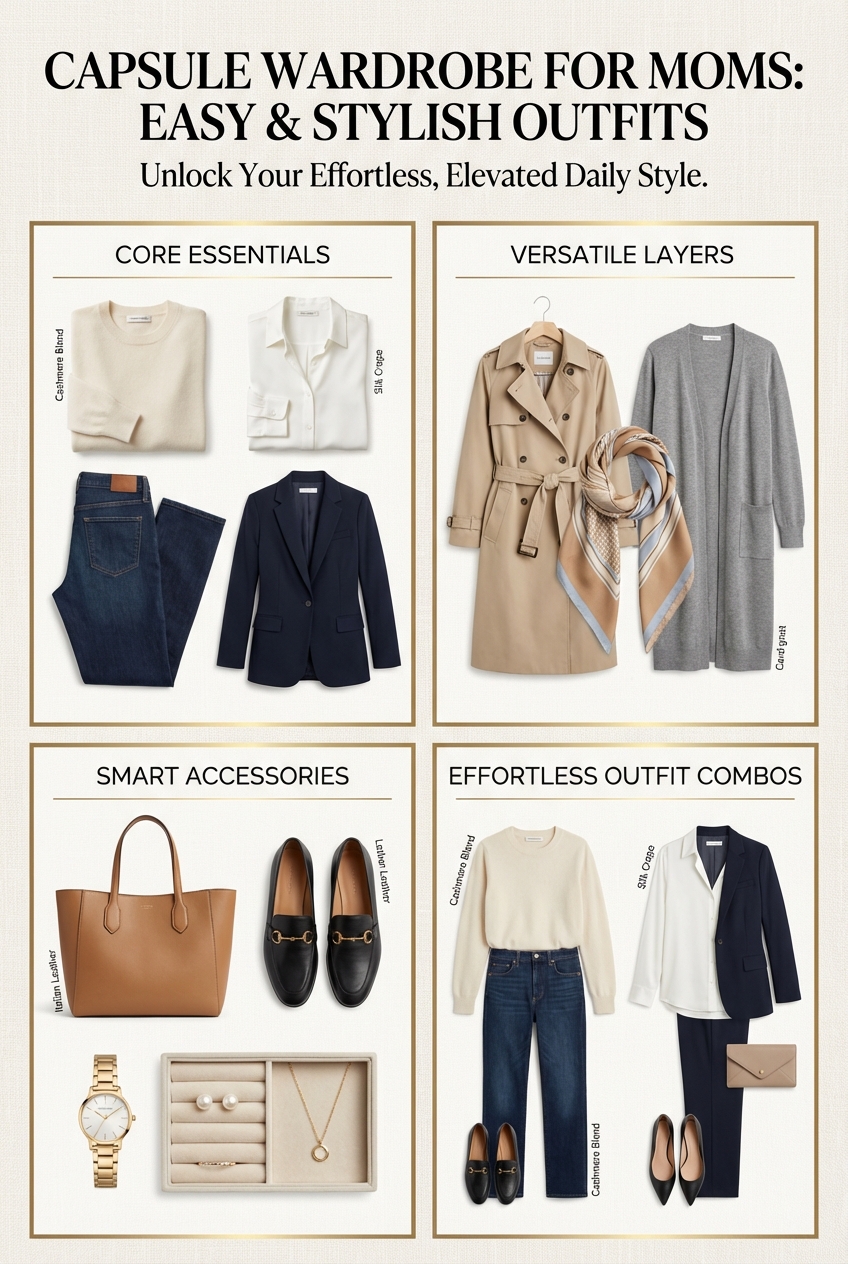
A low-profile leather sneaker is the most useful shoe here, since leather wipes clean more easily than canvas. Add a Chelsea boot or loafer in smooth leather for cooler weather. Suede is high-maintenance in rain and at parks.
For boots, you should be able to slip about two fingers between the shaft and your leg. Much tighter is uncomfortable, and much looser lets your heel slide and rub.
Skip long pendant necklaces that little hands can grab. Small hoops add a bit of shine near your face and are harder to yank. A crossbody bag with a wide strap spreads weight and keeps your hands free, and a leather belt in the same tone as your shoes pulls an outfit together.
Styling checklist for simple outfits
- Half-tuck your tee: tuck only the front hem so the waist is defined and the back hangs loose.
- Roll button-down sleeves twice to show your forearms.
- Leave a small gap of skin or sock between pant hem and shoe.
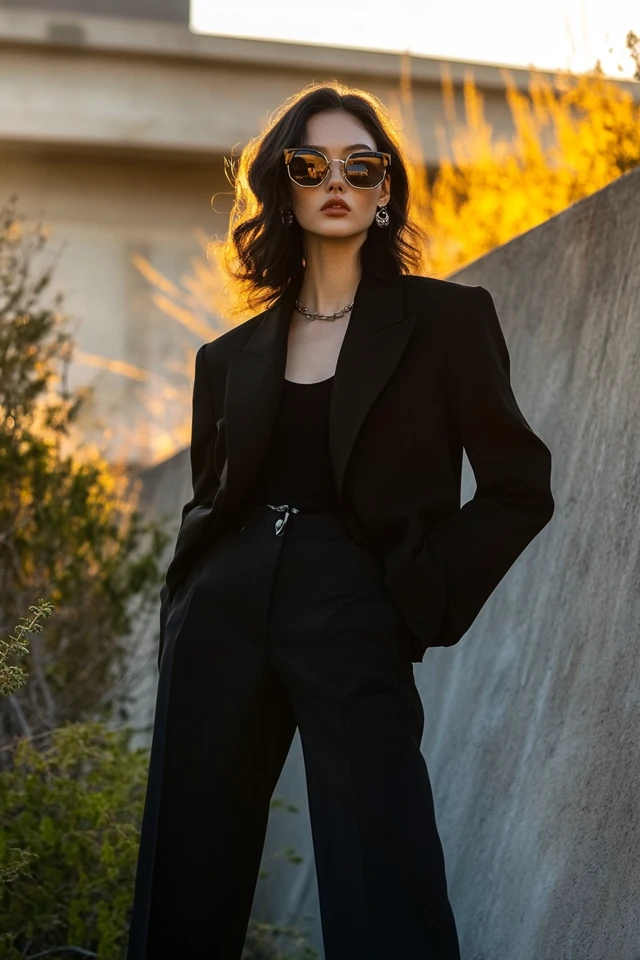
- Wearing one color head to toe? Vary the textures, such as black denim with a silky top and a leather belt.
- Balance tight with loose, as described above.
As an architect trained in evidence-based design, I'd treat texture as the first tool for a one-color outfit, because a matte and a glossy surface in the same shade read as different colors.
Is it worth buying less and keeping it longer?
Often yes. Spending more on jeans you wear several times a week usually costs less per wear than replacing cheap pairs that lose their shape. Start with shoes and denim, then upgrade tops gradually.
Textile waste is a reason to buy fewer, better pieces. The EPA estimated that textiles generated in 2018 came to 17 million tons, and the recycling rate for all textiles was 14.7 percent that year. When you edit your closet, MSU Extension instructor Jasmine Harris-Speight suggests: "When deciding what to keep, ask yourself: Does this item hold a sentimental place in my heart? Will I miss this item if I get rid of it?"
For more routines and outfit ideas, see quick and easy capsule outfits and how to build a capsule wardrobe step by step.
Frequently asked questions
What is the 3-3-3 rule capsule wardrobe?
It usually means three tops, three bottoms and three pairs of shoes that all combine into outfits. It works well for travel or as a small test of how well your pieces mix.
What should a woman have in a capsule wardrobe?
A few pairs of pants or jeans, a skirt or dress, a handful of tops in neutral and accent colors, a cardigan or blazer, comfortable shoes and a practical bag. Adjust the mix to how you spend your days.
How do I handle a changing body size postpartum?
Choose bridge pieces: pants with an elastic back waist, wrap dresses and wrap tops. They adjust to your shape without tailoring.
How do I keep white t-shirts clean with kids?
Treat stains right away with a stain stick or spray rather than waiting for laundry day. Off-white or oatmeal shades also hide small marks better than bright white.
Filed under Capsule Wardrobe