Bright Orange and Charcoal Outfits: How to Wear the Pair
- Words by
- Julio Arco
- Published
- Reading
- 4 min
An orange and charcoal outfit works because charcoal is a quiet, cool neutral that lets a loud warm color sit comfortably. Keep charcoal as the larger share of the look, use bright orange as the focal piece, and the pairing reads bold but controlled.
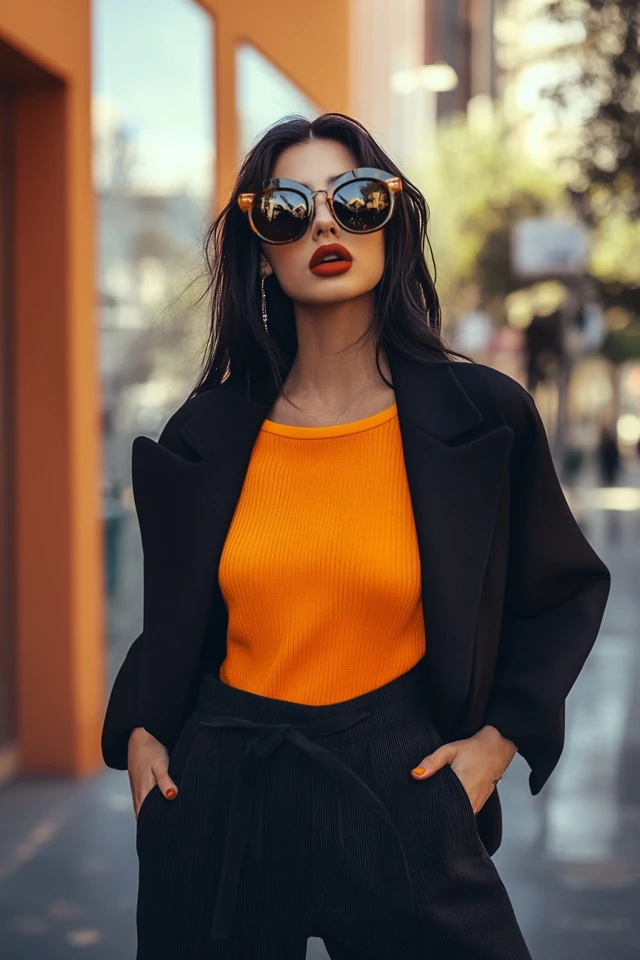
The easiest formulas: an orange top under a charcoal blazer, a charcoal knit with an orange skirt, or an all-charcoal outfit with one orange accessory. Everything below is about adjusting how loud you want it.
Why do bright orange and charcoal go together?
Orange is a warm, high-energy color. Cornell's home gardening guide to color describes warm colors, including reds, oranges and yellows, as ones that catch your attention and feel lively and energetic. On clothing, that means the eye goes to the orange first.
Charcoal does the opposite. It is dark, low-key and softer than black, so it frames the orange instead of competing with it. The contrast in temperature (warm against cool) and in brightness (light against dark) is what makes the pair look intentional.
Through the lens of evidence-based design, I'd think about it as a hierarchy: one color gets the eye, the other gives it somewhere to rest.
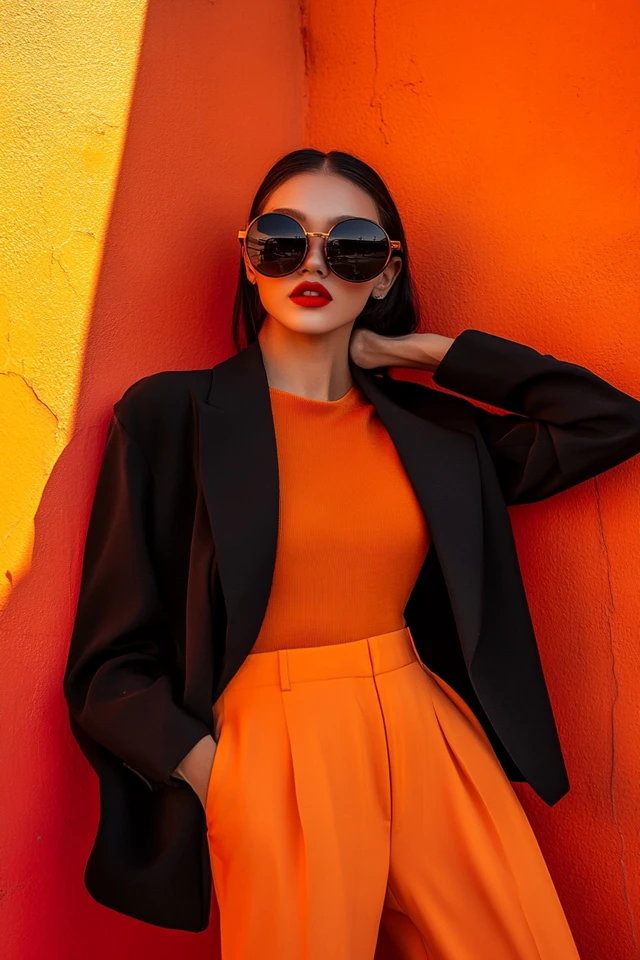
How much orange should you wear with charcoal?
Decide how much attention you want, then set the ratio.
- Low volume: all charcoal with orange in a scarf, bag, socks or earrings.
- Medium volume: an orange blouse, knit or tee with charcoal trousers or a charcoal blazer.
- High volume: an orange dress, skirt or coat with charcoal as the supporting layer, or an orange blazer over a charcoal jumpsuit.
If you are new to bold color, start at the low end. Seeing orange near your face in the mirror tells you quickly whether you like it.
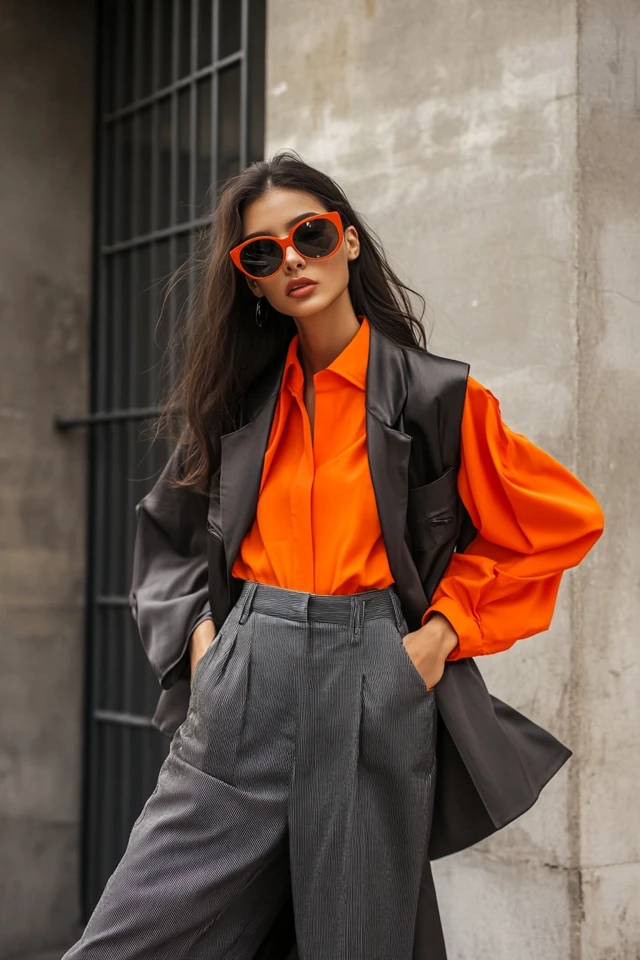
Which shade of orange suits you?
Orange covers a wide range: coral-leaning, true bright, and deeper rust or burnt tones. The shade matters more than the category. Hold a piece up near your face in daylight and look at your skin, not the fabric. If your skin looks tired or sallow, try a shade that leans redder or deeper. If it looks bright and even, keep it.
Charcoal is forgiving across the range, which is one reason it makes a good partner. If you want a deeper, autumn-leaning version, see warm orange and deep brown layers for fall jackets.
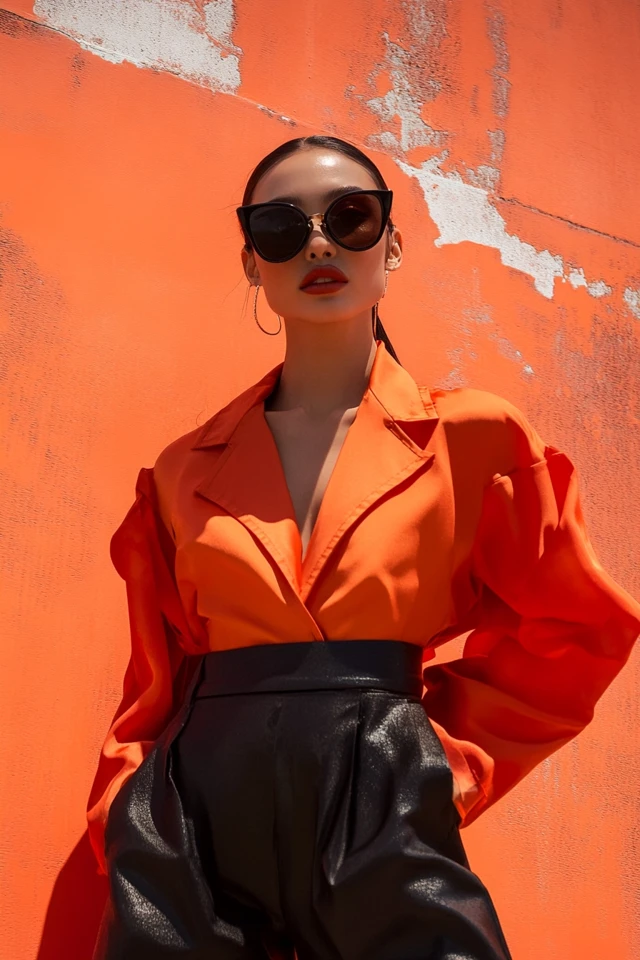
How to place the colors on your body
Color placement changes proportion. A dark color tends to recede and a bright one tends to advance, so you can steer attention.
- Orange on top, charcoal below keeps focus near your face and shoulders.
- Charcoal on top, orange below (a skirt or trousers) pulls the eye to the hips and legs.
- A charcoal column with a short orange layer, like a cropped jacket, adds one bright line without cutting the outfit in half.
On petite frames, I'd keep one color dominant so the outfit does not split into many blocks. For a dress version of this, charcoal and warm orange everyday dresses has more ideas.
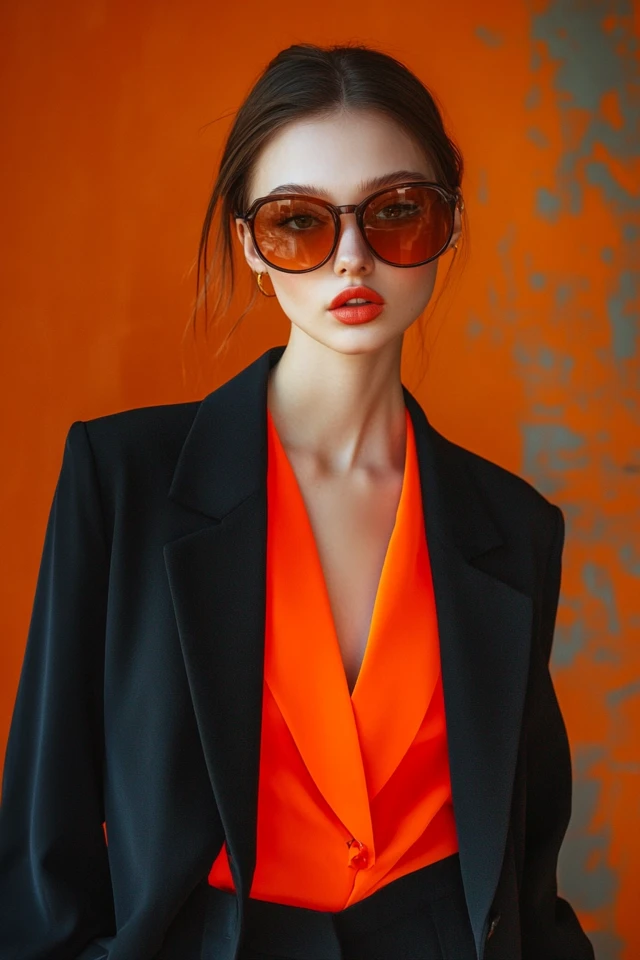
Which fabrics work for an orange and charcoal outfit?
Texture changes how both colors read. A matte wool or tweed in charcoal looks deeper and calmer, while a smooth silk or satin in orange looks brighter because it reflects more light. A chunky orange knit looks softer and warmer than the same shade in a flat cotton.
Some pairings to try:
- Orange silk blouse with a charcoal tweed skirt.
- Chunky orange sweater with charcoal ponte or jersey trousers.
- Charcoal turtleneck with an orange pleated midi skirt.
- Plaid or geometric prints that include both colors, if you want an easy entry point.
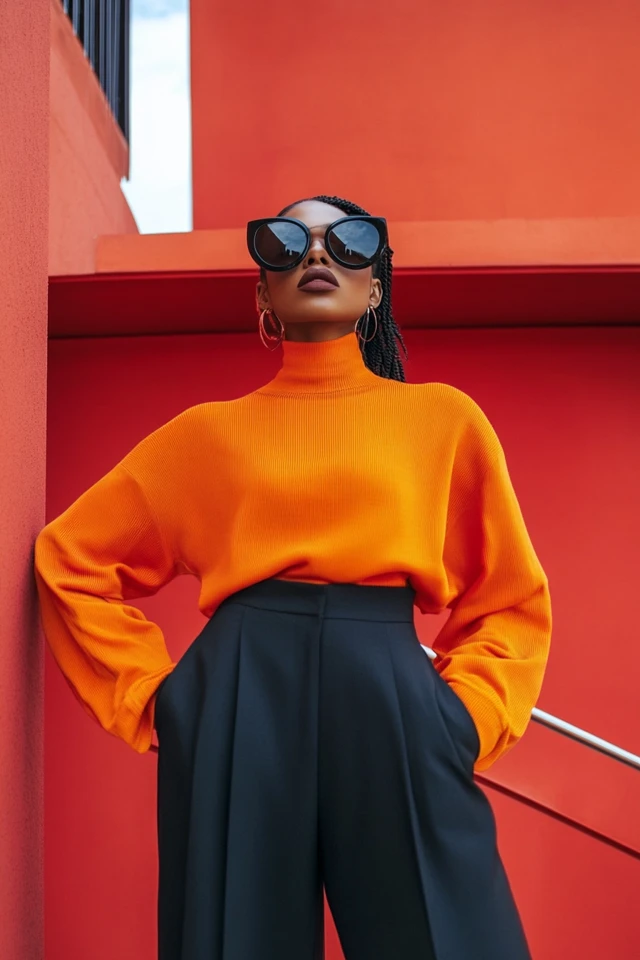
Outfits for work, weekends and evenings
Work
A charcoal blazer over an orange shell is the simplest version. Add black or nude shoes and keep jewelry small.
Weekend
A charcoal hoodie or crewneck with an orange scarf or cap works, as do orange sneakers with an all-charcoal outfit.
Evening
An orange sheath dress with a charcoal cardigan or tailored coat is clean and formal enough for dinner. Gold jewelry sits well with both colors.
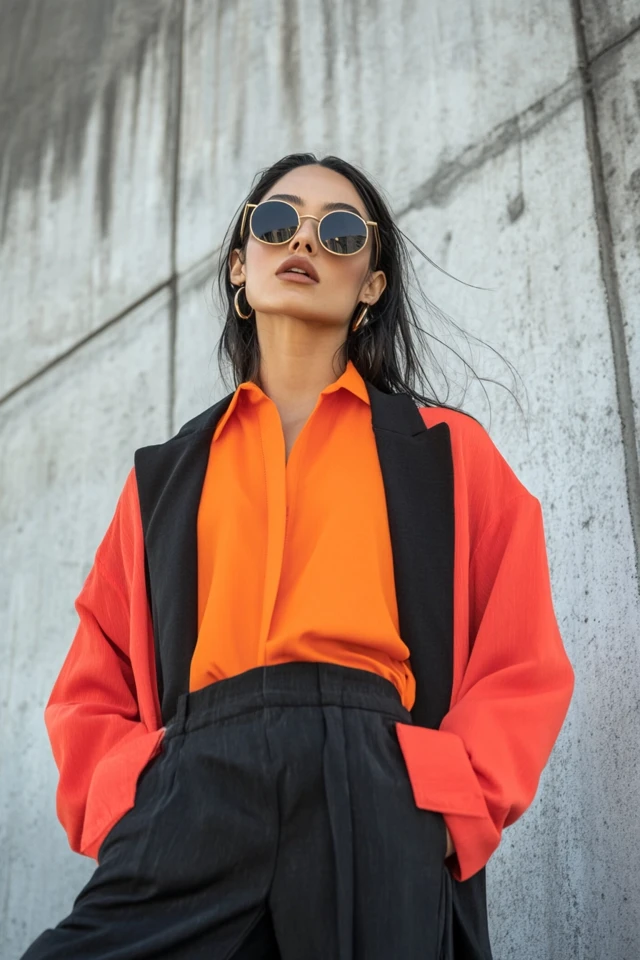
Other colors that join the pair
White and cream brighten the mix. Navy adds depth, and emerald green gives a stronger contrast. For something quieter, brown works with orange, and burnt orange with aqua shows how a cool color can sit beside it. Soft cool shades like lavender also pair with charcoal on their own, as in soft lavender and deep charcoal.
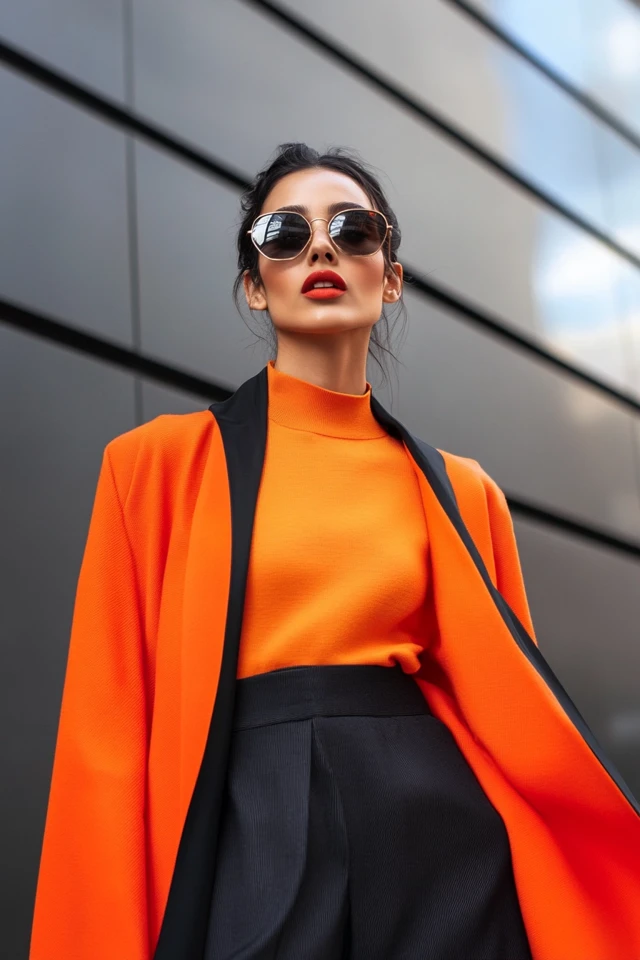
Does yellow work in place of orange?
Yellow is orange's neighbor, so the same logic mostly carries over. Among the colors that go with yellow, gray is one of the easiest, and a yellow and gray color combination reads fresh and clean. Charcoal makes the yellow look brighter, while light gray keeps it soft.
Deeper yellows such as mustard also suit this approach. For dark yellow color pairings, charcoal is a dependable base, and brown or olive work too. If you prefer a lighter take, pastel blue and lemon yellow is a fresh option for spring.
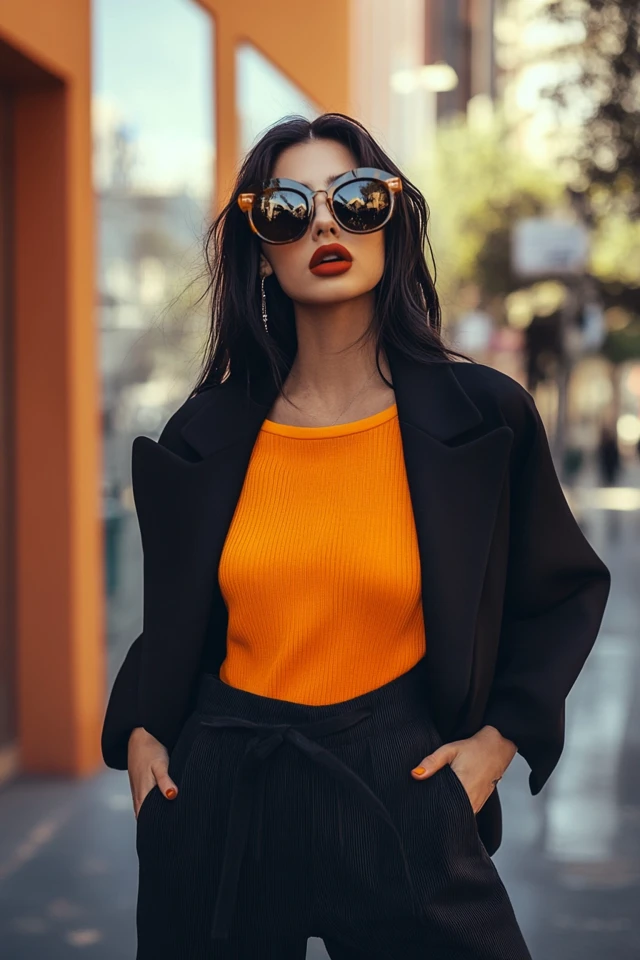
Frequently asked questions
Can an orange and charcoal outfit work for formal settings?
Yes. Choose a clean silhouette, such as an orange sheath dress with a charcoal blazer or coat, and keep shoes and bag in a neutral.
What other colors go with orange and charcoal?
White, cream, navy and emerald green all work, and gold or silver metals suit both main colors.
How do I tone down bright orange?
Pick a deeper shade like burnt orange or rust, or use orange only in small accents such as a scarf or belt.
Does this pairing work in every season?
Brighter oranges feel natural in spring and summer, while rust and burnt tones with heavier charcoal fabrics suit fall and winter.
Filed under Color Palettes