Bold Spring Lookbook Seasonal Trends
- Words by
- Julio Arco
- Published
- Reading
- 4 min
The easiest way to pick a spring fabric is to start with one "focus" fabric: a single print or texture you love, then build the rest of the outfit or project around it. Choose something light enough for changeable weather, with a color you'd happily see every day.
Below: what a focus fabric does, how to choose one, which spring colors and textures are worth a look, and what to make or wear with them.
What is a focus fabric?
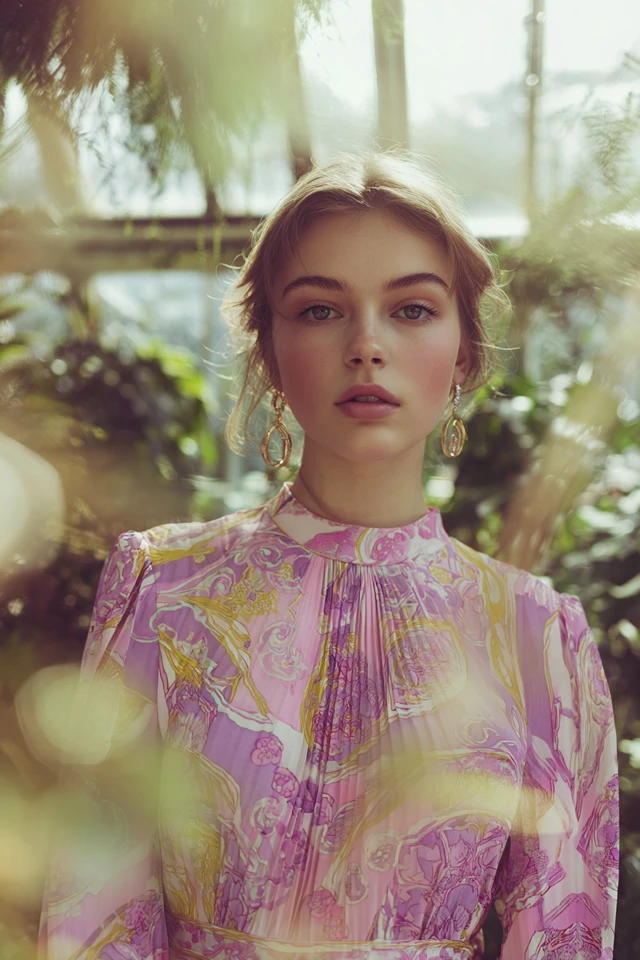
A focus fabric is the piece that sets the tone. It might be a bold floral, a striped linen or a rich jacquard. Every other fabric, color or accessory is chosen to support it, so the look has one clear lead instead of several competing ones.
The idea works for sewing, quilting and getting dressed. A magenta blouse with neutral trousers follows the same logic: one loud element, quiet partners.
How to choose a focus fabric
Start with the fabric you keep returning to, then test it against a few simple questions.
- Does the color look good next to your skin in daylight? Natural light changes how saturated tones read, so check it near a window.
- Is the scale of the print right for the project? Large motifs suit a skirt or a quilt panel. Small prints suit shirts and trims.
- Does it drape or hold shape the way the project needs? A flowing chiffon and a structured cotton blend behave very differently.
- Can you find two or three calmer partners for it, such as a solid in one of its minor colors?
Through the lens of evidence-based design, I'd judge texture before color. The same coral in a matte cotton and in a glossy satin does not read as the same color, because the surface changes how light reaches your eye.
Which spring colors work in fabric?
Spring palettes tend to split into two camps: soft pastels and saturated brights such as coral, turquoise, chartreuse and magenta. Both work. The brights suit a focus piece, and the pastels suit the supporting cast.
For spring color trends in fabric, pair one bright with a neutral (cream, tan, soft gray) so the color has room to breathe. If you want more contrast, try color blocking, such as cobalt next to sunny yellow. Keep the blocks large and the number of colors low.
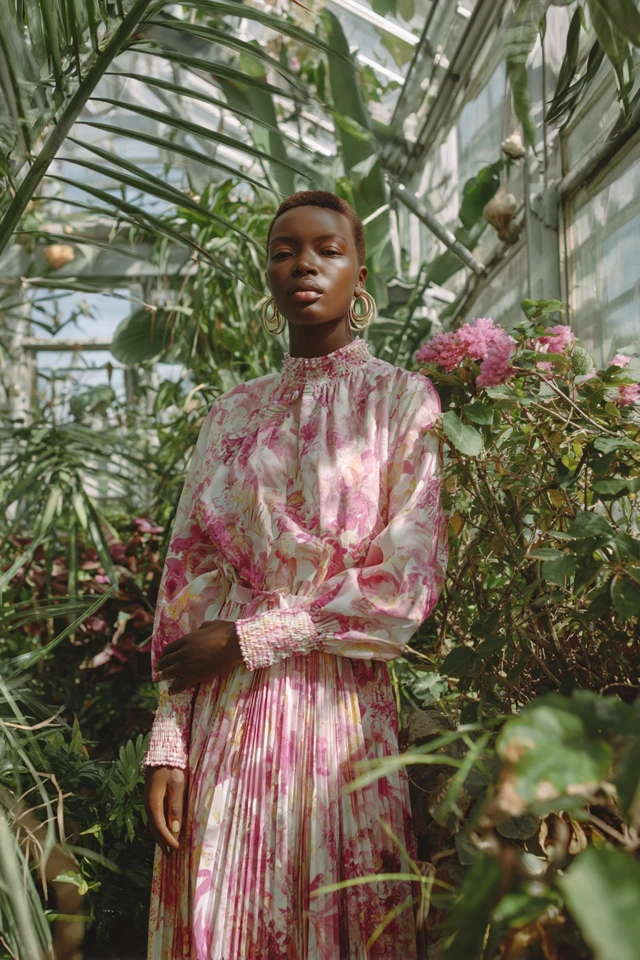
Floral, jacquard and print fabrics
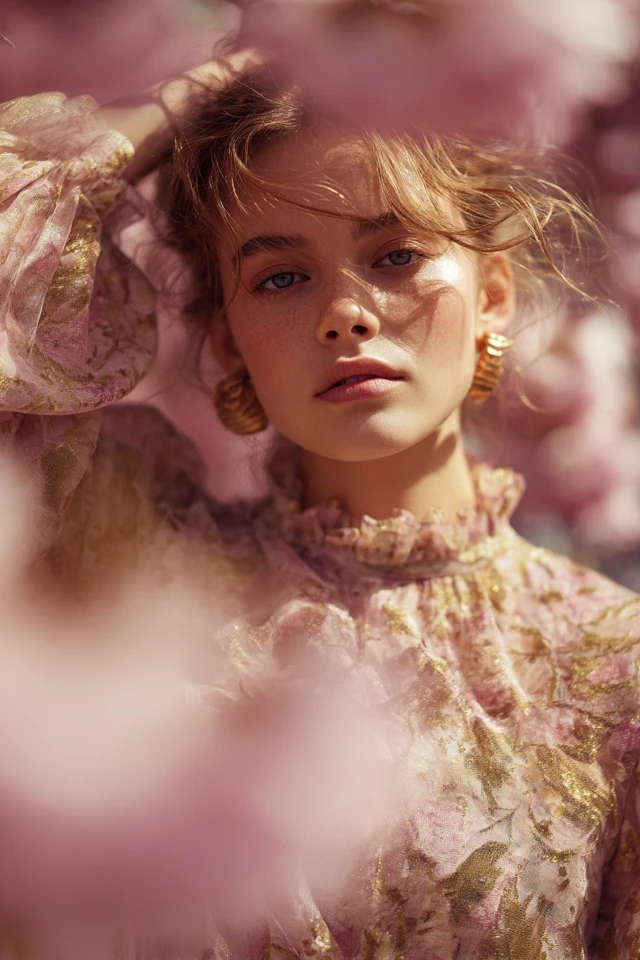
Florals are the obvious spring choice, but how they are made matters. A printed floral sits flat on the surface. Floral jacquard fabrics are woven, so the pattern has relief and catches light, which gives a quiet, dressy feel even in a tone-on-tone color.
- Printed florals suit blouses, dresses and gathered skirts.
- Jacquards suit structured pieces: jackets, shift dresses, cushion covers.
- Stripes and gingham are easy companions if you want a floral without overdoing it.
At work, a bold print is easier to wear under a neutral blazer. If you want ideas for that kind of balance, see our bolder spring looks.
Natural textures for spring
Linen, cotton, silk blends and gauzy weaves are the usual spring staples. They breathe, they layer well and they look relaxed. Natural textures for spring also pair neatly with bright color, because a slightly rough surface softens a saturated shade.
Sheer fabrics such as voile or organza work best as a layer: a sheer sleeve, an overshirt, a light scarf. Layering matters in spring because the weather changes. If you will be active outdoors on a cool morning, the Texas A&M Howdy Health guidance says to avoid cotton, including undergarments, because it absorbs moisture and can keep it next to your skin. For a casual walk cotton is fine, but for a workout choose a moisture-wicking base layer.

Things to sew with spring fabrics
Match the project to the fabric's weight and drape.
- A wide-leg pant in a fluid fabric with a soft sheen.
- A puff-sleeve blouse in voile or lightweight cotton.
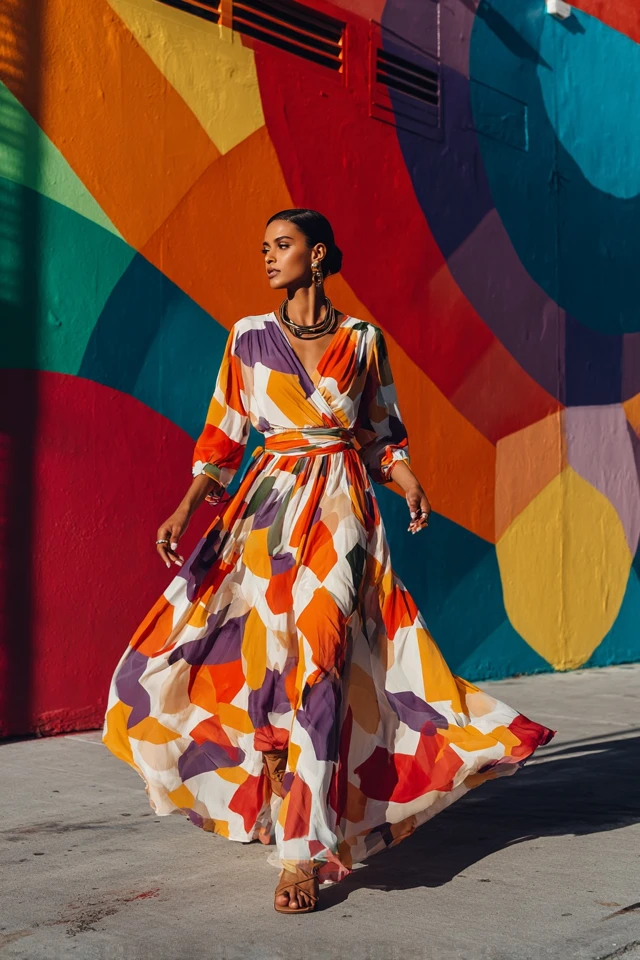
- A maxi skirt or dress in a flowing print. Our spring maxi dress ideas show how to style one.
- An unlined trench or jacket in a crisp cotton blend. See spring trench coat ideas for shape inspiration.
- A quilt or throw built around a focus print, with solids pulled from its minor colors.
For quilts, choose the focus fabric first, then cut your swatches from its colors. A print with three to five colors gives plenty of direction.
Styling the fabric you've chosen
Let the fabric do the talking and keep the rest simple. A bright top with neutral trousers, or a printed skirt with a plain tee, is enough. For a calmer take, browse the minimalist spring lookbook, and for accessories that pick up a fabric's accent color, see bold spring accessory ideas.
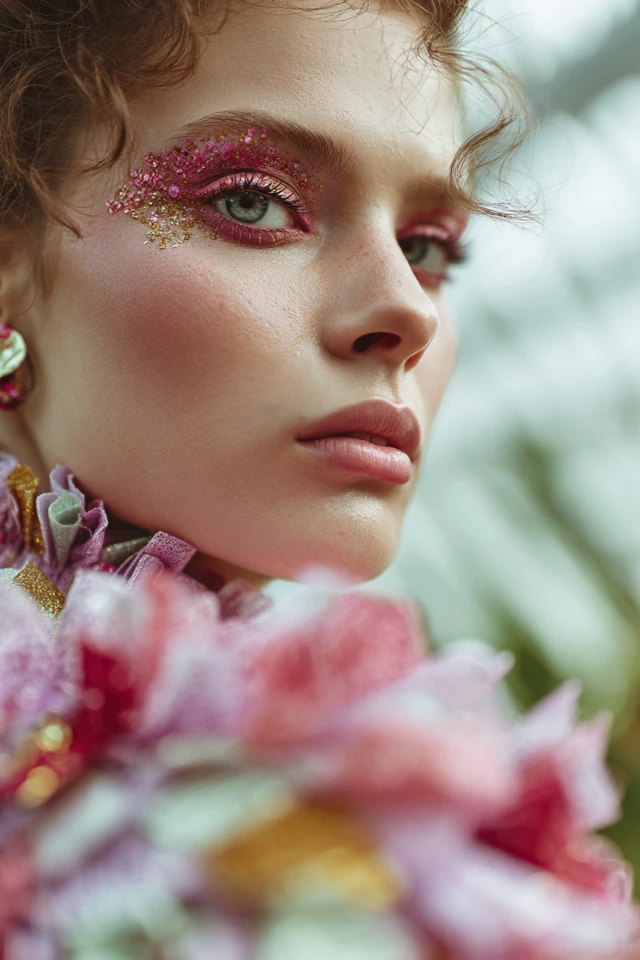
As an architect trained in evidence-based design, I'd treat the biggest block of color as the first thing the eye reads, so put your focus fabric where you want attention to land.
Frequently asked questions
What is the best fabric for spring?
Lightweight, breathable fabrics such as cotton, linen and silk blends are the usual picks because they layer easily and handle changing temperatures. Choose by drape and weight for the project you have in mind.
How do I choose a focus fabric for a quilt?
Start with a print you love that has three to five colors. Then pick solids or smaller prints drawn from those colors so the focus fabric stays the lead.
Can I wear bold spring prints to work?
Yes, if you balance them with solid basics. A floral blouse under a neutral blazer or a printed skirt with a plain top keeps the look polished.
Filed under Outfit Ideas