Lightweight Spring Cardigans: Asymmetrical Styles to Try
- Words by
- Julio Arco
- Published
- Reading
- 4 min
The best lightweight spring cardigans are made of a breathable knit, sit open or loosely closed, and have a hem or drape that adds shape without bulk. An asymmetrical cardigan, with an uneven hem or diagonal front, does this well: it layers over almost anything and looks finished even when you just throw it on.
Below: what to look for in fabric and length, how to color and pair one, and outfit formulas for the days spring can't decide on a temperature.
What makes an asymmetrical cardigan different?
A standard cardigan is symmetrical and buttons straight down. An asymmetrical one has an uneven hem, a diagonal closure or a front that drapes to one side. Those details add movement, so a plain knit reads as a deliberate piece rather than a default layer.
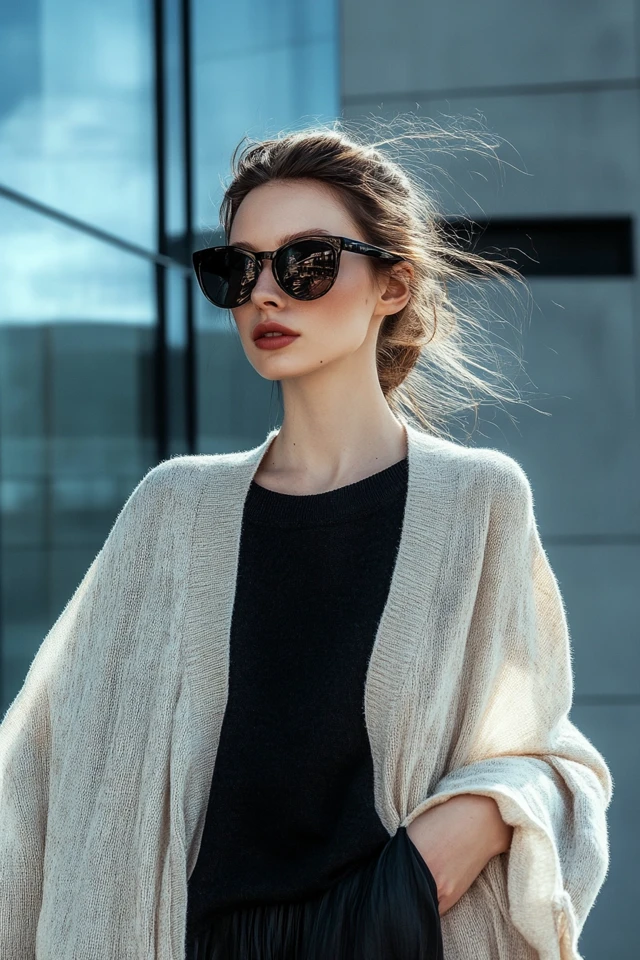
Most work as a lightweight open front cardigan: no buttons to fuss with, just a drape you can wear loose or cinch with a belt. That makes them easy over tailored trousers and heeled boots, or jeans and sneakers.
How does an uneven hem change your proportions?
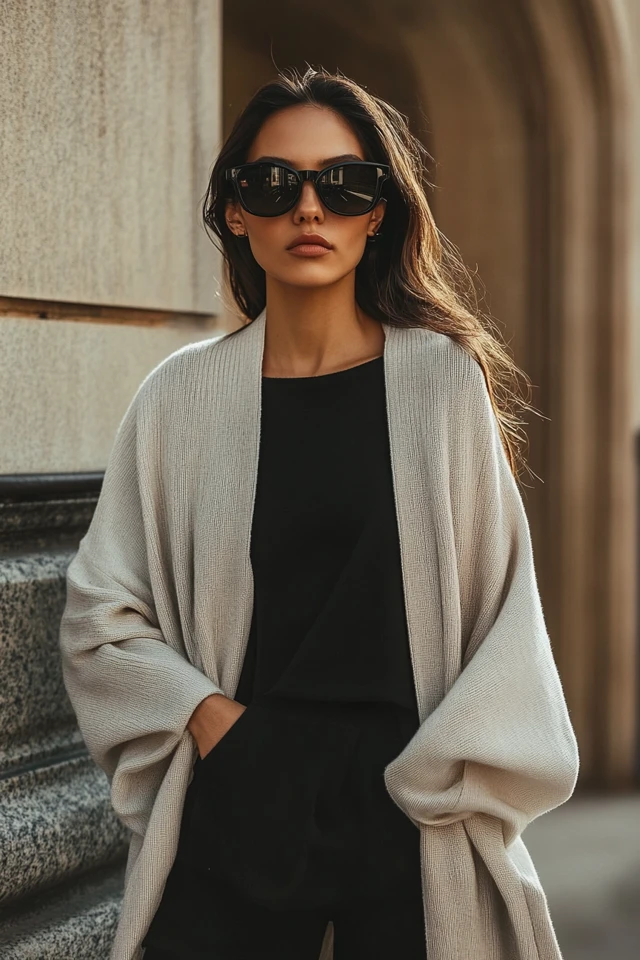
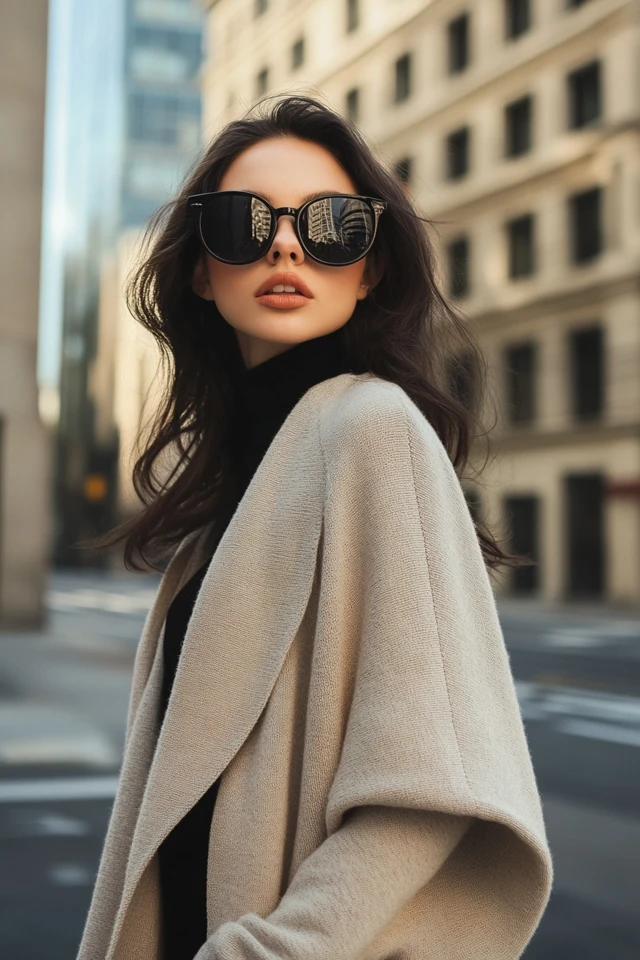
A hem that drops longer on one side leads the eye down in a diagonal line, which tends to make the outfit look longer through the torso. Through the lens of evidence-based design, I'd say the eye follows the strongest line in an outfit, and here that line is the angled edge. If you are petite, a cropped version keeps that line without swallowing your frame.
If you are taller, a softer, longer knit can add drama. Fit still comes first: a cardigan that pulls at the shoulders is a fit problem, not a you problem. Check that the shoulder seam sits where your shoulder ends.
Which fabrics work best for spring and warm days?
For cardigans for hot weather, choose open, airy knits: fine-gauge cotton, linen blends, bamboo-viscose blends or loose crochet. A lightweight cotton cardigan breathes well and is easy to wash, which suits everyday wear.
One caution: cotton absorbs moisture. Texas A&M's Howdy Health notes that you should avoid cotton for cold-weather exercise because it holds moisture next to your skin and can make you cold. For a brisk outdoor workout, pick a moisture-wicking base layer instead, and keep the cotton cardigan for everyday wear.
Texture matters as much as fiber. A matte ribbed knit and a silky back panel in the same color do not read as the same color, because the surface changes how light reaches your eye. Two-fabric cardigans, with a cotton front and a fluid back, use that contrast on purpose.
What colors suit spring cardigans?
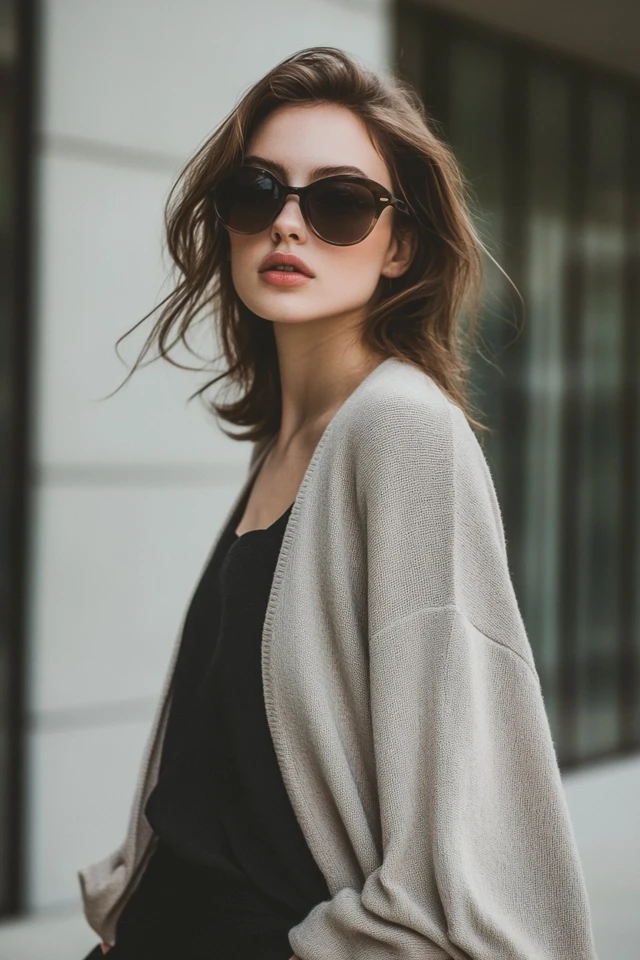
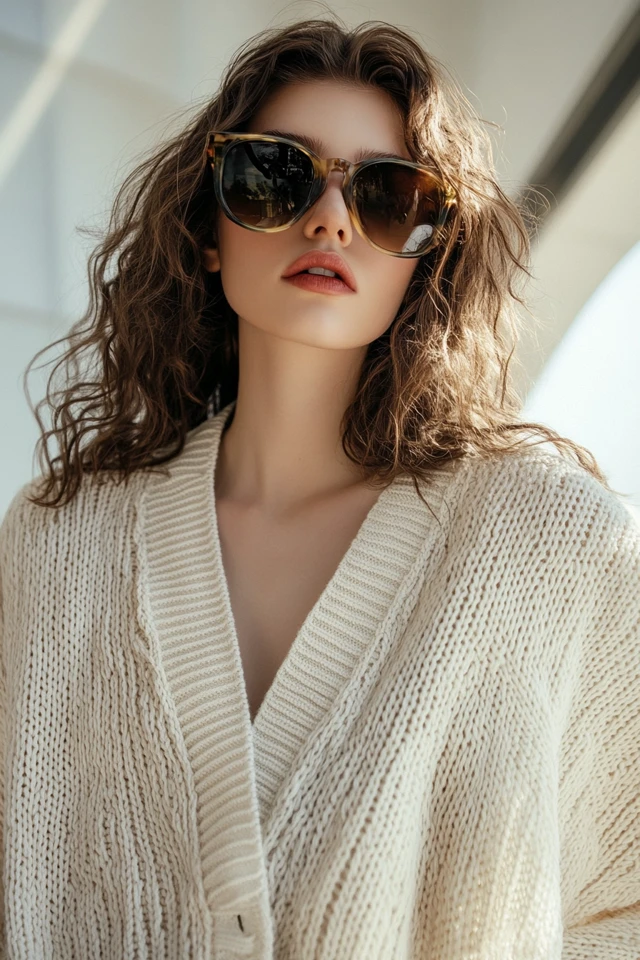
Pastels like lavender, mint and soft peach look fresh against light denim and white trousers. Neutrals such as cream, beige and dove gray work as a base and let you change accessories without changing the cardigan.
For a bolder choice, emerald or sapphire stand out against white or light wash jeans. Since the shape already draws attention, keep the rest of the outfit to one or two quiet colors. If you want more pastel ideas, see pastel cropped cardigans and lightweight floral cardigans.
How do you wear one over dresses and tees?
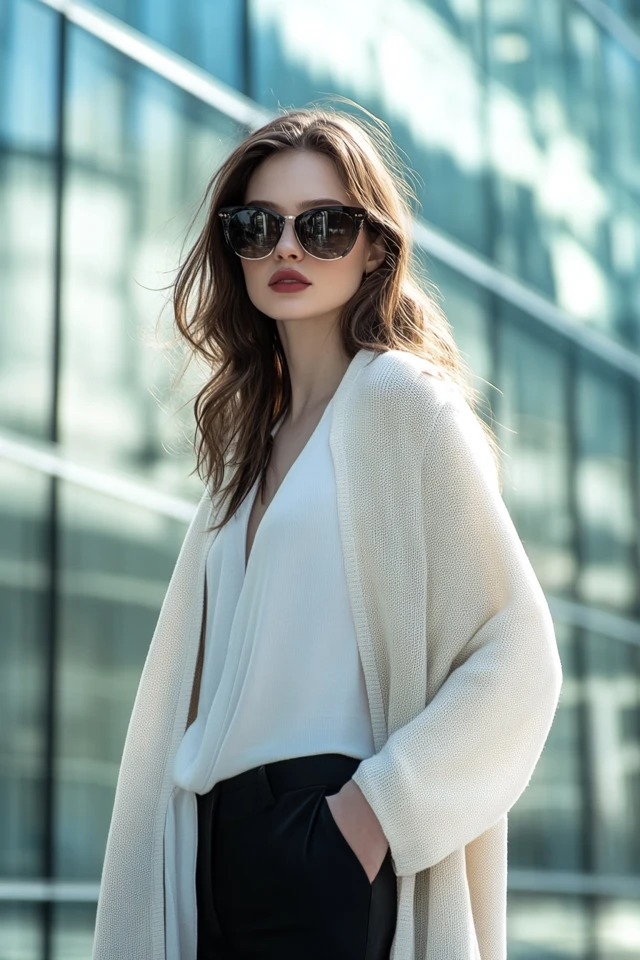
A lightweight cardigan for dresses should be shorter or longer than the hem, not within an inch of it. Over a slip dress, leave it open and let the angled edge fall past the waist. Slip dresses pair especially well with a bold-colored cardigan.
- Weekend: draped cardigan, white tee, denim, sneakers, crossbody bag.
- Work: structured neutral cardigan, tucked-in blouse, tailored trousers, loafers.
- Evening: bright cardigan over a slip dress with ankle boots.
- Outdoors: cardigan over a fitted tank and leggings, with a light scarf.
Are long lightweight cardigans a good idea?
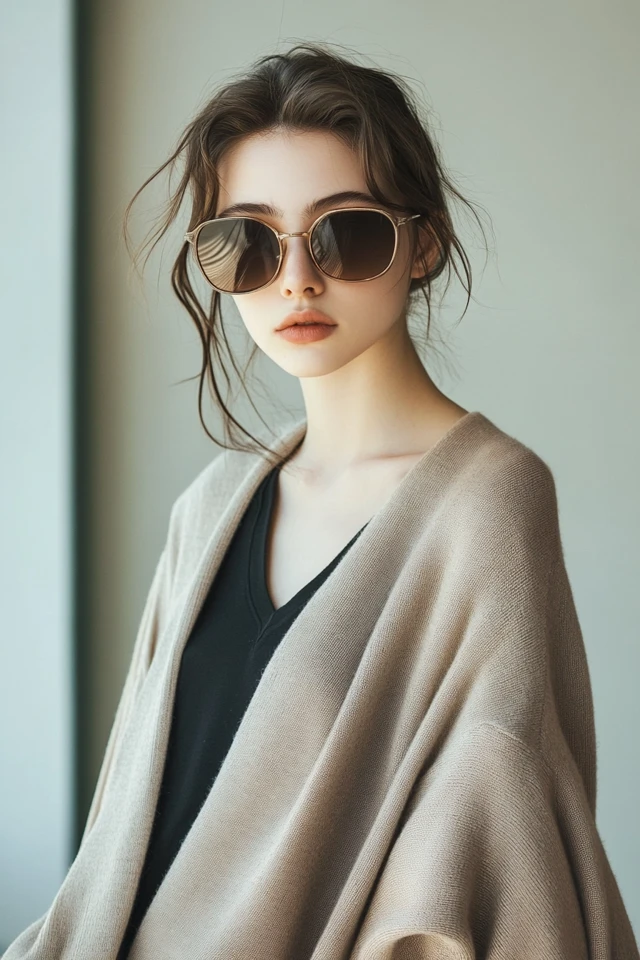
Long lightweight cardigans work when the fabric is fluid enough to drape and not hang stiffly. They suit tall frames and straight trousers. On a petite frame, keep the length to mid-thigh and belt it if needed. Wrap-style versions with ties let you adjust the waist, and a belt does the same job on any open-front style.
Sleeves matter too: a three-quarter sleeve shows off a bracelet or watch and stays cooler on warm afternoons.
How to choose and buy one
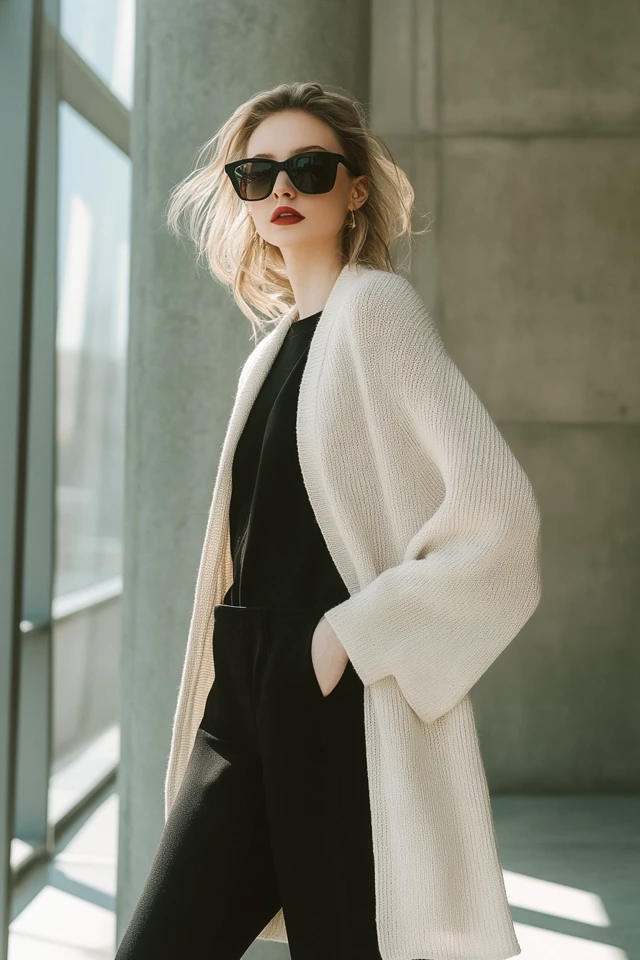
- Check the fiber label. Cotton, bamboo or linen blends breathe best.
- Hold the knit up to the light: if you can see through it a little, it will layer without bulk.
- Start with a neutral if you own mostly basics, then add color.
- Follow the care label; most knits like gentle washing and air drying to keep their shape.
As an architect trained in evidence-based design, I'd treat the hem as the first thing the eye reads, so pick the cardigan whose edge you like best and build the outfit quietly around it. For other cuts, browse cropped cardigans for mild spring days.
Frequently asked questions
What is the best lightweight cardigan?
The best one is a fine-gauge knit in a breathable fiber like cotton or a bamboo blend, with a shoulder seam that fits and a length that suits your frame. An open front is the most flexible shape.
What are some good cardigans for hot weather?
Look for loose crochet, linen blends or thin cotton knits, worn open over a tank or camisole. Short sleeves or three-quarter sleeves keep them cooler.
What are some good long lightweight summer cardigans?
Choose a fluid, open-weave knit that drapes instead of hanging stiffly. Belt it if the length overwhelms your frame.
Can asymmetrical cardigans work for all body types?
Yes, if the length and fit suit you. Cropped styles keep petite frames balanced, while longer ones suit taller frames.
Filed under Seasonal Trends