Geometric Nail Art Ideas: Simple, Short and Minimal
- Words by
- Julio Arco
- Published
- Reading
- 5 min
The easiest geometric nail art ideas use one or two shapes: a single diagonal stripe, a small triangle at the base of the nail, or a thin grid over a sheer color. Start with straight lines and a limited palette, and the design will look deliberate even if your hand is not perfectly steady.
Below are the designs that work best, sorted by how much skill they need and which nail length they suit.

What are some simple geometric nail art ideas?
Simple geometric nail art ideas rely on a few straight lines and a clear base color. These are good first projects:
- One diagonal stripe across a nude or pale pink nail.
- A small triangle in the corner of the nail, with the rest left bare.
- Two thin parallel lines running from cuticle to tip.
- A single dot-and-line combination on the ring finger only, with the other nails in a plain color.
Accent nails are forgiving. If one line wobbles, you only have one nail to redo, and the plain nails give the eye somewhere to rest.
Minimalist geometric nails
Minimalist geometric nails use fewer elements, not smaller ones. Think one hairline, one shape, one color, and a lot of empty nail. Gold or silver lines over a sheer milky base are a classic version, and a matte top coat over a single dark stripe gives a quieter look.
Through the lens of evidence-based design, I'd keep the palette to two tones here. When a design has few elements, the contrast between them is what the eye reads first, so a soft contrast looks calm and a hard one looks graphic.
If you like this direction, see more minimalist nail design ideas on this blog.
Geometric nail art ideas for short nails
Short nails suit geometry well, because there is less surface to fill and clean edges stand out. A few rules help:
- Run lines vertically or at a slight diagonal. Vertical lines make the nail look a little longer.
- Keep shapes small and leave some bare nail around them.
- Avoid dense patterns with many tiny pieces. On a short nail they read as clutter.
- Sheer or nude bases make the nail bed look longer, so the lines carry the design.
Triangles that point toward the tip, thin stripes and a single half-moon at the cuticle all work on short nails without crowding them.
Negative space geometric nail art
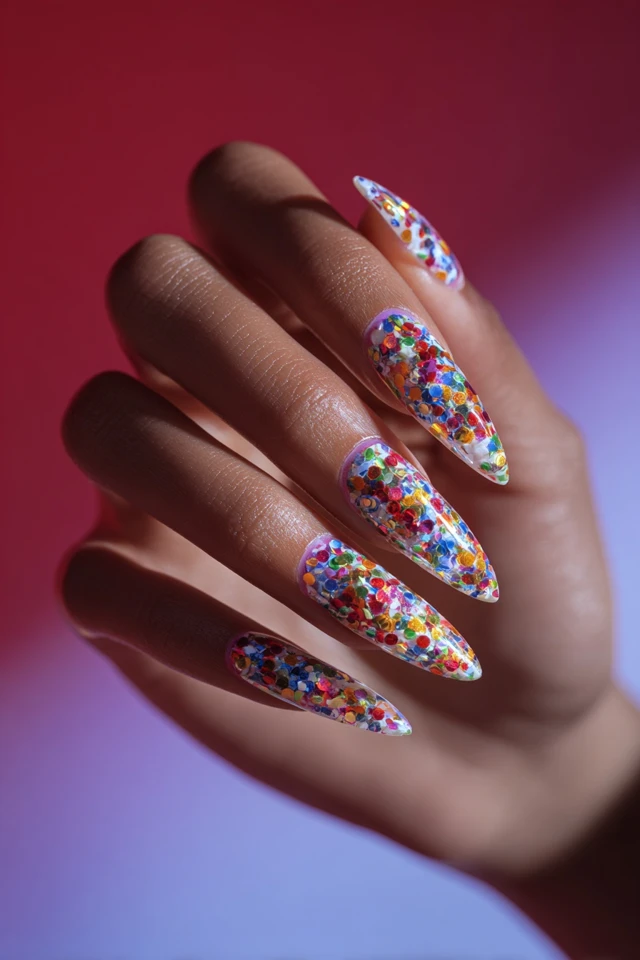
Negative space means leaving part of the natural nail bare and painting only the shapes. It is one of the most wearable forms of geometric work, because grow-out is barely visible and the bare areas keep the look light.
Easy versions include a bare nail with a diagonal color block, a half-moon at the base, or two crossing lines forming small open triangles. Use a base coat first so the bare areas look glossy and even, then add shapes with a thin brush or striping tape. Peel the tape off while the polish is slightly tacky, not fully dry, to keep edges crisp.
For a more detailed take, this geometric concept nail post shows other layouts.
Black and white geometric nail art
Black and white is the highest-contrast pairing, so the shapes themselves become the design. Checkerboard, chevrons, bold stripes and thin grid lines all look sharp in this palette.
A balanced approach is to make one color the base and the other the accent. All-black shapes on every nail can feel heavy on short nails, while a white base with thin black lines stays light. Matte black against glossy white adds a second layer of contrast, because the two surfaces catch light differently.

Geometric French nails
Geometric French nails replace the curved tip with an angle or a line. Options include a sharp triangular tip, a diagonal tip that cuts across the nail, a double thin line parallel to the free edge, or a V shape at the cuticle for a reverse look.
Keep the base sheer so the shape reads clearly. A tip in black, deep green or a metallic gives a modern effect, while a soft white keeps it close to the classic. The diagonal tip is the easiest to paint, since you only need one straight stroke per nail or a strip of tape.
How to do geometric nail art at home
- Prep: shape the nails, push back cuticles gently and apply a base coat.
- Paint the base color in two thin coats and let it dry fully.
- Apply striping tape or draw lines with a fine brush. A dotting tool works for anchoring points of triangles.
- Paint the shape, remove the tape while the polish is slightly tacky, and let it dry.
- Seal with a top coat, running the brush smoothly so it does not drag the lines.
Work one hand at a time and one layer at a time. Smudging is almost always a drying-time problem. If you want a pattern with more color and layering once you are comfortable, try these palette-based geometric nails.
Taking care of your nails when you remove designs
Long-wear manicures are where nail health usually suffers, mostly at removal. The American Academy of Dermatology says acetone is the most effective way to remove gel polish at home, and the Cleveland Clinic notes that careless removal can temporarily damage nails, with cracking and peeling the most common issues.
If you use dip powder, dermatologist Shari Lipner, MD, PhD, advises: "After removing the color, wait one month before getting another one of these manicures." Regular polish is the gentlest option for practicing designs. For any ongoing nail problem, check with a dermatologist.
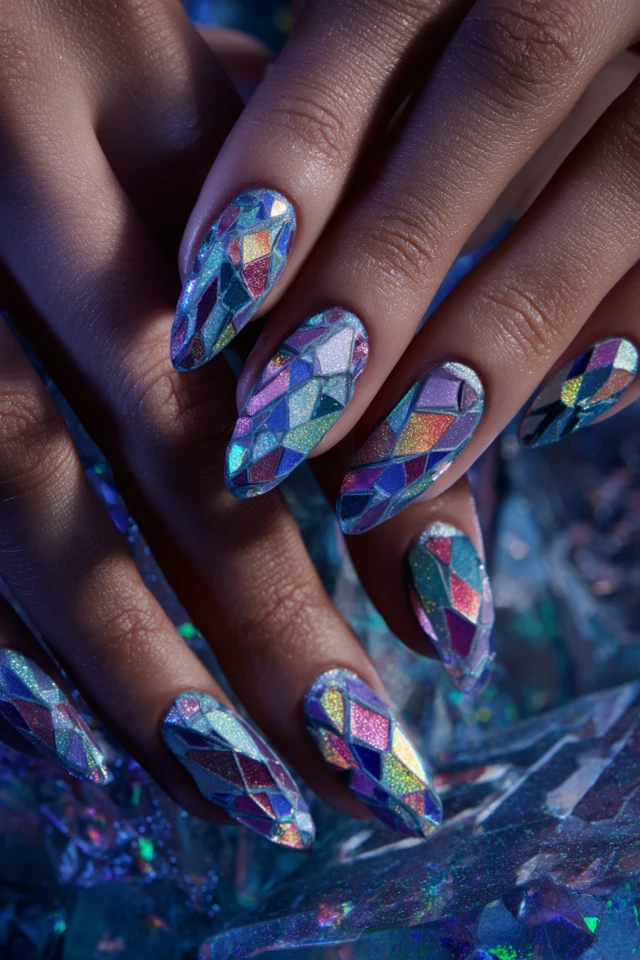
More looks to try: an artful geometric mani and textured geometric concept nails.
Frequently asked questions
What nail art is trending right now?
Soft minimal looks such as negative space, thin lines and sheer bases with a single accent shape are common choices. Trends shift quickly, so pick a design you like on your own hands rather than chasing one.
What are some simple geometric art ideas for nails?
A single diagonal stripe, a small corner triangle or two parallel lines on a nude base are the easiest. Paint them on one accent nail first if you are new to it.
Do geometric nails work on short nails?
Yes. Keep shapes small, use vertical or slightly diagonal lines and leave some bare nail so the design does not crowd the surface.
What tools do I need for geometric nail art at home?
A fine nail art brush, striping tape, a dotting tool, a base coat and a top coat cover most designs. Tape is the biggest help for straight edges.
Filed under Nail Design