Artful Flare Geometry Nails
- Words by
- Julio Arco
- Published
- Reading
- 4 min
Geometric nail art is built from straight lines, triangles, squares and blocks of color. The easiest way in is one or two thin lines over a neutral base. From there you can add color blocking, negative space or a matte finish.
Below are the patterns worth copying, how to choose colors, which shapes suit sharp angles, and how to keep your natural nails in good shape while you wear them.
What are some examples of geometric nail designs?
These are the patterns I'd start with, roughly from easiest to hardest:
- A single diagonal stripe across a nude or frosted white nail.
- A French tip with a straight or angled line instead of the usual curve.
- Negative space, where a triangle or strip of bare nail is left unpainted.
- Color blocking: two or three flat shapes meeting at a clean edge.
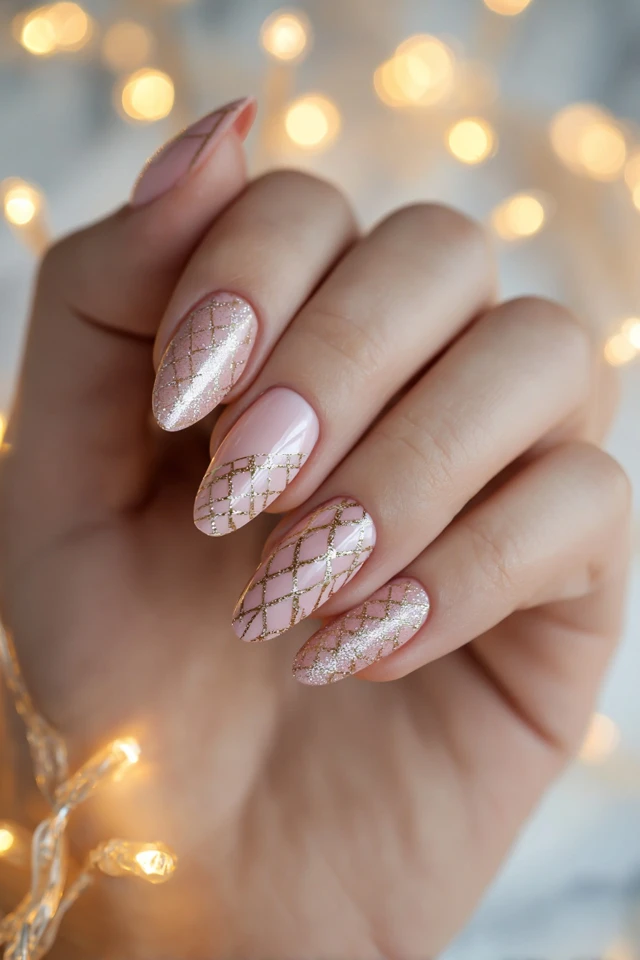
- Crossed thin lines in black or metallic polish over a sheer base.
- Clear, angular shapes layered over a solid color for a bit of depth.
Simple geometric nail designs for beginners
Start with striping tape. Paint the base, let it dry fully, press the tape down in a straight or angled line, paint over it and peel the tape away while the polish is still slightly tacky. A dry base matters: tape on tacky polish lifts color with it.
A fine detail brush, a dotting tool and a good top coat cover most of what you need. Keep the first attempts to one line per nail. Fewer lines forgive a shaky hand, and a sparse design reads as intentional.
If you want more, try the minimalist design approach, where a single small shape does all the work.
How do color and finish change a geometric look?
Color blocking works best when the shapes have clear contrast. Navy against cream or charcoal against dusty rose gives the edges something to hold onto. Two soft shades of similar value blur together, which is fine if you want a gentle look but loses the sharpness that makes geometry read.
Through the lens of evidence-based design, I'd think about finish before color. A matte surface scatters light and makes a shade look softer and deeper, while gloss reflects it and brightens the same shade. Matte geometric nails with a thin metallic line pair that contrast well: the line catches light, the base does not.
For more on finish, see matte canvas nails. For bolder color, neon flare nails shows how bright shades behave against angular shapes.
How do lines and angles change how nails look?
Lines draw the eye in the direction they point. Vertical or slightly diagonal lines running toward the tip make a nail look longer, while horizontal bands across the middle make it look wider and shorter. If your nail beds are short, favor lines that run lengthwise or start at the cuticle edge.
Negative space also lengthens, because the bare strip of nail continues the line of the finger. Heavy blocks of dark color at the tip do the opposite and visually shorten the nail.
What is the best nail shape for geometric designs?
Squoval, square and almond all work, and the choice depends on the pattern. Square and squoval nails echo straight edges, so grids, blocks and stripes sit naturally on them. Almond and pointed shapes suit diagonals that follow the taper. A round nail can wear geometry too, but the shapes tend to look softer, as in round geometry nails.
Very long, sharp shapes give you more surface for angles, as in stiletto geometry nails, though they chip more easily. On short nails, keep the design to one or two shapes so it does not look crowded.
As for which shape is healthiest, the usual advice is to keep the length manageable and the edges rounded enough not to snag. If you have recurring splitting or pain, check with a dermatologist.
Protect your nails while you wear precise designs
Intricate designs tempt people toward long-wear gel or acrylic, so the removal step matters. The American Academy of Dermatology notes that getting acrylics to stick means filing natural nails until they feel rough, which thins them. For gel, the AAD's at-home removal guide says that after about 10 minutes under plastic wrap, most or all of the polish should be gone.
Dermatologist Shari Lipner, MD, PhD, says of dip powder: "After removing the color, wait one month before getting another one of these manicures." A break between sets is a sensible habit for any long-wear system.
Polish alone is the gentlest option for geometric work. Tape, a fine brush and a good top coat get you clean lines without any of the filing.
Frequently asked questions
What is the most attractive fingernail shape?
There is no single answer. Almond tends to look long and slender, while squoval is the easiest to wear and suits most geometric patterns. Pick the one that fits your nail bed and daily routine.
What are the 7 different nail shapes?
The commonly listed shapes are square, squoval, round, oval, almond, coffin (ballerina) and stiletto. Names vary a little between salons, but the differences are in the tip width and edge.
What is the healthiest nail shape?
Shorter shapes with softly rounded corners, such as round or squoval, are less likely to snag and break. If you have ongoing nail problems, check with a dermatologist.
Can I do geometric nail art on a budget?
Yes. Striping tape, a thin brush and two or three polishes you already own are enough for clean lines and color blocks.
Filed under Nail Design